





A guest sitting at my bar once asked me a simple question. What is the difference between anisette and sambuca? I froze, gave an answer that was not wrong, and knew it was not good enough. That embarrassment sent me deep into the anisette vs sambuca question, and the answer changed how I see my own family’s table.
Here is the short version. Both are sweet Italian anise liqueurs with that unmistakable licorice flavor. But sambuca is a tightly defined legal style, stronger and more exact. Anisette is an older, broader family, softer and gentler, and it is what Southern Italian families like mine actually poured. The rest of this story explains why that difference matters more than any label.
I Was Supposed to Be the Expert
I have always believed that if I am going to sell something, I should understand it. Not just how it tastes, but why it exists, where it came from, and why one producer makes it differently than another. A guest who trusts me with a question deserves more than “they’re basically the same.”
That night bothered me for weeks. So I did what I have done my whole career when I hit a gap. I went down the rabbit hole, the same way I did with seed oils, wild salmon, olive oil, and tequila. I even did it with the spritz everyone orders by brand name. Every time I discover I do not know enough, I immerse myself until I do.
Key takeaway: A trained palate is not enough. Chefs owe guests the story behind every bottle they pour, and admitting a knowledge gap is where real expertise starts.
What Is Anisette?
Anisette, called anisetta in Italy, is a family of sweet liqueurs flavored with anise seed. It is a soft, dessert-sweet anise liqueur, typically gentler in proof than sambuca, and it is built for the after-dinner table. Italians splash it into espresso, sip it neat with family, and pour it at every holiday.
It is also old. Italy has produced anisetta commercially for more than 150 years. Meletti, one of the best-known houses, has made its anisetta since 1870. This is not a novelty spirit. It is heritage in a bottle.
Key takeaway: Anisette, or anisetta, is the older and broader family of sweet Italian anise liqueurs, gentler than sambuca and tied to espresso and the after-dinner table.
What Is Sambuca?
Sambuca is a specific Italian anise liqueur style with an exact legal definition. Under the European Union’s spirit drink rules, sambuca must be colourless, flavored with anise, and bottled at 38 percent alcohol or higher. It also carries a legally required minimum of 350 grams of sugar per liter. That combination of high proof and high sweetness gives sambuca its distinct punch.
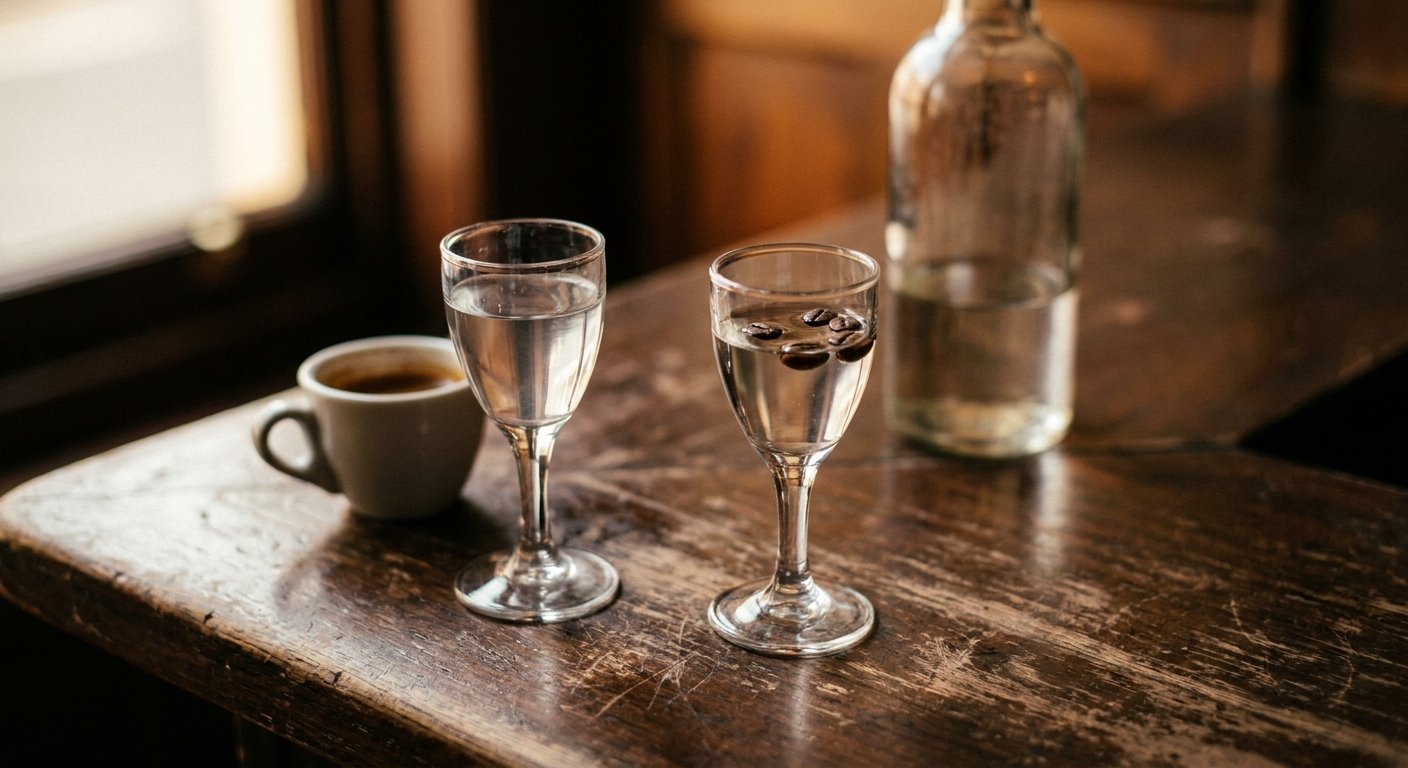
Producers typically build it on anise and star anise, often with other aromatics such as elderflower and licorice. Its signature ritual is sambuca con la mosca, “with the fly.” Three roasted coffee beans float on top, representing health, happiness, and prosperity.
Key takeaway: Sambuca is a legally defined Italian anise liqueur: colourless, at least 38 percent alcohol, heavily sweetened, and famously served con la mosca with three coffee beans.
Anisette vs Sambuca: The Real Difference
The actual difference between anisette and sambuca comes down to definition, proof, sugar, and ritual. They share the anise backbone, the licorice aroma, and the espresso pairing. They are still not interchangeable. Here is the side-by-side I wish someone had handed me years ago.
| Factor | Anisette (Anisetta) | Sambuca |
|---|---|---|
| What it is | A broad, older family of sweet anise liqueurs | A single, legally defined Italian style |
| Proof | Gentler, lower alcohol | Minimum 38 percent alcohol under EU law |
| Sweetness | Soft and dessert-sweet | Legally required minimum sugar of 350 g per liter |
| Botanicals | Anise seed forward | Anise and star anise, often elderflower and licorice |
| Signature serve | A splash in espresso, or neat after dinner | Con la mosca, with three roasted coffee beans |
| Roots | Deep regional traditions, including Puglia | National Italian style, known worldwide |
If you remember one thing from the anisette vs sambuca comparison, remember this. Sambuca is a style you can define. Anisette is a tradition you inherit.
Key takeaway: Anisette and sambuca share an anise core but differ in proof, sweetness, botanicals, and ritual. Sambuca is a defined style, while anisette is an inherited tradition.
My Family Never Drank Sambuca
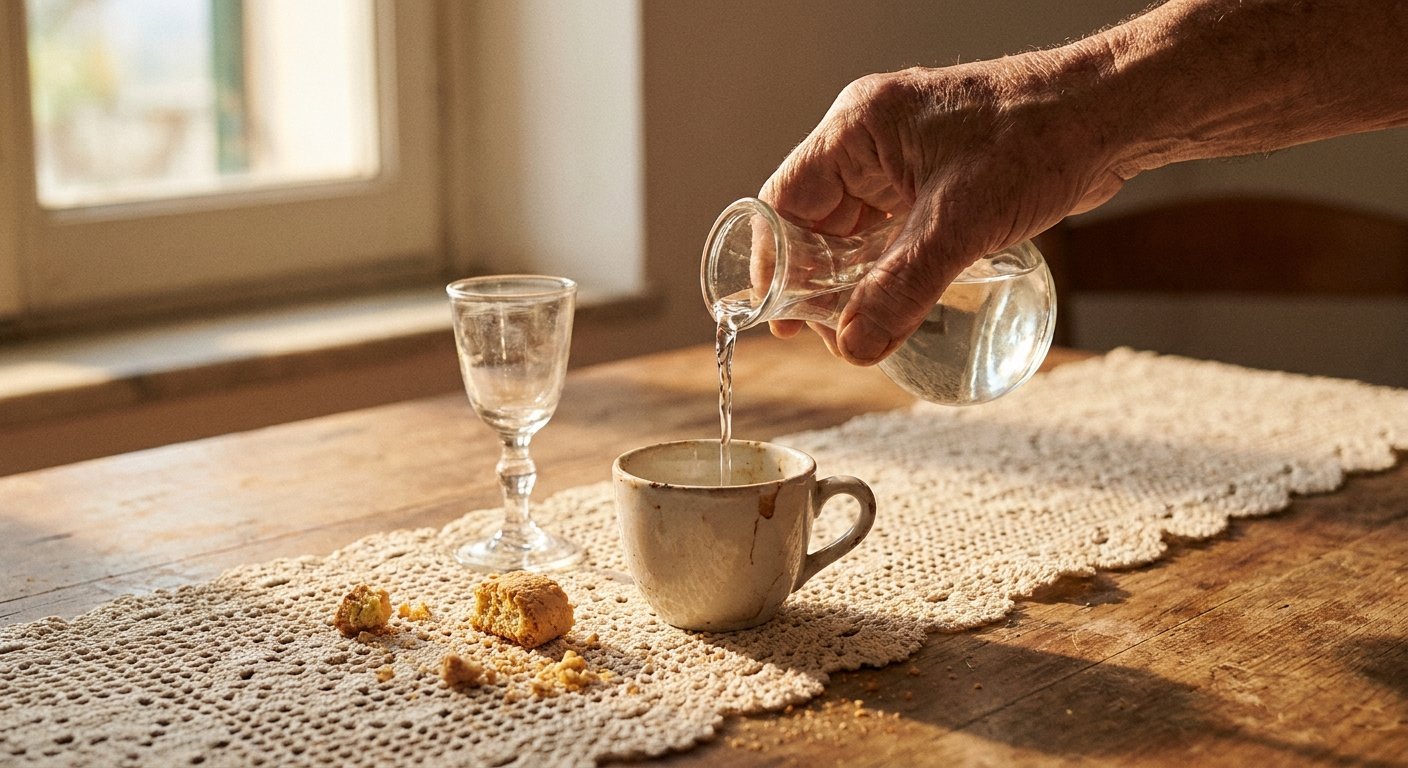
Here is where the story gets personal. I grew up in a Southern Italian family with roots in Puglia, and there was never sambuca on our table. After dinner there was anisette. A splash went into the espresso. A bottle came out at every family gathering and every holiday dinner. I honestly do not remember hearing the word sambuca until I was much older.
My grandmother ran that table the way she ran her sauce, with zero tolerance for shortcuts. To us, anisette simply was the after-dinner drink. So naturally I assumed the two liqueurs were basically the same thing. I was wrong, and it was not the first time Puglia humbled me. I grew up Italian and had never even heard of spaghetti all’assassina until a few years ago.
Key takeaway: In many Southern Italian homes, including Marcus's Puglia family, anisette was the only after-dinner pour and sambuca never came up.
Puglia Has Its Own Anisetta Tradition
I originally assumed my family’s anisette habit came from French influence. It did not. Southern Italy has a deep anisetta tradition of its own. The province of Lecce, just south of my family’s corner of Puglia, built a celebrated anisetta tradition in the late 1800s. The De Giorgi family started distilling there at the close of that century. In 1920, King Victor Emmanuel III granted royal recognition to Anisetta De Giorgi in San Cesario di Lecce.
That research changed everything for me. My grandfather was not choosing anisette instead of sambuca. He was pouring what his family had always poured. That is an Italian digestivo tradition doing what traditions do: carrying a family forward one small glass at a time.
Key takeaway: Puglia, especially the province of Lecce, built its own celebrated anisetta tradition, so a family's anisette habit reflects regional heritage rather than brand preference.
Every Bottle Carries a Story
People think they are ordering a drink. They are actually ordering history: a recipe passed down, a memory, a region, a family’s identity. The same thing happens with olive oil, bread, cheese, and pasta shapes. Ask someone from one village why they use one ingredient instead of another. The answer is rarely “because it’s better.” The answer is “that’s how my family always did it.”
I wrote about this exact pattern in what “authentic Italian” really means. Tradition is a specific chain of hands, and it is the reason two nearly identical liqueurs can mean completely different things two provinces apart.
Key takeaway: Food and drink choices carry inherited history, so two similar bottles can tell two completely different family and regional stories.
Why This Matters at My Restaurant
If I put something on my menu at Aroma Thyme Bistro, I owe it to my guests to understand it. Not just serve it. Understand it. Would you trust a mechanic who cannot explain why a part is installed? Neither would I. Restaurants should be places of education, not just consumption.
That is why our team can now answer the anisette question properly. The biggest divide in the anisette vs sambuca debate is not found in the bottle anyway. It is found in the people drinking it. Put sambuca in front of my grandfather and he would have looked around and asked where the anisette was. Not because sambuca is worse. Because anisette was home.
Key takeaway: The deepest difference between these liqueurs lives in memory and identity, which is exactly why restaurants owe guests a concrete answer about what they pour.
Frequently Asked Questions
Is anisette the same as sambuca?
No. The two share anise and sugar, but sambuca is a distinct Italian style with a legal definition. Anisetta is a broader, older tradition with regional variations across Italy. Much of the anisette vs sambuca confusion comes from their shared anise backbone.
Which is older, anisette or sambuca?
Commercial anisette predates modern sambuca by decades. Italian anisetta houses such as Meletti have been producing it since 1870, and regional traditions run even deeper.
What is sambuca con la mosca?
“Con la mosca” means “with the fly.” Sambuca is traditionally served with three roasted coffee beans floating on top, symbolizing health, happiness, and prosperity.
What does anisette taste like?
Anisette leads with a soft licorice flavor from anise seed, wrapped in dessert-level sweetness. It is gentler and rounder than sambuca, which is why it works so well in espresso.
Did Southern Italy really have an anisette tradition?
Yes. Puglia, particularly the province of Lecce, developed a respected anisetta tradition in the late 19th and early 20th centuries. The Anisetta De Giorgi house in San Cesario di Lecce earned royal recognition in 1920.
How do Italians serve anisette and sambuca?
Both arrive after the meal as a digestivo. Anisette most often lands as a splash in espresso or a small neat pour. Sambuca shows up neat, chilled, or con la mosca.
The Question I Hope You Steal
The next time you are traveling through Italy or sitting at a good bar, do not just ask what something is. Ask “why this one?” That is where the real story begins, because every bottle has a history and every recipe has a reason. One guest’s question about anisette vs sambuca reminded me that even a 30-year chef should never stop being a student.
Three direct ways to put this into practice:
- Ask what anise liqueur the bar carries and where it is made.
- Order it the way its region drinks it: neat, chilled, or as a splash in espresso.
- Ask who first poured it in the owner’s family. That story is the best part of the glass.
Come sit at the bar at Aroma Thyme, order an espresso, and ask for a splash of anisette. I will tell you about Puglia while you drink it. More of my food and wine stories live at marcusguiliano.com.
About the Author