



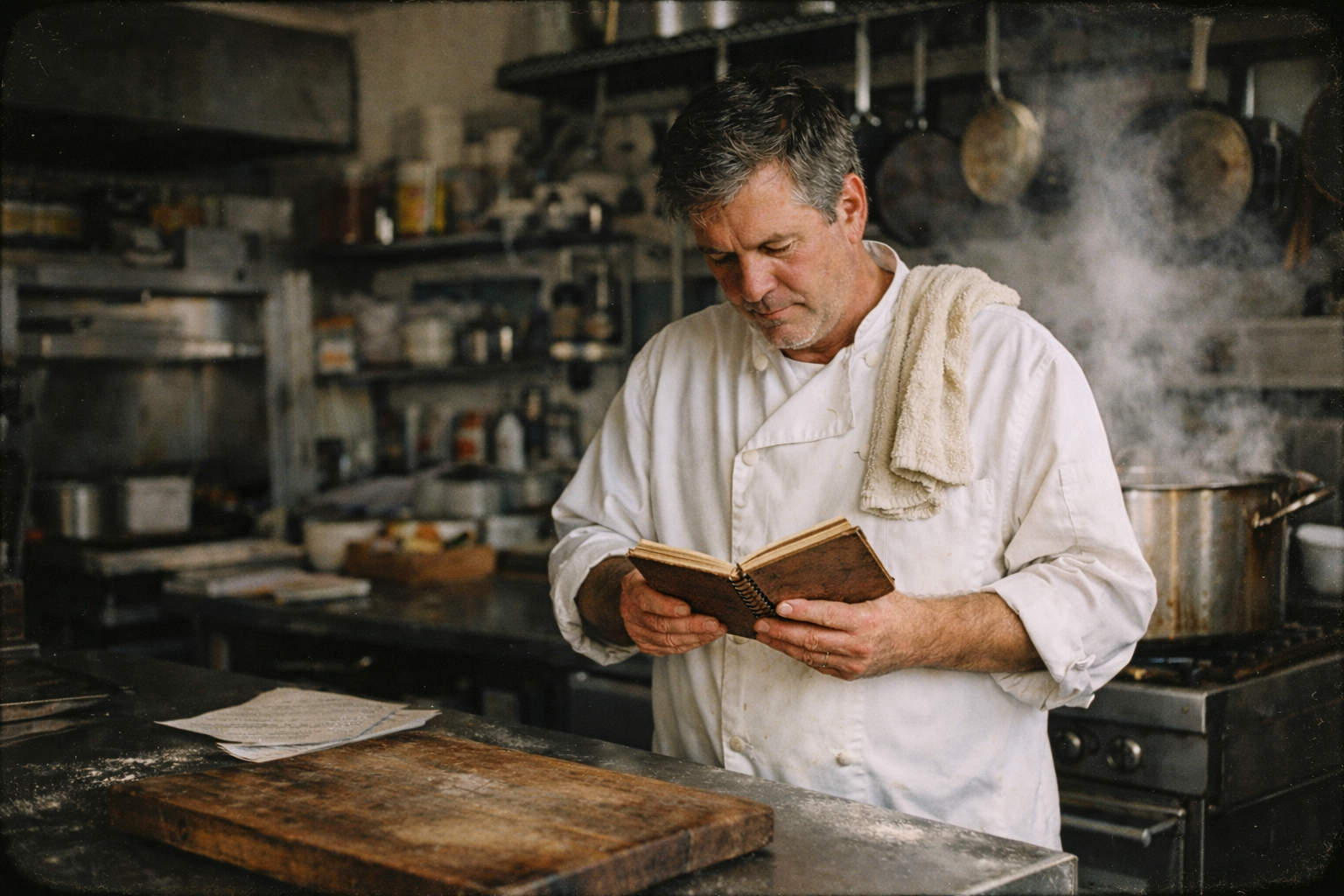
I made the commitment to never stop learning in the early ’90s, when I began as a culinary apprentice.
It was not about one label or one moment. It was about immersing myself in countless cuisines, techniques, and procedures. The real turning point came when I felt almost embarrassed, realizing it was my duty as a chef to understand every ingredient, diet, and food tradition I came across.
That feeling changed how I run every part of my life. Over thirty years later, I still treat each day like the first day of class.
The world does not wait for you to catch up. Your guests keep changing. Your competition keeps changing.
I trained in Michelin-level kitchens. I have visited over 350 wineries across six countries. I built Aroma Thyme Bistro into one of the most awarded restaurants in the Hudson Valley.
None of that matters if I stop growing.
Why Do So Many Talented Chefs Fail at Running a Restaurant?
There is a dangerous myth in the culinary world.
“If you’re a great chef, you’ll run a great restaurant.”
False.
I have watched talented cooks open restaurants and close within a year. Cooking is one part of the job. The rest is a pile of restaurant owner skills nobody teaches you in culinary school.
When I opened Aroma Thyme Bistro in 2003, I thought my culinary background would carry me. It did not.
I had to become something I had never been:
- A marketer who could fill seats on a Tuesday
- A copywriter who could sell without sounding desperate
- A website builder who could get found online
- A financial planner who could survive slow months
- A handyman who could fix a pipe at midnight
- A systems thinker who could connect all of it
If people do not know you exist, you do not have a business. That is the part most chefs miss.
The Self-Taught Business Skills That Saved My Restaurant
The turning point was not a new dish. It was learning marketing.
This was before social media. We relied on Yellow Pages, direct mail, birthday postcards, and email lists. Old-school methods.
When I learned how to communicate value and stay top of mind, everything shifted. That single self-taught business skill saved my restaurant.
I did not stop there. I learned how to fix plumbing so I would not call someone every time a pipe broke. I built my own websites when I could not afford a developer. I studied SEO, email marketing, and offer creation late at night after closing.
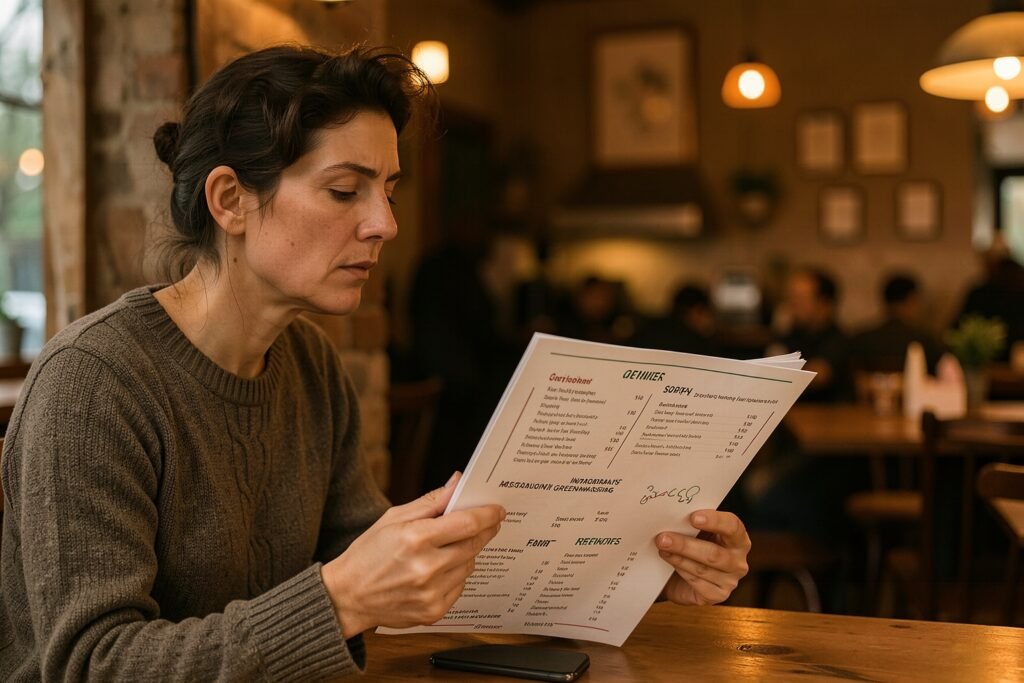
I sat in mastermind rooms with over 100 restaurant owners, sharing strategies and failures. From fixing pipes to business strategy, that is what real learning looks like. The same instinct drove me to build an honest restaurant menu where every ingredient is accounted for.
Adaptability in Business: When the Rules Change, Start Over
Around 2010, social media arrived. The marketing playbook I had built over seven years was suddenly outdated.
Now I had to learn content, video, storytelling, and attention. Adaptability in business is not a nice idea. It is survival.
So I went back to being a student. Watching. Testing. Failing. Adjusting.
The pattern kept repeating. Every time I got comfortable, the landscape shifted. Every shift forced me to learn again. The people who refused to adapt? Most of them are gone.
Staying relevant requires humility. Humility is the price of growth.
Learning from Failure in Business: The Lesson That Cost Me
When we launched VIP Winery Vacations, I thought I had an edge.
I knew how to travel. I knew the wineries. I knew the people.
What I did not know: how to run a travel business.
Our first two trips, we partnered with someone in the industry. In my opinion, I got taken advantage of.
Most people would call that a mistake. I call it tuition.
Learning from failure in business taught me what no course could:
- What to do and what to avoid next time
- How the backend of travel operations actually works
- How to structure trips so the experience stays protected
- How to build contracts that protect the business
No classroom. No textbook. No safety net.
Today, our trips are tighter and more intentional because I learned the hard way.
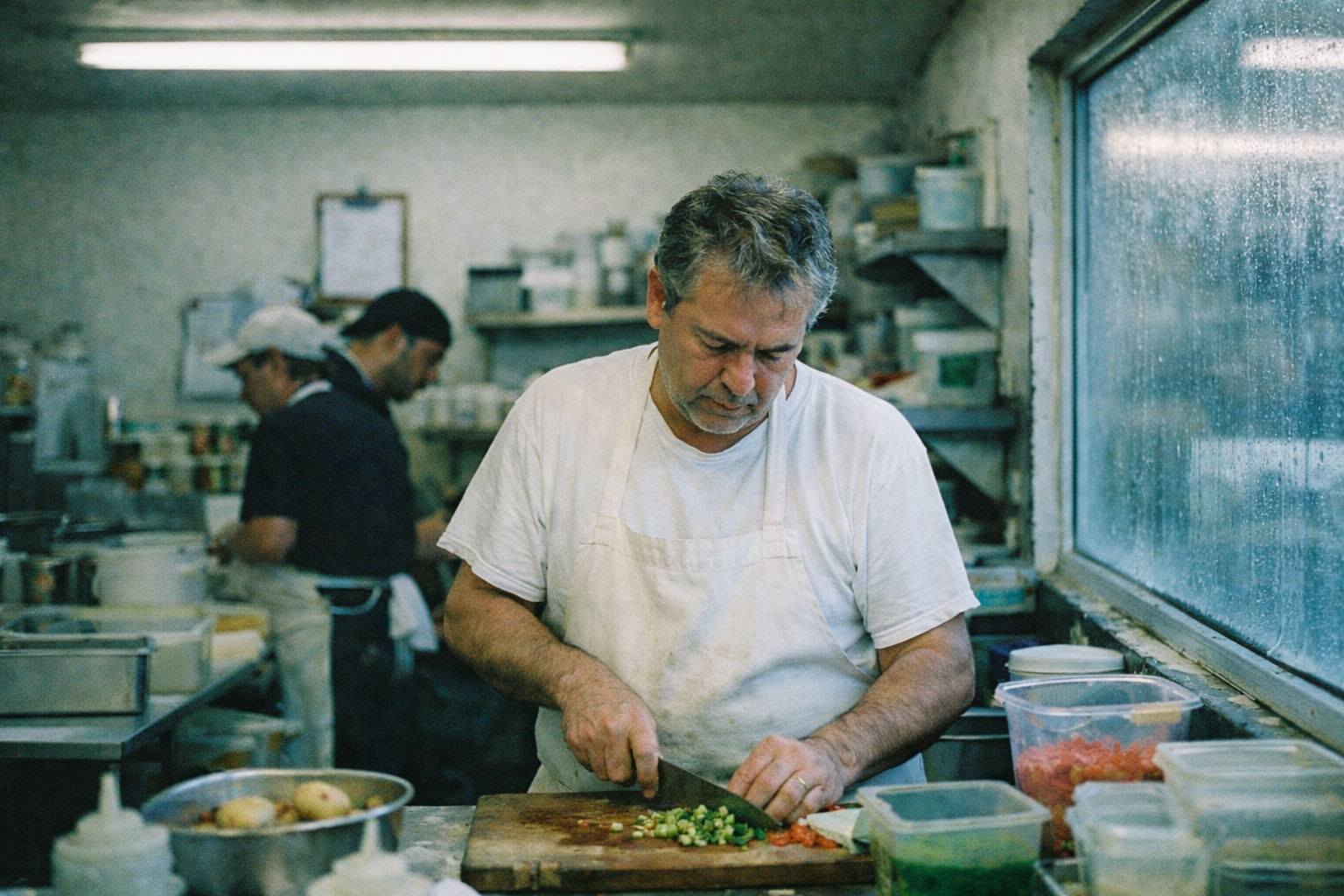
Growth Requires Humility: A Chef Who Never Stopped Being a Student
One of the most powerful experiences of my career happened when I volunteered at Pure Food and Wine in New York.
No paycheck. No title. No ego.
Just me, showing up, shutting up, and learning. I was dehydrating, sprouting, and working with techniques I had never touched.
An executive chef, back to being a prep cook. It was one of the best decisions I ever made.
A growth mindset for entrepreneurs means accepting that your title does not define your ceiling. The people who keep growing are the ones willing to look foolish while they learn.
Some of my greatest teachers had no formal training at all:
- Grandmothers in Italy making risotto for 70 years
- Winemakers walking their vineyards at dawn
- Chefs cooking paella over open fire in Spain
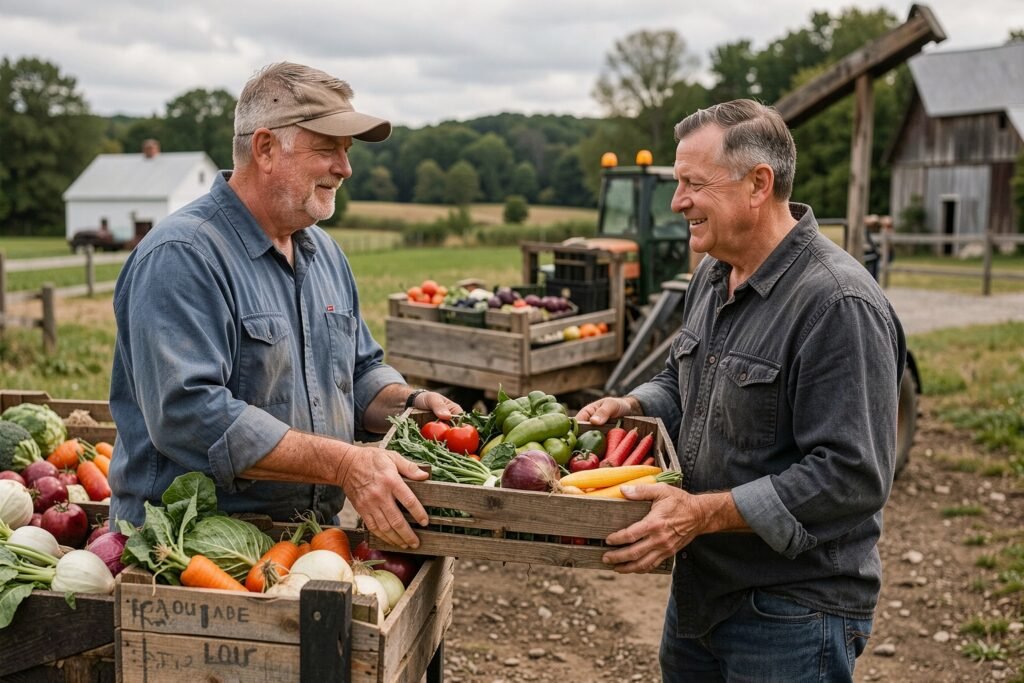
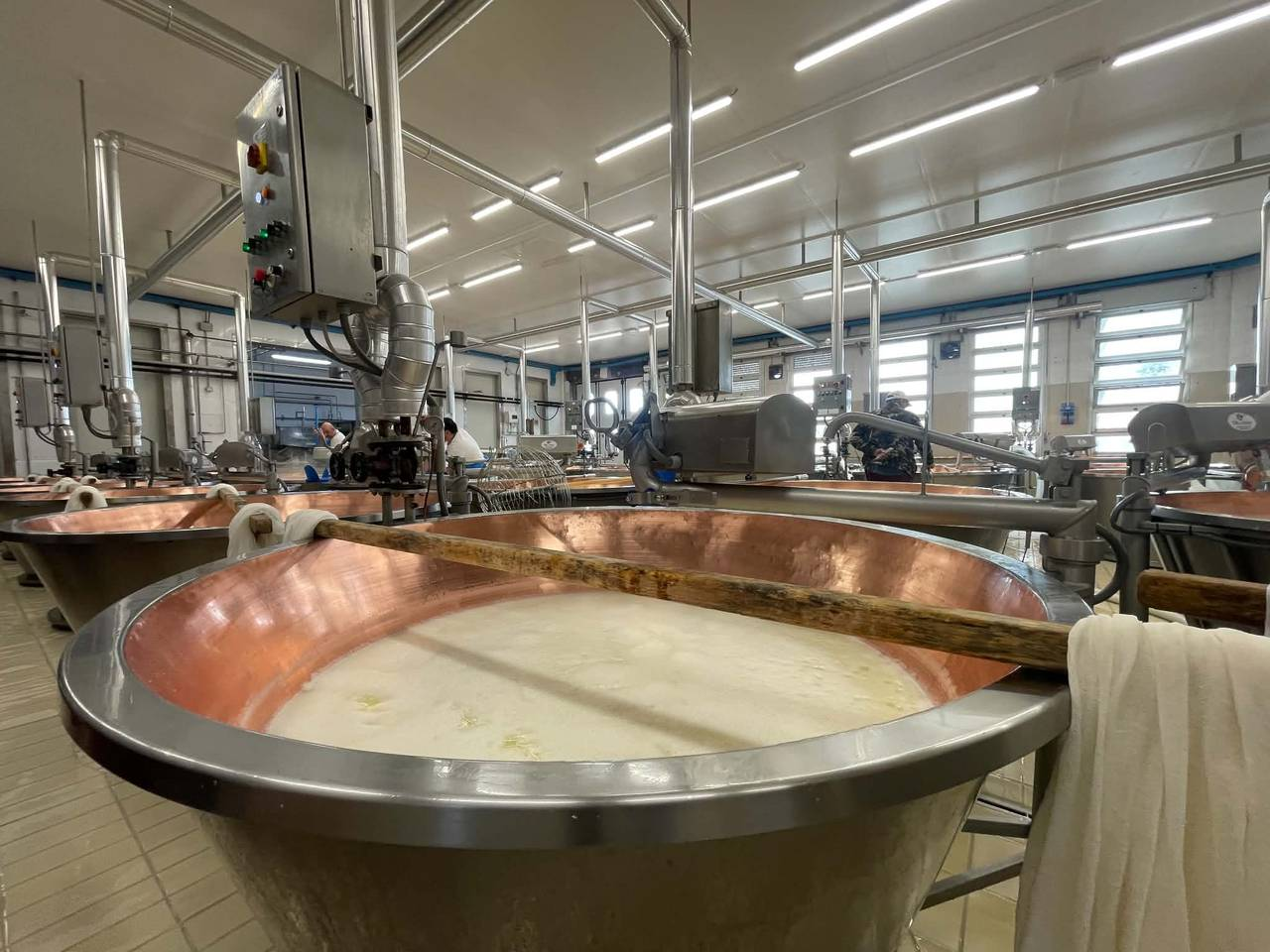
- Market vendors explaining their cheese and produce
I do not just observe. I ask questions. Excellence lives in the details. Those details come from people who have done the work for decades, not from textbooks.
How to Stay Relevant in Business: Never Stop Learning New Things
How to stay relevant in business comes down to one habit: keep learning things that scare you.
Through VIP Winery Vacations, I have built relationships around the world that most people will never access. Every trip is a classroom.
Right now, I am studying the food culture of Mexico. I am preparing to visit La Chinesca in Mexicali, where Chinese and Mexican cooking collide in ways most people have never seen.
I have scouts sending photos and sharing insights. When I arrive, I do not want to visit. I want to learn.
The same principle applies to technology. AI is changing marketing, communication, and business operations. I am all in.
But AI will not replace craft. It will not replace the feel of dough, the instinct of seasoning, or the energy of a dining room. AI is a tool. Mastery still belongs to humans.
Everyone wants to do something complex. I focus on simple. Simple is hard. Simple exposes everything. In my kitchen, I judge cooks on how well they execute the fundamentals. If you cannot do the basic things right, nothing else matters.
| Decade | What I Had to Learn | Why It Mattered |
|---|---|---|
| 1990s | Michelin kitchen technique, label reading, sourcing standards | Built my cooking foundation and food ethics |
| 2000s | Marketing, finance, web design, plumbing | Kept Aroma Thyme Bistro alive when cooking alone was not enough |
| 2010s | Social media, video, storytelling, content strategy | Stayed visible when the marketing playbook changed overnight |
| 2020s | Travel operations, AI tools, global food culture | Built VIP Winery Vacations and expanded into new markets |
Why You Should Never Stop Learning
This is not just about chefs. This is about anyone who wants to get better.
Why lifelong learning is important comes down to one fact: the world does not slow down for anyone. If you are not learning, you are falling behind. If you are not adapting, you are becoming invisible.
Curiosity is the advantage. Learning is the edge.
I am over 50 years old. I feel like I am just getting started.
If you want to see what this philosophy looks like on a plate, visit Aroma Thyme Bistro. If you want to experience it around the world, join a VIP Winery Vacations trip.
This is not about food. This is about growth. You should never stop learning.
What are you learning next?
Frequently Asked Questions
Why is lifelong learning important for business owners?
Industries change constantly. The skills that built your business five years ago may not keep it alive today. Learning helps you adapt to new tools, markets, and customer expectations before your competition does.
How do you build a growth mindset as an entrepreneur?
Start by accepting what you do not know. Volunteer for work below your title. Ask questions of people with more experience. Treat every failure as data, not an endpoint.
What self-taught business skills matter most for restaurant owners?
Marketing, basic web design, financial literacy, and systems thinking. Most restaurant failures come from gaps in business skills, not cooking ability.
How can business owners stay relevant as their industry changes?
Travel, study other industries, adopt new technology, and never assume your current skills are enough. The people who last are the ones who keep learning outside their comfort zone.