

Why you don’t need a 100-point scale to enjoy what’s in your glass
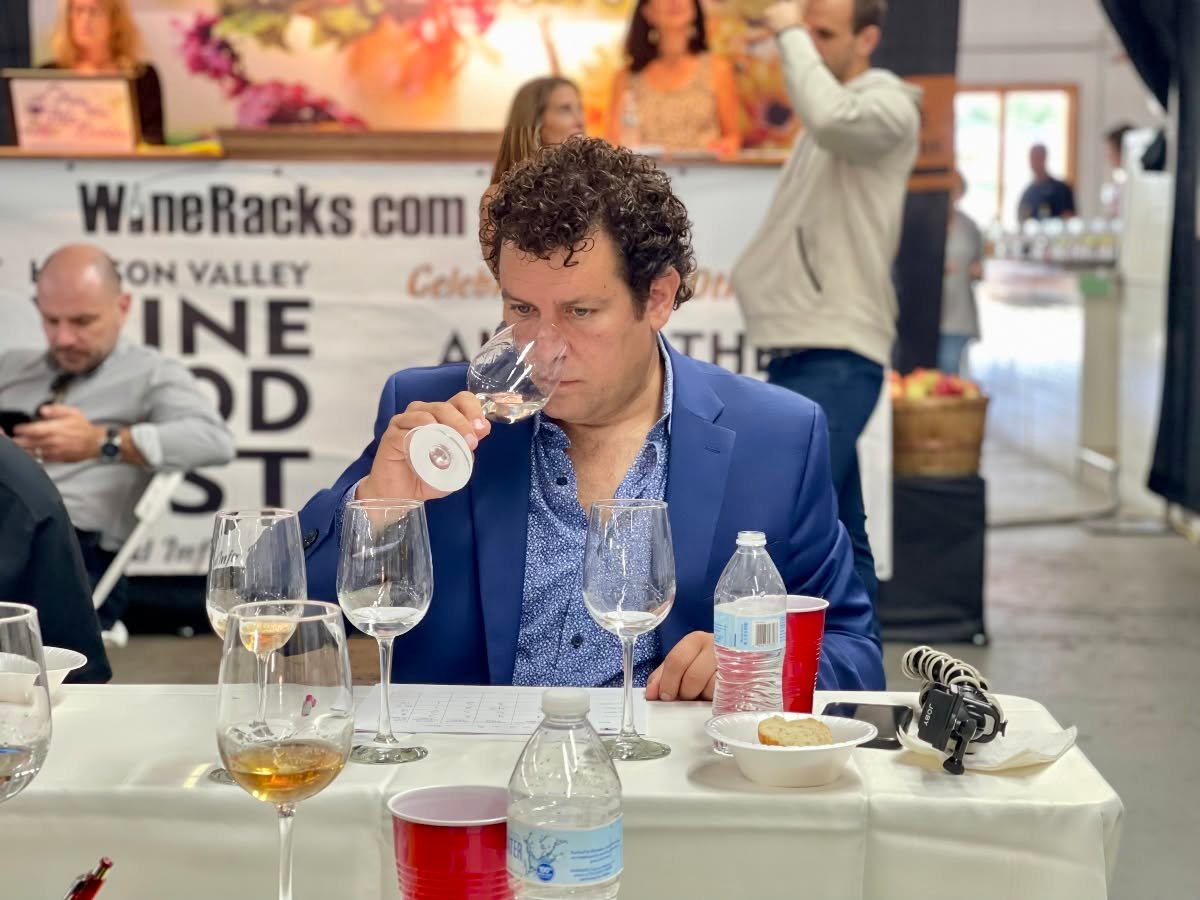
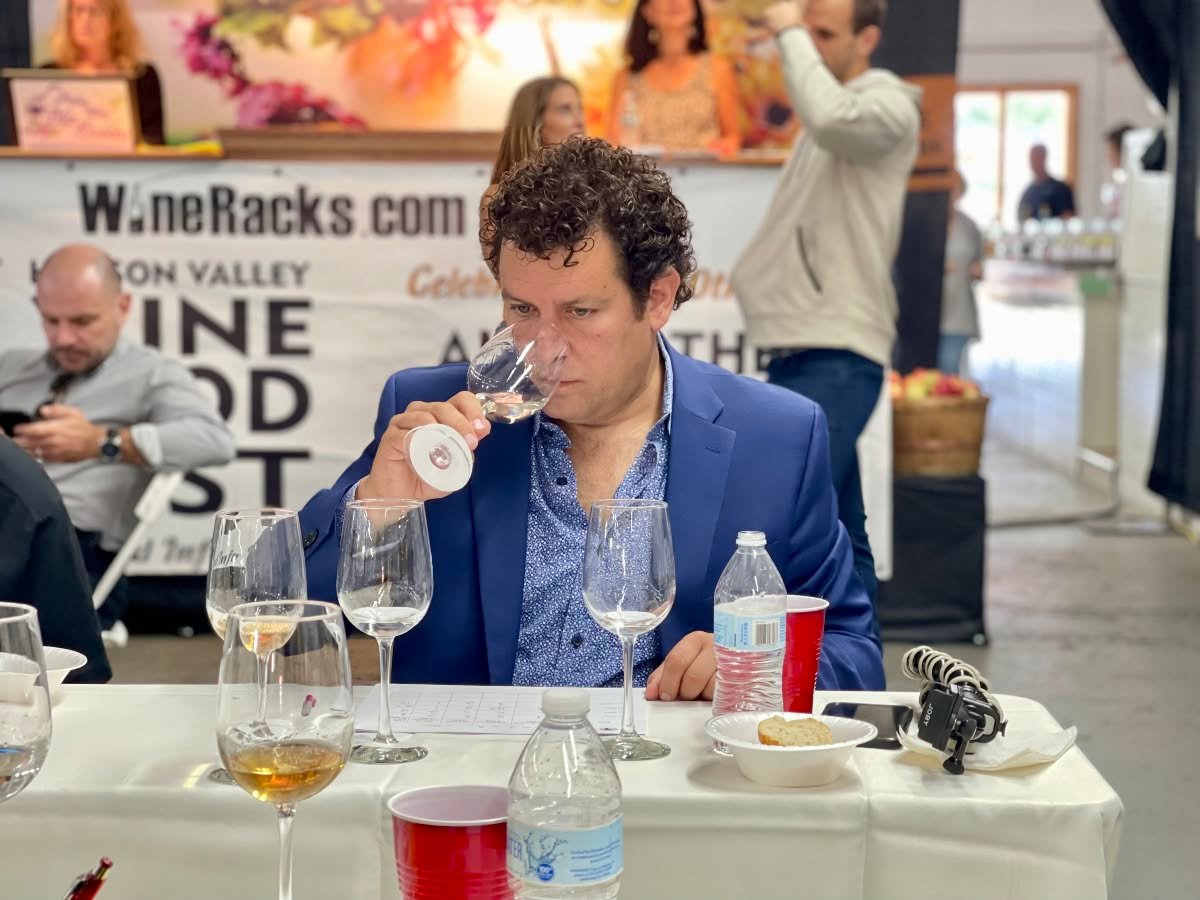
I’ve judged wine competitions for close to thirty years. Picture the room: a long table, rows of numbered glasses, and fifty or more wines to work through before dinner. Every wine gets pulled apart. We evaluate appearance, aroma, balance, structure, acidity, tannin, complexity, finish, and typicity. Then we turn all of that into scores, medals, and rankings.
Here’s the problem. Too many wine lovers think that’s how they’re supposed to drink wine, and I’m convinced that belief has kept more people from enjoying wine than anything else. The judge at the competition table and the person deciding what to pour with dinner are answering two different questions. The judge asks whether a wine deserves a medal. You only need to ask whether you’d pour a second glass.
This is a guide to how to taste wine the way I teach it to our guests: three points for smell, three for taste, three for finish. Nine points total, no vocabulary quiz, and no clipboard.
Why Does Wine Tasting Feel So Intimidating?
Somewhere along the way, wine picked up a reputation as an exam. People believe they need to tell a Burgundy Pinot Noir from a Sonoma one and understand limestone versus volcanic soils. They think they must know the winemaker’s philosophy before they’ve earned the right to enjoy a glass.
Those things genuinely matter, and they fascinate me. Jamie and I have visited more than 400 wineries across six countries, and we never stop learning from the families who grow the grapes and make the wine. But none of that knowledge means anything until you answer one question first: do you enjoy what’s in your glass?
The intimidation comes from two myths. The first is the vocabulary myth, the idea that you have to name black cherry, graphite, or forest floor before your opinion counts. The second is the score myth, the idea that a number from a stranger’s palate matters more than your own. Both have it backwards. Wine tasting for beginners should start with pleasure, and the studying is optional.
What Does a Wine Judge Actually Do Differently?
When I judge wine, I’m not hunting for my favorite. I’m evaluating whether a wine achieves what it’s supposed to achieve. Is it balanced, true to its variety, representative of its region, and technically sound next to the rest of its class? Personal preference gets left at the door. That’s how to judge wine professionally, and it’s serious, useful work.
It also has almost nothing to do with how you should drink wine at home, in a restaurant, or in a tasting room.
| At the judging table | At your table |
|---|---|
| Fifty or more wines in a day, evaluated blind | One or two bottles you actually get to enjoy |
| Formal scoring across aroma, balance, structure, and typicity | One question: would you drink it again? |
| Personal preference set aside | Personal preference is the entire point |
| The goal is a medal | The goal is a better dinner |
How to Taste Wine With the 3-3-3 Method
This is the exact method I teach guests on our winery vacations, and it works the very first time you try it. You score three things, from 1 to 3 points each: smell, taste, and finish. Nine possible points, and nothing to memorize.
Smell: 1 to 3 Points
Swirl the glass gently and put your nose right in it. You’re not trying to identify dried violets or crushed oyster shells. You’re asking whether the aroma is inviting and whether it pulls you back for another smell. If it’s pleasant but forgettable, give it a 1. If it’s interesting enough to make you pause, that’s a 2. If you can’t stop smelling it, that’s a 3. That’s the entire exercise.
Taste: 1 to 3 Points
Take a sip and let it sit for a moment before you swallow. Does it fill your mouth? Is there balance between the fruit and the acidity? Do you want another sip? If you’ve ever wondered why some wines feel savory and mouth-filling rather than simply fruity, that’s the same fifth taste I unpacked in my guide to umami. You don’t need to name any of it, though. If drinking it makes you happy, score it accordingly.
Finish: 1 to 3 Points
Here’s the step almost everyone skips. After you swallow, wait, and pay attention to what happens next. Does the flavor vanish immediately, or does it linger for twenty or thirty seconds? Wine professionals call that length, and Decanter has a good explanation of why a long finish usually signals concentration and balance. If the wine disappears like water, that’s a 1. If you’re still tasting it half a minute later, you’ve found something special.
| Step | The question you’re asking | 1 point | 3 points |
|---|---|---|---|
| Smell | Does the aroma draw me back? | Pleasant but forgettable | I can’t stop smelling it |
| Taste | Do I want another sip? | Perfectly drinkable | Genuinely delicious |
| Finish | Does the flavor linger? | Gone instantly | Still there thirty seconds later |
Add the three numbers together and you have your score out of nine. That simple wine tasting scorecard will tell you more about your relationship with a bottle than any professional rating ever will.
What Can Wine Scores Tell You, and What Can’t They?
The formal wine scoring system exists so professionals can compare hundreds of wines fairly. The 20-point Davis scale breaks a wine into components such as appearance, aroma, flavor, balance, and finish. The American Wine Society publishes a version of it if you’re curious about what judges are actually adding up. Many publications translate their evaluations onto a 100 point wine scale, which is where the famous 90-plus ratings on shelf tags come from.
A score can tell you that a wine is technically sound, true to its type, and respected by professionals. What it cannot tell you is whether you will enjoy drinking it. A 96-point wine is one professional’s answer to a question you never asked. If you open a celebrated bottle and it leaves you cold, you’re not wrong, and neither is the critic. You’re simply the one buying the bottle and drinking the wine, so your palate outranks the number on the tag.
How Do You Trust Your Palate at a Winery or Restaurant?
On almost every trip we host, one guest arrives treating wine tasting like a final exam. They’re nervous about pronouncing names, afraid of saying the wrong thing, convinced everyone else at the counter knows something they don’t. Meanwhile, another guest simply smiles, tastes, and enjoys every single winery. By the middle of the trip, the nervous guest usually has the aha moment. One of them put it perfectly: “Tasting wine is so much simpler than I thought. I’ve been overthinking it for years.” I’ve watched that same nervousness melt away in tasting rooms from the Hudson Valley to Lake Garda. I’ve written before about why some Italian wineries run their tastings so differently from the tourist-counter routine.
The trick is to shrink your note-taking down to a single line. Not fourteen fruits, not a paragraph about tannin. Just this: would I buy it again? Your palate has a better memory than you think, and when you taste a wine you genuinely love, you’ll recognize it months later without a spreadsheet. And if you taste peaches while the winemaker says apricots, it doesn’t matter in the slightest. You’re the one who has to drink it. If you eventually want to learn how to taste wine like a sommelier, that path exists too, but it starts in exactly the same place: paying honest attention to what’s in your glass.
How Do You Learn Wine Without Turning It Into Homework?
Take Pinot Noir. A Burgundy bottling can be dramatically different from one grown in California, an Oregon Pinot differs from New Zealand, and Germany produces yet another style. Altitude changes things. Climate, soil, oak, vintage, and the winemaker’s hand all change things. Those differences are some of the most fascinating rabbit holes in wine, and they’re worth exploring over a lifetime.
But explore them because you’re curious, not because you think you need permission to enjoy wine. Let one bottle raise one question, then chase that question. Maybe a tasting room pour gets you wondering what actually separates organic wine from wine made with organic grapes, so you read about it over a glass. That’s wine education that builds confidence instead of anxiety, one honest question at a time.
Frequently Asked Questions
Do I need to know wine terminology to enjoy wine?
No. Professional terminology is useful for communicating with other professionals, but enjoying wine only requires knowing what you like. The 3-3-3 method never asks you to name a single aroma.
What is the 20-point wine scoring system?
It’s a professional evaluation method, developed at UC Davis, that scores components like appearance, aroma, flavor, balance, and finish to produce a total out of 20. It was designed for judges and competitions, not for casual wine drinkers.
Is the 100 point wine scale important?
It can be helpful as one professional’s opinion, but it shouldn’t determine what you enjoy. A 99-point wine isn’t automatically the right wine for your palate, and an 85-point wine you love is a better buy for you than either.
How do I taste wine at a winery without feeling intimidated?
Use the 3-3-3 method and ignore everything else:
- Smell (1 to 3): Does the aroma draw you back for another smell?
- Taste (1 to 3): Do you enjoy drinking it, and do you want another sip?
- Finish (1 to 3): Does the flavor linger after you swallow?
What should I write in my wine tasting notes?
Keep it to one line. The answers that matter most are simple:
- Would I buy this again?
- Would I order another glass?
- Would I share this bottle with friends?
Those three answers are worth more than any attempt to sound like a sommelier.
Come Taste Wine the Way It Was Meant to Be
After thirty years of judging competitions and more than 400 winery visits around the world, the biggest lesson I’ve learned is that the best wine isn’t the highest-scoring one. It’s the one you’re excited to pour again. On every VIP Winery Vacations journey, Jamie and I help guests discover exactly that. We meet the families behind the bottles, walk the vineyards, and build the confidence to trust your own palate. I’ve written about what that kind of trip really feels like compared to standard wine tourism, and no scorecard can measure it.
So the next time you’re standing in a tasting room, forget trying to impress anyone. That’s how to taste wine on your own terms: swirl, smell, taste, and wait for the finish. Then ask yourself the only question that matters: would I buy this again? If the answer is yes, you’ve already learned the most important lesson about wine.