



Why is restaurant food so expensive? It’s a question I hear often. There’s a reason why some restaurant food is cheap. After more than two decades at Aroma Thyme Bistro, I can tell you that the difference isn’t always visible on the plate. When someone tells me my restaurant is more expensive than another restaurant, I have a simple response. “Find me a restaurant serving the same quality ingredients we do, and then let’s compare prices.”
Compare wild Alaskan salmon with farm-raised salmon. Then compare grass-fed beef with commodity beef. These are different products, so their prices tell only part of the story. When someone asks, “Why is eating out so expensive?” I tell them to look beyond the price. And here’s something most consumers don’t realize.
Sometimes the restaurant charging more is actually offering the better value. Let me explain why.
Why do two restaurants charge different prices for what looks like the same dish?
Because the dishes may only look the same. Two dishes may share the same name but use very different ingredients. The fish, beef, bread, cooking oil, butter, and vegetables all matter.
Why shopping solely by price can change the plate
I’ve spent decades in professional kitchens, and I know how restaurant purchasing works. Distributors often approach restaurant owners with the same pitch. “I can get you that cheaper.” Cheaper beef. Cheaper butter. Cheaper broccoli. Cheaper seafood.
Some software tools help restaurants compare distributor prices and find cheaper products. And plenty of restaurants use them. Every week, purchasing decisions can change based on who offers the lowest price. One distributor has cheaper ribeyes this week.
Another has cheaper brisket. Someone else offers a better price on strawberries or broccoli. So the restaurant switches. Next week, they might switch again.
Now, there’s nothing inherently wrong with negotiating better prices. Restaurants operate on thin margins, so careful buying matters. But there’s a big difference between finding a better price for the same product and buying a different product because it’s cheaper. That’s where quality and consistency can start to suffer. Consider butter.
Are you comparing the same butterfat percentage? The same producer? Grass-fed or conventional? The same flavor, performance, and sourcing standards? Or are you simply comparing the price per pound? Those details matter. And they matter even more with proteins, seafood, and produce.
Why Is Restaurant Food So Expensive? Consistency Has a Cost
Have you ever visited a restaurant and loved a dish, only to return a few weeks later and find that it tasted completely different? Sometimes the reason is simple. They’re not buying the same ingredients. The restaurant might have changed suppliers, switched brands, or purchased a lower-cost product.
A ribeye isn’t automatically the same as another ribeye. Different cattle breeds, feeding practices, aging methods, and specifications can produce dramatically different results. The same goes for seafood. And produce can vary enormously by farm, season, variety, and handling.
Restaurant food quality isn’t only about a single excellent dish. It’s also about serving the same quality next week. When purchasing decisions are driven primarily by price, consistency can become a moving target. Interestingly, large restaurant chains often understand the importance of consistency better than some independent restaurants. Many chains have products manufactured or sourced to specific standards, with dedicated distributor stock-keeping units, or SKUs. Their locations receive the same specified ingredients because consistency is part of their business model.
Now, that doesn’t mean their ingredients are necessarily better. It means they’ve established standards and built systems to maintain them. Independent restaurants should be doing the same thing. At Aroma Thyme, we have producers and products we’ve committed to.
If a farm’s prices rise beyond what we can reasonably absorb, we may change the menu or remove the dish. We don’t simply substitute a cheaper product and pretend nothing changed. Because the ingredient itself is part of the promise we’ve made to our guests.
My Ingredient Standards Go All the Way Down to the Salt
Restaurant ingredient quality begins with everyday choices. When I talk about ingredient standards, I’m not just talking about expensive steaks or wild seafood. I’m talking about everything. Even the salt. At Aroma Thyme Bistro, our everyday kitchen salt is Redmond Real Salt, mined in Utah.
I’ve used it for years. I believe in the product and know its origin. Could I purchase other salts for less money? Absolutely. There are salts available for a fraction of the price.
But I’ve made a deliberate decision about the salt we use. We also use specialty finishing salts when a dish calls for them, but Redmond Real Salt is our core kitchen salt. Why? Because I know where it comes from, I like the product, and it meets my standards.
That doesn’t mean every other salt is worse or unsafe. It means I’ve established a standard for my kitchen, and I’m sticking with it. And that philosophy carries through everything we purchase. The butter.
The cooking oils. The meat. The seafood. The vegetables.
The bread. Everything that goes onto a plate at Aroma Thyme has to meet my approval. It’s the same standard I use when feeding my own family. And if a guest wants to know what we’re using, I’m happy to show them.
I’ll show them the package. I’ll tell them where we bought it. I’ll explain why we chose it. That’s what transparency means to me.
Wild Salmon vs. Farmed Salmon: Understanding the Real Value
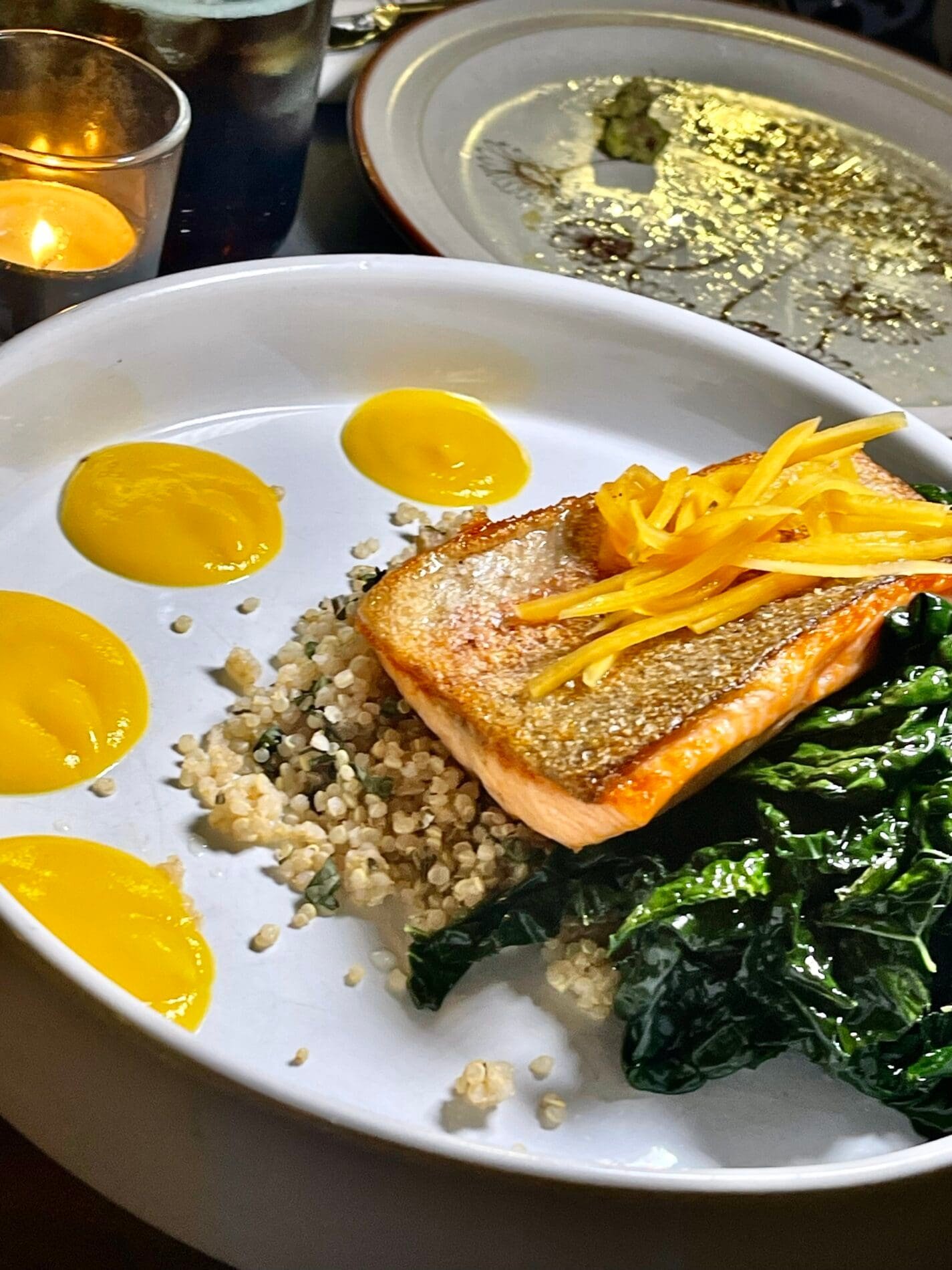
Here’s an example I often share. At Aroma Thyme, we’ve made the choice not to serve farmed salmon. We serve wild Alaskan salmon because that’s the sourcing standard we’ve chosen. Now, depending on the species, season, and market, wild salmon can cost substantially more than conventional farmed salmon.
Sometimes the wholesale difference is huge. But when you look at our menu, the price isn’t necessarily twice what you’d pay for farmed salmon at another restaurant. It might only be a few dollars more. So when someone tells me we’re expensive, I ask them a question.
“Do you want farmed salmon or wild salmon?” Because those aren’t the same product. And if you’re paying only a little more for the product you actually prefer, you’re getting better value for your money. That doesn’t mean every farmed salmon is poor quality or every wild salmon is superior in every respect.
There are differences among producers, species, and harvesting methods. But we have made our sourcing choice. And we’re transparent about it. Price tells you what you’re paying. Value tells you what you’re getting.
That’s the distinction consumers need to understand. If you’re wondering why restaurant food is so expensive, ask what you’re really buying. The fish on the plate is one place to start.
The First Thing I Do When I Sit Down at a Restaurant
Now I’m going to share something that might surprise you. When I sit down at a restaurant, one of the first things I do is flip over the plate. Yes, literally. I pick up the bread plate or whatever plate is sitting on the table and look underneath.
I’m looking for the manufacturer. Then I examine the flatware. Why? Because I’m curious about the quality of the equipment the restaurant has chosen.
Are they investing in durable, well-made plates and silverware? Or have they purchased the least expensive products available? Now, this isn’t a foolproof test. Some wonderful restaurants use low-cost tableware and invest in great ingredients, skilled employees, or other priorities.
But when I see a restaurant investing in quality all the way down to its plates and flatware, that tells me something about the operator’s attention to detail. Then I look at the sugar packets. Are they generic distributor-branded packets? Are they using a particular sugar producer?
Again, neither answer proves whether the restaurant is good or bad. But I’m building a picture. I’m looking at the small decisions because those decisions often reveal how the restaurant approaches the bigger ones. The little things tell a story. You just have to know how to read it.
Why Is Restaurant Food So Expensive? The Bread Test Reveals a Lot
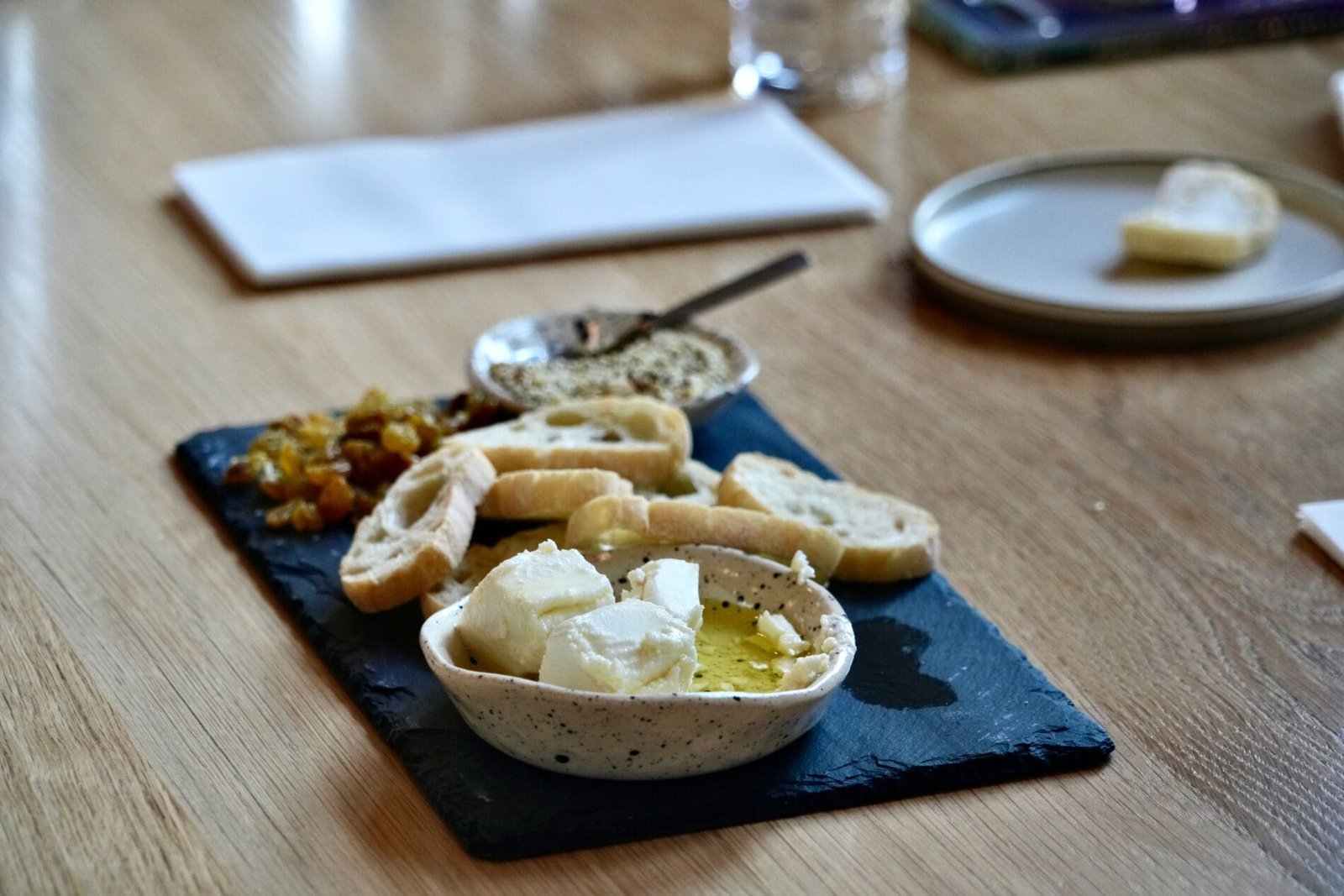
Then the bread arrives. And this is one of my favorite tests. Bread tells me a lot about a restaurant. Carefully made bread can taste very different from the cheapest mass-produced bread available through a distributor.
Some mass-produced breads contain enriched flour, potassium bromate where permitted, preservatives, dough conditioners, and other ingredients designed to support large-scale production. Now, I’m not saying every ingredient in commercially produced bread is inherently harmful. And I’m certainly not saying frozen bread is automatically bad. Some excellent artisan bakeries freeze bread to keep it fresh and make delivery easier.
But restaurants can also buy plenty of cheap, highly processed bread. And you can often recognize the difference through flavor, aroma, crust, texture, and overall quality. If a restaurant serves beautiful, thoughtfully sourced bread, I want to know more. If the bread tastes like the cheapest commodity product available, I start asking questions.
Bread is a basic part of the dining experience. When the kitchen puts care into it, I notice. When it doesn’t, I ask what other purchasing decisions deserve a closer look.
The Olive Oil Test: A Story I Still Can’t Believe
Here’s a true story from one of my restaurant experiences. I was dining at a restaurant where they proudly told me they made their own olive oil. That caught my attention. “You make your own olive oil?”
So I asked how they did it. Their explanation shocked me. They were buying already-cured olives and soaking them in low-cost canola oil. Afterward, they were using that infused oil as their house olive oil.
Let me explain something. Putting olives into canola oil does not turn canola oil into olive oil. It’s olive-infused canola oil. Those are completely different things.
And if you’re telling guests they’re receiving olive oil when they’re actually receiving canola oil infused with olives, that’s misleading. It made me question what else the restaurant might be misrepresenting. Now, infused oils can be wonderful culinary ingredients when they’re made and handled properly. But call them what they are.
If you’re serving a blended oil, tell people it’s a blend. If you’re serving extra virgin olive oil, it should actually be extra virgin olive oil. This is why transparency matters. And it’s why consumers shouldn’t be afraid to ask questions.
Farm-to-Table Should Mean More Than a Marketing Slogan
How many restaurants describe themselves as farm-to-table? How many say they serve local ingredients? How many use words like sustainable, natural, or responsibly sourced? Those words sound wonderful.
But I want to know what they actually mean. If a restaurant claims to serve local beef, which farm produces it? If the menu says grass-fed beef, where does it come from? If the salmon is wild, what species is it, and where was it caught?
I believe a menu should tell a story. I’ve written more about what an honest restaurant menu should reveal. Not necessarily the life history of every carrot, but enough detail to give the guest meaningful information. I’ve also written about why sourcing relationships matter more than miles. Instead of simply saying “local beef,” tell me the farm. Instead of saying “fresh salmon,” identify the species and origin.
Instead of relying on generic claims about sustainability, explain what you’re actually doing. A restaurant that’s genuinely proud of its sourcing should be willing to talk about it. And if the server doesn’t know the answer, that’s okay. I don’t expect every server to memorize every detail about every ingredient.
But I do expect them to be willing to find out. When I ask a question, I’m happy to wait while the server checks with the chef. That’s reasonable. What concerns me is when nobody can provide a clear answer.
When a restaurant can’t or won’t explain what it’s serving, that affects my trust.
The Salmon Question That Reveals a Lot
Here’s something else I frequently encounter. I’ll ask a restaurant where its wild salmon comes from. And sometimes I’ll receive an answer that doesn’t make sense. For example, somebody might tell me they’re serving wild Atlantic salmon as a routine commercial menu item.
That makes me ask more questions. Wild Atlantic salmon populations are heavily protected in the United States, and commercial harvesting of wild Atlantic salmon is prohibited in U.S. waters, as NOAA Fisheries explains. Most Atlantic salmon sold in American restaurants is farm-raised. There are limited wild Atlantic salmon fisheries in certain other countries, so the phrase itself isn’t universally impossible.
But if a restaurant claims to serve wild Atlantic salmon, I want to know the exact source. As a chef, I have the experience to recognize when something sounds wrong. Most consumers don’t. And that’s why education is so important.
I want guests to feel welcome asking informed questions about their food. A good restaurant should respond with care and clear answers.
Social Media Gives Consumers a Look Behind the Kitchen Door
Here’s something that didn’t exist when I started cooking professionally. Social media. Today, chefs post cooking videos, recipe demonstrations, and behind-the-scenes footage of their kitchens. And I think that’s fantastic.
It gives consumers an opportunity to see more than the finished plate. Look at the equipment. Look at the ingredients. Look at the oils being poured into pans.
Look at how the kitchen operates. Sometimes I’ll watch a cooking video and notice a chef using a low-cost aluminum pan. Personally, I prefer stainless steel and other cookware that meets my kitchen standards. But a low-cost aluminum pan doesn’t mean the food is bad. Cookware alone can’t tell you whether a restaurant follows good safety or sourcing practices.
It’s one detail among many. My point is that social media gives consumers another opportunity to ask questions and learn about the people preparing their food. A beautiful plate on Instagram is one thing. Understanding how that plate was produced is another.
What should diners ask a restaurant about ingredient sourcing before deciding whether a meal is good value?
Start with questions that matter to your meal. Here are four that any diner can ask:
- Where does the fish come from, and is it wild or farm-raised?
- Which cooking oil does the kitchen use?
- Who supplies the beef or vegetables?
- Is the bread made here or purchased from a bakery?
- Can the chef identify the fish species and where it was caught?
- Does the menu change when a preferred ingredient is unavailable?
A thoughtful answer is more informative than a slogan.
Be curious, not confrontational
Here’s something I wish more consumers understood. You have every right to ask questions about the food you’re purchasing. Think about buying a car. You wouldn’t walk into a dealership, hand over your money, and refuse to ask about the vehicle.
You’d ask about its features. Its performance. Its reliability. What makes it different from another model?
And you’d expect someone there to explain those differences. Your restaurant server should guide you through the menu and explain the options. That’s part of helping a guest make a good choice.
So ask questions. What oil does the kitchen use? Where does the beef come from? Is the salmon wild or farm-raised?
Who makes the bread? What farm supplies the vegetables? You don’t have to interrogate your server. Be respectful. Be curious. Give them an opportunity to find out if they don’t know.
But don’t be embarrassed about wanting to understand what you’re eating. Transparency shouldn’t make a restaurant uncomfortable. It should make the restaurant proud.
Does More Expensive Always Mean Better?
Absolutely not. If you ask, Is expensive restaurant food worth it? my answer is simple: judge what you’re getting. I’ve eaten at expensive restaurants that served disappointing food. I’ve also eaten at modest restaurants where the quality, care, and integrity were exceptional. A high menu price doesn’t guarantee better ingredients. Even phrases such as clean eating don’t prove what’s actually on the plate.
Beautiful tableware doesn’t guarantee a talented chef. A farm-to-table slogan doesn’t guarantee meaningful sourcing. And a low-cost restaurant isn’t automatically cutting corners. That’s why I don’t judge restaurants on price alone. The USDA’s Food Expenditure Series tracks spending on food away from home, but that national data cannot tell you whether an individual kitchen buys better ingredients.
I look for evidence: specific sourcing information, consistent ingredients, and knowledgeable employees. I want clear answers and care in the kitchen. Ultimately, I judge the quality of what’s on the plate. Those things matter far more than a restaurant’s marketing.
Real Food Isn’t Expensive. Cheap Food Often Leaves Something Out.
When someone asks, Why does good food cost more? I understand the concern. But we need to look at the bigger picture. The price of food reflects a long series of decisions. How it was grown.
How animals were raised. How workers were treated. How ingredients were processed. How long products are designed to remain on shelves.
What shortcuts were taken or avoided? Those factors don’t always determine the price in a simple way. A higher price isn’t proof of ethical production, and a lower price isn’t proof of poor practices.
But they are questions worth asking. I believe real food should reflect the actual cost of producing food responsibly, rather than relying on unnecessary fillers, cheaper substitutes, or practices that compromise the standards we value.
At Aroma Thyme, I scrutinize what we purchase. Everything is approved by me. Everything has to meet the standards I’ve established. And everything is something I would be comfortable feeding my own family.
That’s not a marketing slogan. That’s how I run my kitchen. After more than two decades, I’m still committed to doing it better. And when somebody tells me they can find a cheaper restaurant, I have one response.
Find me a restaurant serving the same ingredients, with the same sourcing standards, and then let’s compare prices. Because there’s a reason why some food is cheap. And there’s also a reason why quality food is worth paying for. The question isn’t simply how much dinner costs.
The question is: What are you actually getting for your money? This is why I encourage guests to compare restaurant food quality, not just menu prices.
Chef Marcus Guiliano is the chef-owner of Aroma Thyme Bistro in Ellenville, New York. For more than two decades, Marcus has encouraged ingredient transparency, traceable food sourcing, and helping diners make informed choices.