



Eating out healthy is possible. But the phrase needs a little honesty. A restaurant meal is not healthier simply because a chef cooked it, and a home-cooked dinner is not automatically nutritious because it came from your kitchen. What matters is what goes on the plate, how it was prepared, how much you eat, and what your own needs are.
I’ve spent my career around restaurant kitchens and ingredient sourcing, and one lesson keeps coming back: the name of a dish rarely tells its whole story. A plate of vegetables can arrive swimming in butter. A modest-looking meal can contain beans, whole grains, good produce, and a sensible portion. You cannot judge either from the words “restaurant” or “homemade” alone.
Can eating at a restaurant ever be healthier than cooking at home?
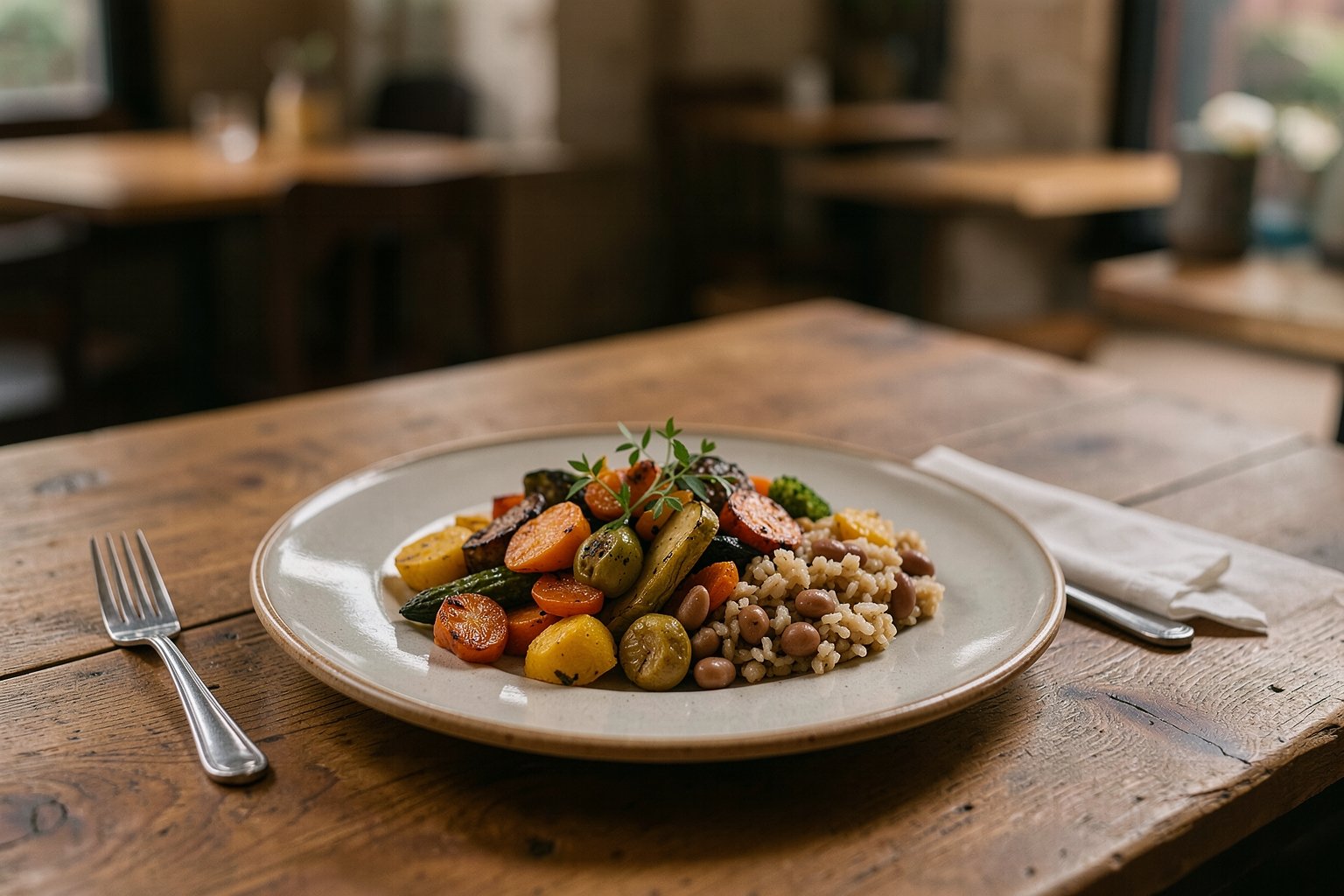
Yes, sometimes. If one meal has a generous serving of vegetables, beans or whole grains, thoughtfully prepared protein, and a portion that suits you, it may be a better fit than a home dinner built mostly around refined starch, a heavy sauce, and few vegetables. Reverse those two plates, and the home meal could easily be the better choice. The address where you eat does not decide the outcome.
That is a comparison between two actual meals, not a claim about restaurants as a group. We also have to account for more than a single nutrient. One plate could have more vegetables but much more sodium. Another might be lower in saturated fat yet less filling because it lacks fiber. Eating well is a pattern of choices over time, not a competition to declare one dinner perfect.
Restaurant kitchens can offer something useful: access to a wider mix of ingredients, techniques, and dishes than some people prepare on a busy night. That is an opportunity, not a nutritional guarantee. The value depends on whether the restaurant uses that opportunity to make the food better for the diner, not simply more elaborate.
What the research says about restaurant meals and home cooking
The broad evidence does not support the idea that eating out is usually healthier. The USDA Economic Research Service’s comparison of food sources found that, in 2017–2018 data, food from restaurants and fast-food establishments was generally higher in saturated fat, sodium, and refined grains, and lower in several underconsumed foods and nutrients, compared with food eaten at home.
The picture was not identical for every food group. The USDA also found restaurant food was denser in vegetables and certain protein foods and lower in added sugars than food at home in those data. That matters because it keeps us from oversimplifying the story. Still, the researchers’ overall conclusion favored the dietary quality of food chosen for home consumption on several important measures.
Those findings describe population averages from historical dietary surveys. They cannot tell you the sodium content of tonight’s entrée, how a particular chef prepares a dish, or whether your own home dinner is better than the restaurant option in front of you. If we are going to argue that a restaurant can sometimes help someone eat better, we have to stay within that narrower, more useful claim.
For me, this distinction is the heart of food honesty: acknowledge what the data show, then give people a practical way to judge the meal they actually have.
How can you tell whether a restaurant serves healthier meals?
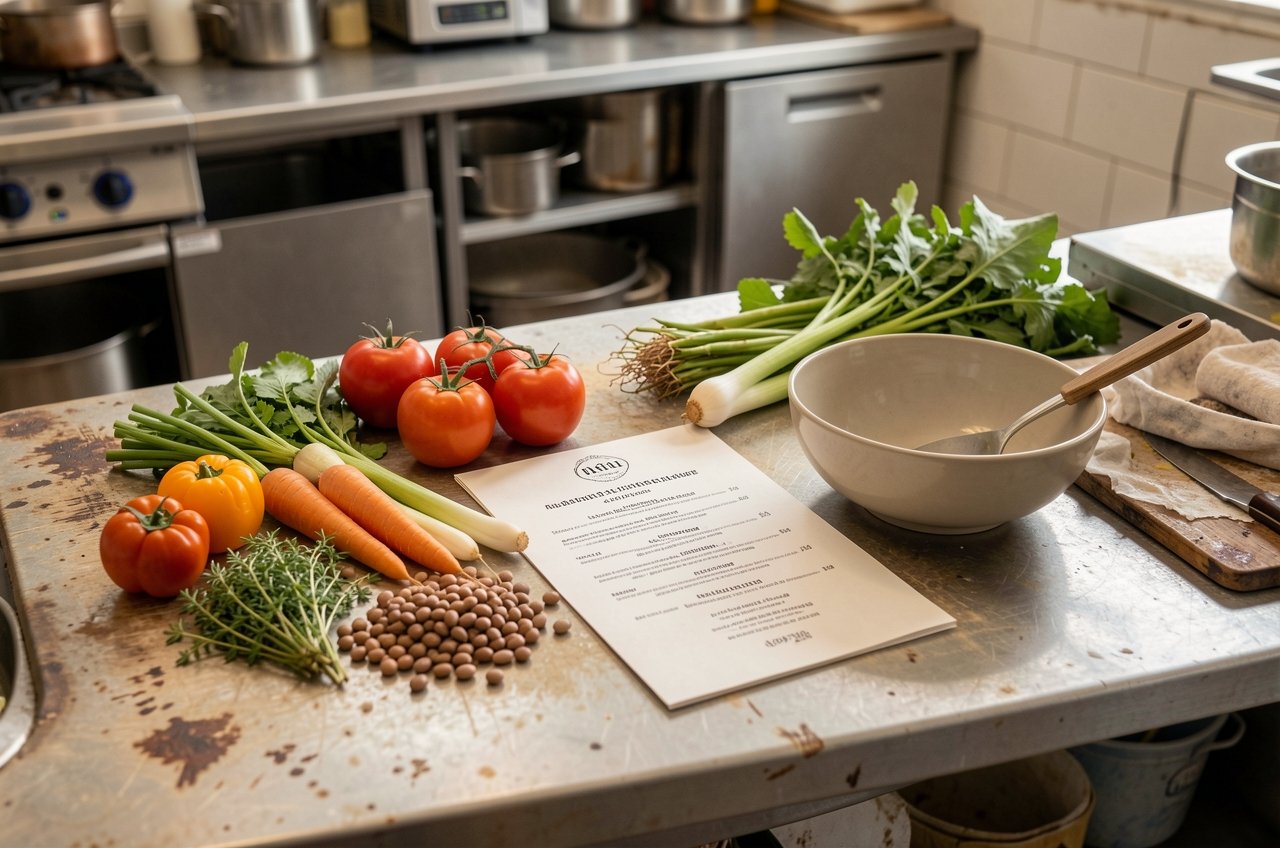
Look for clear ingredients, cooking methods, balanced options, reasonable portion choices, and staff who can explain what is in a dish. A restaurant does not need a menu full of wellness buzzwords to offer useful options. It needs to give you enough information to make an informed decision.
Start with the menu. Does it tell you whether a dish is roasted, grilled, braised, fried, or served in a cream sauce? Are vegetables and beans treated as real parts of the meal instead of decorative extras? Can you request a different side or have a sauce served separately? When dietary needs require specific information, can staff explain ingredients or check with the kitchen?
The American Heart Association’s advice on dining out recommends checking menus in advance, asking about preparation, adding fruits or vegetables, requesting sauces on the side, and being mindful of large portions. Those are practical questions almost anyone can use, regardless of the restaurant’s branding.
A menu that names the farm but hides the preparation method tells only half the story. In my piece on what an honest restaurant menu really looks like, the larger point is transparency: a guest should not need to guess what a restaurant means. Nutrition decisions deserve the same respect.
Six details that change the nutritional picture
1. What the plate is made of
Vegetables, fruits, beans, lentils, whole grains, nuts, and suitable protein foods can contribute different nutrients and fiber. Their presence matters more than whether a menu calls the dish “clean.” A bowl of refined pasta with a token herb garnish and a bowl that includes vegetables, beans, and whole grains are not equivalent just because both are described as fresh.
Do not confuse an ingredient’s source with its nutritional role. Locally grown potatoes are still potatoes; imported beans can still be useful foods. The real question is whether the meal offers the mix your body needs.
2. How those ingredients are cooked
A vegetable can be steamed, roasted with some oil, deep-fried, or covered in a rich sauce. Each preparation changes the result. Ask about frying, breading, butter, cream, and the amount of oil used where those details matter for your goals. There is no need to treat cooking fat as the enemy; it is simply part of the dish that deserves to be understood.
Restaurant purchasing also matters. My article on butter-flavored oil in professional kitchens explains why something described casually as “buttery” may not be actual butter. Knowing what a kitchen uses is more informative than judging a menu by its adjectives.
3. What is added before the plate reaches you
Sodium, sweet glazes, dressings, marinades, and sauces can make a substantial difference. Some are integral to a dish; others can be adjusted. A useful question is whether a sauce can come on the side or whether a preparation can be changed without ruining the meal.
Do not invent a salt or sugar figure if the restaurant does not provide one. If nutritional values are posted, use them as a starting point. If they are not, ask what is prepared from scratch and which ingredients are added during cooking.
4. Whether the portion suits the person eating it
A restaurant can serve thoughtfully prepared food in a portion far larger than one person wants at that sitting. The reverse can happen at home: you can cook a balanced recipe and then serve more than you need. Portion size is not a moral test, and it is not identical for every adult.
Think about appetite, activity, the rest of your day, and any individualized guidance you follow. Sharing an entrée, ordering a smaller portion, or taking some home may make sense. There is no prize for finishing a plate because a restaurant served it that way.
5. How much flexibility the kitchen gives you
One of the genuine advantages of a good restaurant is choice. You may be able to add vegetables, swap a side, request a different preparation, or combine smaller dishes. Those options can help a guest build a meal that fits their needs.
But flexibility is only useful when the kitchen can explain it honestly. A substitution may change flavor, price, allergens, or preparation time. Ask rather than assuming every request can be accommodated safely.
6. What is right for your dietary needs
There is no single healthy plate that works for everyone. Allergies, intolerances, medical nutrition requirements, preferences, and access all change which choices are appropriate. Someone managing a medically restricted diet may need ingredient details that a general menu cannot supply.
When a requirement is safety-critical, speak with staff about ingredients and cross-contact procedures rather than treating a “healthy” symbol as a promise. For medical nutrition advice, rely on your qualified health professional; a chef’s experience is not a substitute for clinical care.
Eating Out Healthy: Five Questions Worth Asking Before You Order
You do not need to interrogate a server or turn dinner into a nutrition lecture. A few specific, respectful questions often tell you far more than a menu full of branding language:
- How is this dish prepared? Is the main ingredient roasted, grilled, steamed, sautéed, or fried, and what is used in that preparation?
- Which sauces, dressings, or toppings are already added? Can they be served separately if the kitchen offers that option?
- Can I add vegetables, beans, or a whole-grain side? Ask what is actually available rather than assuming an advertised substitution.
- Is there a smaller portion or a practical way to share? Find out what works with that dish and with your own appetite.
- Can you confirm the ingredients relevant to my allergy or dietary requirement? Ask staff to check with the kitchen when necessary, including possible cross-contact.
The response matters as much as the question. A confident answer should be specific, and an honest “let me check” is better than an invented one. If a staff member cannot answer immediately, that alone does not make the restaurant bad. What matters is whether the business takes the question seriously.
These are the kinds of eating out healthy tips that travel well: they work in an independent bistro, a family restaurant, or a place you have never visited before. You are learning how to eat healthy at restaurants through actual decisions, not a list of approved-sounding restaurant names.
Restaurant versus home: a practical plate comparison
Imagine two completely hypothetical dinners. At home, you could heat a large serving of refined pasta with a salty bottled sauce and little else. At a restaurant, you could choose a meal of vegetables, beans, whole grains, and simply prepared protein. In that case, the restaurant option may offer a more varied mix of foods.
Now change the example. Your home meal could include those vegetables and whole grains, while the restaurant entrée arrives deep-fried with a heavy sauce and an oversized portion. The comparison flips. Neither hypothetical example is a laboratory analysis, and no calorie or nutrient numbers are implied.
| What to compare | A home-cooked meal | A restaurant meal | The useful question |
|---|---|---|---|
| Vegetables and fiber | Depends on what you cook and serve | Depends on what is offered and ordered | Where are the vegetables, beans, or whole grains? |
| Preparation | You may control fats, salt, and technique | You may need to ask what the kitchen uses | How was this prepared? |
| Sauces and additions | You can measure or modify them | They may already be mixed into the dish | Can ingredients or sauces be clarified or adjusted? |
| Portions | You decide what to put on the plate | The default serving may be larger | Does the serving fit your needs? |
| Allergens and restrictions | You can check your own ingredients | Staff must confirm ingredients and procedures | Is this actually suitable and safe for you? |
| Transparency | You can see the package or recipe | You rely on accurate menu and staff information | Can the ingredients and method be explained? |
This is the information that helps you compare two meals fairly. It is not a scoring system that automatically crowns the restaurant or the home kitchen.
Farm-to-table is a sourcing story, not a health guarantee
Farm-to-table relationships can matter a great deal. They may tell you something about how a restaurant works with farmers, how it buys ingredients, or how accountable it is to producers. But a local carrot served with a very salty glaze does not become low-sodium because the farm is nearby. Similarly, an organic ingredient is not a complete nutrition label.
At Aroma Thyme Bistro, the stated commitment to farm relationships and ingredient transparency reflects the way the restaurant describes its sourcing philosophy. That is useful context for asking better questions; it is not independent evidence that every dish is nutritionally better than food prepared at home.
I have written about how to spot restaurant greenwashing because a claim should be something a guest can examine, not just a mood created by menu language. The same principle applies to health claims. “Fresh,” “natural,” “light,” and “farm-to-table” are starting points for questions, not conclusive answers.
Likewise, paying farmers fairly can be part of operating an ethical restaurant, but good purchasing ethics and the nutritional composition of a finished plate are separate questions. A serious restaurant can care about both without pretending they mean the same thing.
The better choice is the one you can actually understand
Eating out healthy should not mean hunting for a restaurant that promises perfection. It means knowing enough to make a meal choice that works for you. Some days, that will be an excellent dinner at home. Other days, a well-chosen restaurant meal may be a useful option, especially when it gives you ingredients, variety, or preparation choices you would not otherwise have.
The responsible answer to the headline is not “restaurants are healthier.” They are not, on average, according to the USDA evidence. It is that some restaurant meals can be better choices than some home meals, and that meaningful comparison starts with the actual plate.
The next time you sit down with a menu, ask one better question about the ingredients or preparation. Look beyond the label, consider your portion, and choose what fits your needs. That is a more practical way to eat well than arguing over whether a meal was cooked at home or in a restaurant.