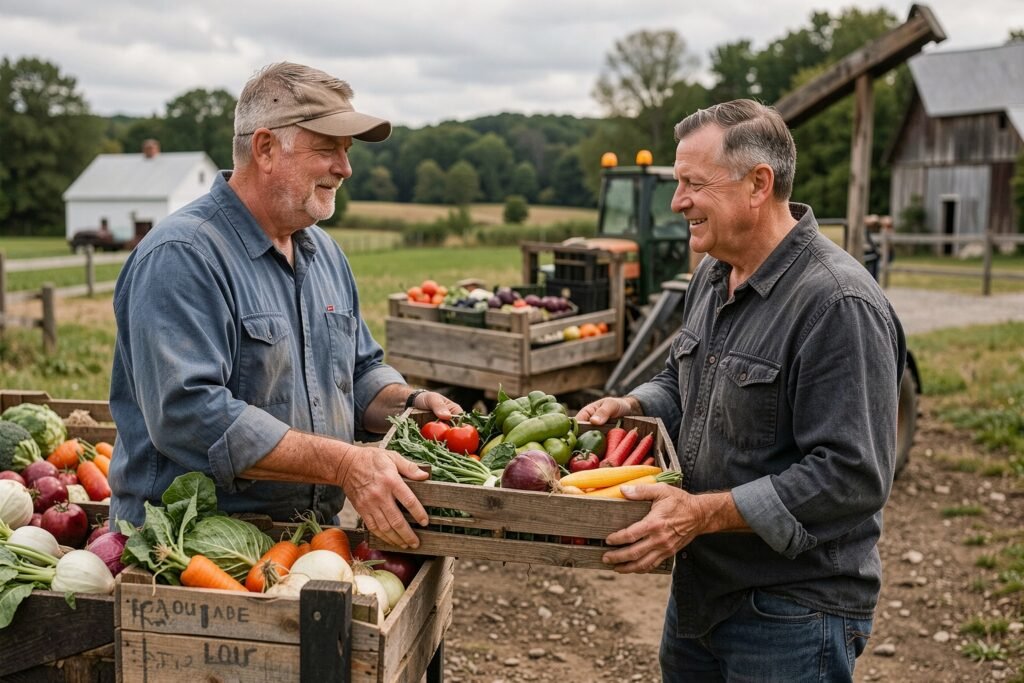





A restaurant can use words like local, sustainable, farm-to-table, organic, and eco-friendly in seconds. The harder part is proving what those words mean in the real operation. For guests interested in ethical dining, learning how to spot greenwashing starts with one rule: language is easy; proof is harder.
That is the test I use after more than two decades of running Aroma Thyme Bistro. I ask suppliers where food actually comes from. Real sustainability gets more specific when you ask a reasonable follow-up question. Greenwashing usually gets more vague.
You do not need to audit a restaurant before dinner. Start with the claim that catches your attention. Ask what it means, what proof sits behind it, and whether one green initiative is being used to imply something much bigger.
How can I tell if a restaurant is greenwashing?
A practical way to learn how to spot greenwashing is to ask whether the claim becomes clearer after one follow-up question. Restaurant greenwashing often stays vague. Stronger claims name the producer, origin, production method, certification, measurable practice, or operating standard behind the marketing.
The FTC’s Green Guides are useful even though they are not a restaurant certification program. The guidance cautions marketers against broad, unqualified environmental-benefit claims such as “green” or “eco-friendly.” It recommends clear, specific qualifications. For diners, the rule is simple: do not judge a claim by how green it sounds. Judge it by what the restaurant can explain.
This is broader than an honest restaurant menu. A menu is one place to look for proof. The same test should also reach the staff, purchasing decisions, certifications, waste practices, utilities, and the rest of the operation.
7 restaurant greenwashing red flags guests can spot
These seven red flags show how to spot greenwashing without turning dinner into an investigation.
1. Big environmental words come with tiny explanations
“Sustainable,” “earth-friendly,” and “conscious” can describe real practices, but none proves one by itself. Ask, “What specifically makes this sustainable?” An answer might identify a farm, fishery, catch method, composting program, certification, energy project, purchasing standard, or other practice. If the reply only repeats the adjective, you still do not have proof.
2. Nobody can explain where a featured ingredient came from
If a restaurant makes sourcing part of its identity, basic sourcing knowledge should exist somewhere in the operation. If the salmon is described as wild, ask where it was caught. If vegetables are promoted as local, ask which farm supplied them. If beef is described as grass-fed, ask who the producer is.
The server does not need a biography of every farmer. Food sourcing transparency means the claim should have a traceable answer.
That is why I think local food sourcing is about relationships, not just mileage. When a restaurant knows the people behind its ingredients, the answer usually gets clearer, not fuzzier.
3. One good initiative is used to describe the whole business
Composting is good. Eliminating a disposable item can be good. Buying one local ingredient can be good. The problem is scope. A restaurant should be able to say, “We compost kitchen scraps,” without implying, “Our whole operation is environmentally sustainable.”
The FTC’s guidance makes a similar distinction. A specific benefit should not be presented in a way that creates an unsupported impression of broad environmental superiority. A small improvement can be worth celebrating. It should not carry more meaning than the evidence supports.
4. “Local” never comes with a producer, place, or season
“Local” matters because guests connect it with farms, community, freshness, and shorter supply chains, but the word is often left undefined. Ask which farm or producer supplied the ingredient. Ask what town or region it came from. Ask which ingredients are actually local and whether sourcing changes with the season.
That is what farm-to-table transparency should look like: a claim that leads to a producer, place, or season.
A restaurant does not need coffee, olive oil, spices, seafood, and every bottle of wine to come from the same county. Honest sourcing can include ingredients from far away. What matters is whether the restaurant describes that reality accurately.
5. “Organic” is used as a mood instead of a specific claim
Organic is not automatically the same thing as local, natural, regenerative, pesticide-free, or sustainable. There is also an important restaurant nuance. Under 7 CFR §205.101, certain retail establishments can qualify for exemptions from organic certification. That means “Is this restaurant USDA-certified?” is not a complete consumer test.
A better question is “What exactly is organic here?” Ask whether the claim applies to one ingredient, the produce, a packaged product, a supplier, or something broader. The goal is to understand the scope of the claim instead of assuming the whole dish or restaurant carries the same standard.
That kind of label literacy is also central to what clean eating actually means. Definitions matter because vague health or sourcing language can create impressions the ingredient list does not support.
6. A certification badge is visible, but the certifier is not
A leaf icon is not automatically third-party verification, and neither is a green badge. If a restaurant says it is certified, look for the organization behind the certification and what the standard measures. A real restaurant certification should give you a named standard to check.
For example, the Green Restaurant Association’s certification standards cover eight areas. They include energy, water, waste, reusables and disposables, chemicals and pollution, food, building and furnishing, and education and transparency. A named certification gives you something to examine. A symbol with no identifiable standard tells you much less.
7. The sustainability story stops at the plate
Food sourcing matters, but a restaurant is an operating system. If a business describes itself as environmentally sustainable, look beyond the menu. Ask how it handles food waste. Ask whether water and energy use are part of the plan. Ask how disposables and cleaning chemicals are managed. Staff should also be able to explain the practices without relying on a slogan.
A restaurant does not need a perfect answer to every question. It should be able to distinguish what it is doing now from what it still wants to improve.
What questions should I ask a restaurant about sustainability claims?
Ask questions that turn the claim into checkable details. You do not need all five every time you eat out. Choose the one that matches the claim being made.
- Which farm or producer does this come from?
- Where was this seafood caught or raised, and how?
- What does “organic” refer to here?
- Who certified this claim, and what did they evaluate?
- What does the restaurant do beyond sourcing?
The goal is not to interrogate the server. It is to understand the claim well enough to decide whether you trust it.

What does credible restaurant sustainability proof look like?
The best proof is usually specific. Names, methods, boundaries, and evidence are easier to evaluate than a broad adjective.
| Marketing claim | Stronger proof | Useful guest question |
|---|---|---|
| “Local ingredients” | Named farm, producer, region, or seasonal sourcing note | Which farm supplied this? |
| “Sustainable seafood” | Species, origin, catch or production method, and sourcing standard | Where was it caught or raised, and how? |
| “Organic” | Clear identification of the ingredient or product the claim applies to | What exactly is organic here? |
| “Certified green” | Named certifier and identifiable standard | Who certified the restaurant, and what did they measure? |
| “Eco-friendly restaurant” | Specific practices across relevant parts of the operation | What are the main environmental practices you track? |
What I look for at Aroma Thyme Bistro
At Aroma Thyme, transparency has never meant pretending every choice is perfect. It means being willing to explain the choice. When I evaluate a supplier, I ask who produced the food and how it was raised or caught. I also want to know what standard sits behind the claim and whether the story survives direct questions.
That same habit is useful for guests. If a sourcing claim is real, the conversation usually gets more interesting as you ask questions. You hear about the farm, the season, the catch method, the producer, or why the restaurant made one choice instead of another. If the claim is only marketing, the conversation often circles back to the same word: “sustainable,” “natural,” or “local.”
Specificity is not proof of perfection. It is proof that there is something concrete to examine.
How to spot greenwashing: a five-part guest test
Before you give a restaurant’s sustainability language much weight, run it through five simple tests:
- Specific: Does the claim name a producer, place, method, standard, or measurable practice?
- Answerable: Can someone explain it without repeating the marketing phrase?
- Verifiable: Is there a supplier, standard, certifier, document, or other source behind it?
- Proportional: Is one small initiative being described honestly, or used to imply the whole business is green?
- Consistent: Does the sustainability story show up in more than one menu item, badge, or social post?
A restaurant does not have to pass every test perfectly to be worth supporting. The framework helps you separate transparent progress from an environmental identity built mostly from language.
Sustainable restaurants do not need to be perfect. They need to be honest.
Restaurants make trade-offs every day. Seasonality changes and suppliers change. Equipment breaks. A small independent restaurant may not have a sustainability department or a formal impact report. That is not the standard I would use as a guest.
I would ask for honesty about what is being claimed. Name the farm when you know it. Explain the catch method when seafood is part of the story. Say which ingredient is organic. Name the certification. Be specific about the waste or energy program. It is also fair to admit where the work is still unfinished.
If you want to remember how to spot greenwashing, ask one question: “What specifically makes it sustainable?” A restaurant with proof should have something real to talk about.