



“Those are suggested freshness dates.”
That is how I remember a health inspector explaining food expiration dates on packages at a horseback riding camp in 2021. The camp had been closed in 2020, and a small amount of unopened pantry food from 2019 was still on hand. Some packages were past their printed dates.
I asked the inspector what those dates meant we had to do. His answer stayed with me because it clarified something many people still misunderstand about food expiration dates. A date can tell you something useful about quality, inventory, or safety, but the date alone does not tell the whole story. It also does not give anyone permission to ignore storage, temperature, package condition, recalls, or product-specific instructions.
What do food expiration dates really mean?
Food expiration dates do not all mean the same thing. Many dates on packaged foods are intended to communicate peak quality or help with inventory, while some products and jurisdictions use date language for safety. The right interpretation depends on the wording, the product, the applicable rules, and the food’s storage and handling history.
FDA guidance explains that federal law generally does not require quality-based dates on packaged foods, except for infant formula. The agency also supports “Best if Used By” as a standard phrase for the point when a product is expected to have its best flavor or quality. For readers looking for FDA food expiration dates guidance, that federal quality-versus-safety distinction is the place to start.
That does not mean dates are meaningless. A manufacturer may consider the food itself, its packaging, expected storage conditions, and how long the product is likely to keep the quality the company wants to deliver. The mistake is treating every printed date as though the food becomes unsafe at midnight.
Best If Used By, Use By, and Sell By Are Not the Same
Food date labels make more sense when you read the phrase next to the date.
“Best if Used By” generally points to quality. If you are trying to understand the best if used by meaning, think quality first, then check the product’s storage instructions and condition. “Sell By” has traditionally helped a retailer manage stock and is not, by itself, a household instruction to throw food away that day. “Use By” needs more care because its meaning has not been identical across every product and jurisdiction.
The USDA Food Product Dating guidance explains that many food dates describe quality, not safety. Infant formula is an exception. Federal rules require a use-by date on formula. The manufacturer guarantees its nutrient content and quality only through that date. The FDA advises against using formula after that date. Always follow the label’s preparation and storage instructions.
This distinction is also why a simple best if used by vs expiration date comparison can be misleading. You have to know what kind of date you are looking at and what rules apply to that food.
How do you tell whether food is safe after the printed date?
There is no universal number of days that makes food safe after the printed date. Look at the type of food, storage instructions, time and temperature history, package condition, whether it has been opened, recalls, and product-specific guidance.
For refrigerated foods, temperature control matters more than a reassuring date on the package. FDA advises keeping a home refrigerator at 40°F or below and refrigerating perishables within two hours, or within one hour when the air temperature is above 90°F. A future date does not make temperature abuse harmless.
Smell and appearance also have limits. An off odor, visible mold, leaking package, or other obvious spoilage can be a reason to throw the food away. But a normal smell cannot prove that food is free of disease-causing bacteria. Do not taste questionable food to decide whether it is safe.
The same principle applies to commercial kitchens, camps, and restaurants. The FDA Food Code sets a model date-marking rule for certain refrigerated, ready-to-eat foods. It generally covers foods prepared or opened at an establishment and kept longer than 24 hours. The maximum holding period is seven days at 41°F or colder. Count the day of preparation or opening as day one. These rules help limit the risk of Listeria. They are separate from a manufacturer’s best-by date. State and local rules determine what each kitchen must follow. My 2021 conversation with one inspector concerned the food and circumstances in front of us. It was not a universal rule for every kitchen or product.
The Date Is Only One Part of the Decision
When I look at food as a chef, I want to know its history. Was it kept cold when it needed refrigeration? Did moisture get into a dry package? Is the seal intact? Has the container been opened? Was the food moved in and out of warm conditions?
That is the same reason good produce storage is about more than a date. My guide to storing produce correctly explains how temperature, humidity, airflow, and the food itself change shelf life. Even simple pantry habits matter. Potatoes and onions need different storage conditions. Two foods sitting in the same room can respond very differently to their environment.
Opened versus unopened storage matters too. An unopened shelf-stable product may be protected by a sealed package and a preservation process. Once that package is opened, a different set of storage instructions can apply. “Unopened” is not a guarantee of safety, but it is important context.
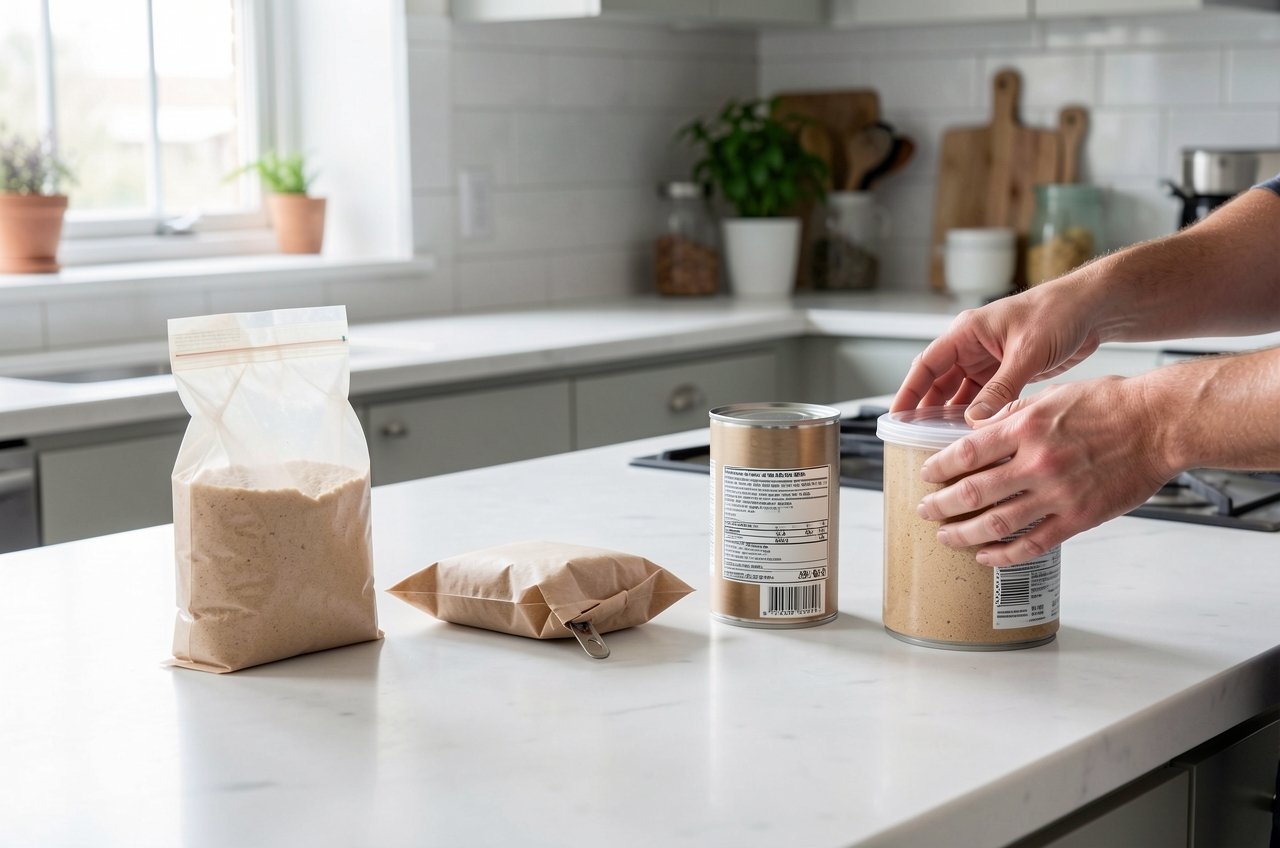
Package condition deserves equal attention. Do not use leaking, bulging, or badly dented cans, and do not taste the contents to test them. Damage can defeat the protection the original package was designed to provide.
Preservation Method Changes the Question
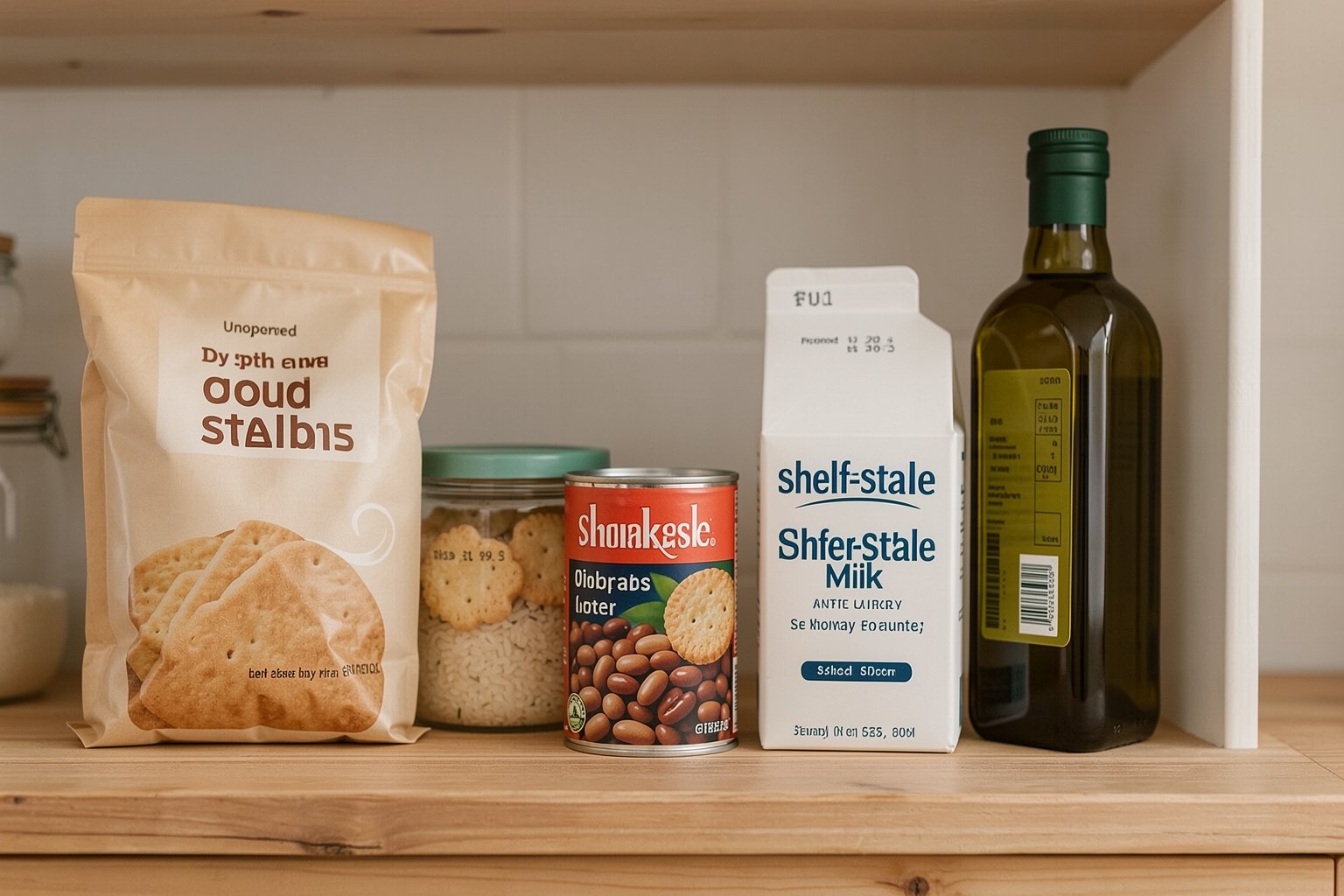
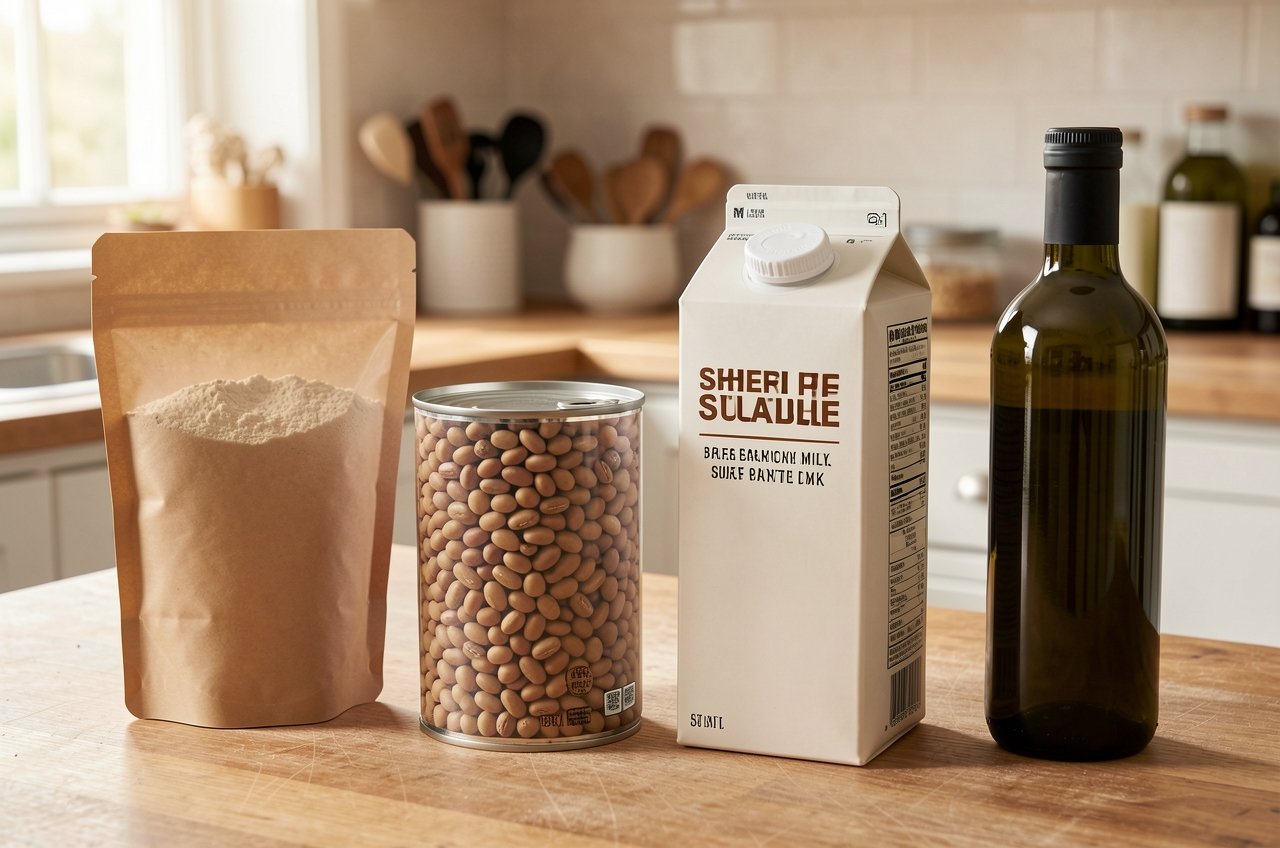
A dry pancake mix, a can of beans, shelf-stable milk, and olive oil do not stay usable for the same reasons. If you only look at the printed date, you miss the science that makes each product different.
Take pancake mix. Dry foods can stay shelf stable because microbes need available water to grow. Food scientists call this water activity. Low water activity can slow or stop microbial growth. It does not kill bacteria that may already be present. Raw flour can contain Salmonella or E. coli, as the FDA explains. Cook flour-based foods properly. Quality also changes over time. Fats can become rancid, leavening can lose strength, and moisture can enter the package.
Canned beans use a different preservation system. Commercial canning relies on heat processing and a sealed container. USDA guidance gives multi-year storage ranges for many low-acid canned foods under suitable conditions. That is not extra time to add after a printed date, and it is not a promise that a damaged or poorly stored can is safe.
Shelf-stable milk works differently again. Ultra-high-temperature treatment and aseptic packaging can keep milk stable unopened without refrigeration for an extended period. Once opened, the package instructions change and refrigeration becomes necessary. The word “milk” alone does not tell you how the product was processed or how it should be stored.
Olive oil is more about declining quality than microbial growth. Heat, light, and oxygen speed oxidation. A bottle can still have a future best-by date and taste tired because it was stored badly. When a harvest date is available, I pay attention to it because it tells me when the olives were picked. That is different from a best-by date, which is about the product’s expected quality window.
Packaging and ingredient handling matter in many foods. I also encourage readers to understand what is actually in pre-shredded cheese instead of assuming two products with the same basic name will behave exactly alike.
Federal Rules Are Not the Whole U.S. Story
Federal guidance is only one layer of food date rules. States can impose their own requirements, and the same phrase can carry different legal significance depending on the product and jurisdiction.
California shows why food expiration dates need context. Its AB 660 labeling rules apply to covered foods manufactured on or after July 1, 2026. The California Department of Food and Agriculture explains the wording used on these labels. “BEST if Used by” marks a quality date. “USE by” marks a safety date. The law does not make every food carry a date label. It sets wording for covered products that display these dates. Consumer-facing “sell by” labels are generally prohibited for covered foods, although coded inventory dates remain allowed. The law exempts infant formula, eggs, beer, and other malt beverages.
If you’re looking for food expiration dates guidelines, avoid broad claims such as “the law never requires food dates” or “use by always means the same thing everywhere.” The safer approach is to read the exact wording, follow product instructions, and recognize when a state-specific rule changes the meaning.
Why Date-Label Confusion Creates Food Waste
Confusing food expiration dates have a real cost. FDA cites an estimate that misunderstanding date labels accounts for roughly 20 percent of consumer food waste. That figure is about consumer food waste, not 20 percent of all food produced.
I understand why people throw food away when they are unsure. Nobody wants to take an unnecessary food-safety risk. But uncertainty can also turn a quality date into an automatic trash command, even when the better next step is to understand the product and its storage history.
There is a commercial consequence too. When usable food goes into the garbage and a replacement is purchased, another sale happens. It is fair to notice that incentive. It is not fair to leap from that fact to a claim that every manufacturer deliberately shortens dates to make people buy more. Dates can also help with stock rotation and protect a brand’s quality standards.
The goal is not suspicion for its own sake. It is better food literacy. The same habit applies when you audit the labels in your pantry. Ask what the label is actually telling you instead of what you assume it means.
A Practical Pantry Decision Framework
When a date has passed, I would work through the decision in this order.
- Read the phrase around the date. Is it a quality phrase, a retailer inventory phrase, a safety date under applicable rules, or a product-specific instruction?
- Check the storage history. Was the food kept at the temperature and conditions the product needs?
- Check the package and opening status. Is the seal intact? Has the product been opened? Is the container leaking, bulging, badly dented, or otherwise compromised?
- Check product-specific guidance. Look at the manufacturer instructions, recalls, and authoritative FDA or USDA guidance when the situation is unclear.
- Do not invent a grace period. The answer for a dry pantry mix cannot simply be copied to refrigerated meat, prepared leftovers, shelf-stable milk, canned beans, or olive oil.
This framework is more useful than one rule for every product because food safety and food quality are different questions. It also gives you a way to use food date labels without letting one printed number replace judgment about storage and handling.
Before buying more, check what you already have. Put older stock where you can see it. Buy an amount you can realistically finish. Those habits reduce waste without asking you to gamble with safety.
I still come back to that camp conversation because it changed how I explain dates to people. The inspector’s answer did not mean “keep everything forever.” It meant the date we were looking at did not, by itself, tell the whole story.
I want people to enjoy food while it is fresh and use it safely. Before you throw away the next unopened package because a date has passed, read the words around that date and check how the food was stored. Use product-specific authoritative guidance when you are unsure. Good food should not end up in the garbage because a label was misunderstood, and safety should never be reduced to a date alone.