




Walk into almost any wine shop or restaurant in America and you will hear the same question: “Do you have organic wine?” It sounds simple. It is not. In the wine world, “organic” does not mean what most people think it means, and that confusion costs guests better wine experiences every single day.
I have spent more than 20 years running Aroma Thyme Bistro, training in Michelin level kitchens from The Greenbrier to The Broadmoor to Pierre Koffmann’s La Tante Claire in London, and personally visiting nearly 400 wineries across six countries with VIP Winery Vacations. The biggest problem at the table is rarely organic versus non organic. The biggest problem is misunderstanding the difference between farming and winemaking.
This guide breaks down the truth most restaurants will not explain. By the end, you will know exactly what to ask for, what to skip, and how to drink better wine for the rest of your life.
What Is Organic Wine? (The Definition Most People Get Wrong)
Organic wine is wine made from grapes grown without synthetic pesticides, herbicides, or fertilizers, and produced under strict winemaking rules that vary by country. In the U.S., certified organic wine prohibits added sulfites. In the European Union, organic wine permits added sulfites at lower limits than conventional wine.
That short definition matters because it covers two separate stages. The first stage is what happens in the vineyard. The second stage is what happens in the cellar. Most labels tell you about one stage, not both.
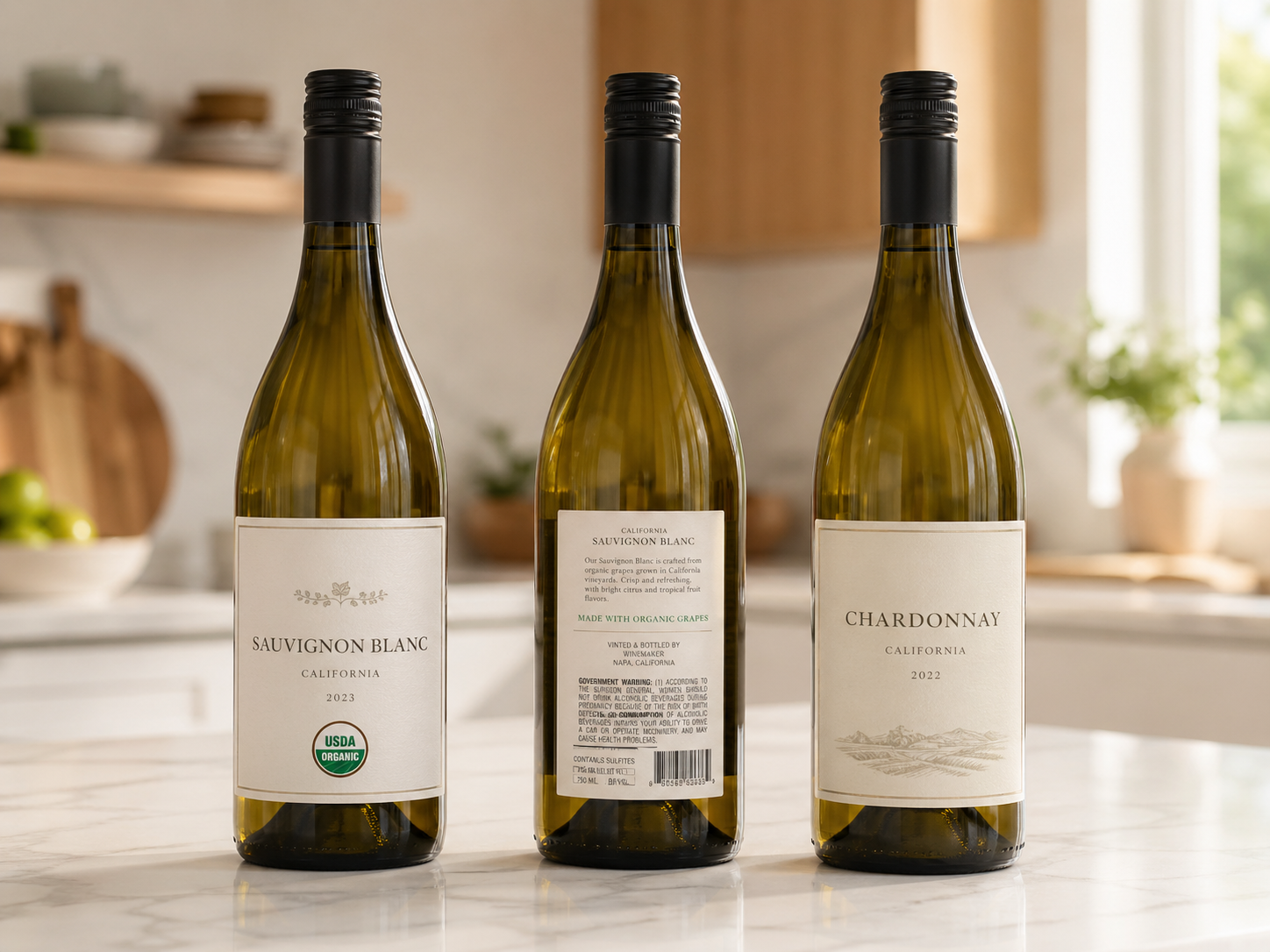
When a bottle says “organic,” it is making a legal claim about both stages. When a bottle says “made with organic grapes,” it is making a claim only about the vineyard. The cellar still has flexibility. That difference is the heart of this article.
Why does this matter to a wine drinker? Because the term “organic” tells you what is banned, not what is good. A poorly farmed wine and a beautifully farmed wine can both be conventional. A boring industrial wine and a soulful family wine can both be organic. The label is a starting point, never a finish line.
So, if “organic” only describes part of the story, what does the other part actually mean?
Organic Wine vs Wine Made With Organic Grapes (The One Distinction That Changes Everything)
Here is the distinction that separates clear thinkers from confused buyers. It comes down to what the winemaker is allowed to do once the grapes leave the vineyard.
| Category | Vineyard Standard | Cellar / Winemaking Standard |
|---|---|---|
| Certified Organic Wine (USDA) | Grapes grown without synthetic pesticides, herbicides, or GMOs | No added sulfites permitted; only naturally occurring sulfites are allowed |
| Wine Made With Organic Grapes | Same vineyard standard as above | Added sulfites permitted up to 100 ppm for stability and shelf life |
| Conventional Wine | Synthetic chemicals permitted in the vineyard | Added sulfites permitted up to roughly 350 ppm in the U.S. |
The middle row is where most of the world’s best clean wine actually lives. From estates across Burgundy to grower producers in Italy, Spain, and the Finger Lakes, many top wineries farm organically and still add a small dose of sulfites in the cellar to protect the wine. They do this because they care about how the wine tastes when you open it three years from now.
Here is what happens at Aroma Thyme Bistro several times a week. A guest sits down and says, “I want an organic wine.” I ask one question back: “Are you looking to avoid sulfites, or are you looking for wine made from organically grown grapes?” Most people pause, then answer, “I do not really care about sulfites. I just want clean farming.” That single question opens up an entirely different world of wine for them, often a better world.
So if both categories qualify as “organic” in spirit, which official certifications should you actually trust on the label?
The Organic Wine Certifications You Need to Know
Most wine drinkers have never been taught what the seals on a bottle actually mean. Here are the three you will encounter most often, along with what each one really requires.
USDA Organic (United States)
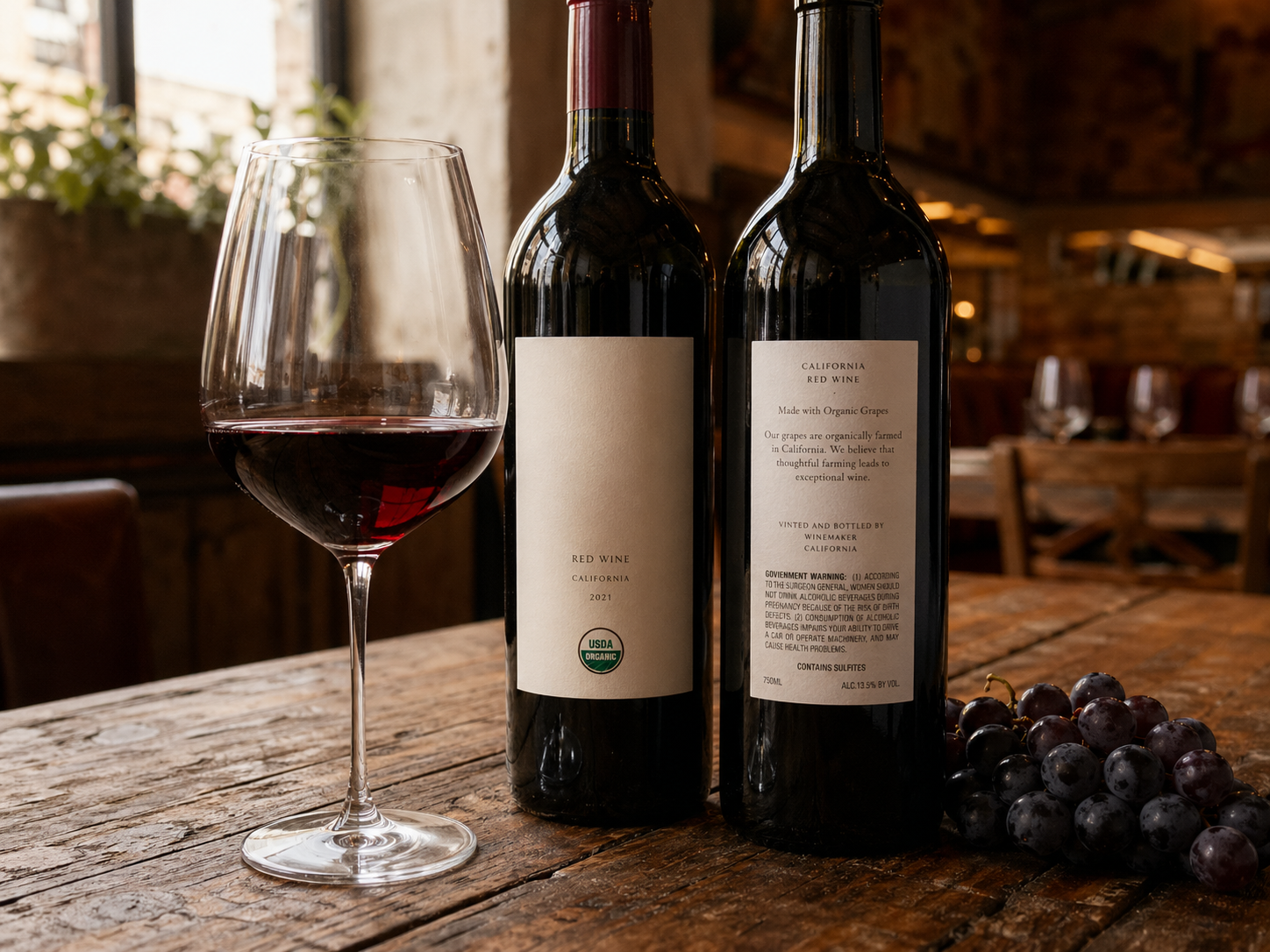
USDA organic wine carries the strictest certification standard in the United States, governed by the USDA National Organic Program. To wear the seal, the wine must be made from 100 percent certified organic grapes, processed in a certified organic facility, and bottled with no added sulfites. Only naturally occurring sulfites from fermentation are allowed, and the total must stay below 10 ppm. This is the seal you look for if your goal is true sulfite avoidance.
Made With Organic Grapes (United States)
This is often talked about like an official “organic wine” category, but let’s be clear: it is not the same as USDA Organic certification for finished wine.
What it really means is simple: the grapes are grown according to organic farming standards. That’s it.
In the winery, producers are allowed to make practical decisions, including adding sulfur dioxide (up to 100 ppm), to ensure the wine is stable, clean, and age-worthy.
This is where the disconnect happens for consumers.
Most people think “organic wine” means the entire process is chemical-free. In reality, “Made with Organic Grapes” reflects how most serious producers actually work. They farm organically, but do not limit themselves in the cellar to the point of compromising the wine.
So while you will often see this phrase on the back label, understand what you are really looking at:
Organically farmed fruit, paired with real-world winemaking.
EU Organic Wine (European Union)
The European Union’s organic wine framework uses a single green leaf logo. To carry it, the wine must come from certified organic vineyards and follow stricter winemaking limits than conventional EU wine. Added sulfites are permitted, but at lower thresholds. This is why so many high end French, Italian, and Spanish wines you already love qualify as organic without ever shouting about it on the front label.
A fourth seal worth recognizing is Demeter, the global body that certifies biodynamic wine. We will return to biodynamic in a later section, but for now, just know that Demeter is its own ecosystem and is not interchangeable with any of the three above.
What if the bottle in your hand has no certification seal at all? How do you tell whether it is genuinely organic in spirit?
How to Read an Organic Wine Label (Without Getting Tricked)
Greenwashing is real, and the wine aisle is one of the easiest places for it to happen. Use this five step check before you trust any “natural” or “clean” claim on a label.
- Look for one of the three official seals. USDA Organic, Made With Organic Grapes, or the EU green leaf. Anything else is marketing language, not a regulated claim.
- Check the back label for the certifying body. Genuine organic wine names its certifier, such as CCOF, Oregon Tilth, or Ecocert.
- Watch for vague terms with no legal definition. “Sustainable,” “low intervention,” and “clean” are not regulated. They may still be honest, but they are not proof.
- Look up the producer online. Family wineries that farm organically usually publish their practices on their own site, often with photos of the vineyard.
- Ask the wine professional in front of you. A good shop owner or sommelier can tell you in 30 seconds whether a wine is genuinely organic, whether it is certified, and whether the producer is worth your trust.
Greenwashing usually shows up as a leaf graphic, the word “natural,” and a marketing friendly back label that mentions soil but never mentions a certifying body. When in doubt, default to the seal or to the human in front of you.
That covers labels. Now we have to address the question that gets asked at every wine bar in America.
Are Organic Wines Truly Sulfite Free? (The Real Answer)
Sulfites in wine are the most misunderstood topic in the entire category, and the honest answer surprises almost everyone.
Certified organic wine in the United States cannot contain added sulfites, but that does not make it sulfite free. Sulfites occur naturally during fermentation in every wine ever made. Wine made with organically grown grapes, by contrast, allows winemakers to add sulfites for stability.
If you are searching for genuine sulfite free wine, the USDA Organic seal is the only one that guarantees zero added sulfites. Most quality producers, however, treat their bottles as low sulfite wine instead, adding the smallest amount necessary for stability without crossing into preservative territory.
Sulfites are not a villain. They are a stabilizer that protects wine from oxidation, temperature swings, long shipping distances, and time in the bottle. Without them, wine becomes fragile. That fragility is fine if the wine is stored well, transported carefully, and consumed young. It becomes a problem when a no added sulfite wine sits on a hot shelf for two years and then arrives at your table tasting flawed. People then blame “organic wine” instead of blaming the supply chain.
Europe handles this more pragmatically. Wines can be organically farmed and still receive a small dose of sulfites in the cellar, which gives the bottle the stability it needs to travel and age. That balance is part of why European organic wines often outperform American certified organic wines on a global wine list.
What about sulfite headaches? In most cases, the headache is caused by tannins, alcohol, sugar, dehydration, or histamines, not by the small amount of sulfite in your glass. If sulfites were the cause, dried apricots, which contain ten times the sulfites of an average glass of wine, would put most adults on the couch.
If sulfites are not the dividing line, what about the other clean wine categories you have seen on a menu? How do they actually differ?
Organic Wine vs Biodynamic Wine vs Natural Wine: What’s the Difference?
This is where most wine drinkers get truly lost. The three categories overlap, but they are not the same.
Organic wine focuses on what is banned, mainly synthetic chemicals in the vineyard and added sulfites in the cellar. Biodynamic wine is organic plus a holistic farming philosophy that aligns vineyard work with lunar and cosmic cycles, certified by Demeter. Natural wine has no legal definition and generally means minimal intervention in the cellar, often with no added sulfites and native yeast fermentation.
When comparing natural wine vs organic wine, the cleanest difference is regulation. Organic wine has a legal definition and a certifying body. Natural wine does not.
| Category | Legal Definition | Farming | Cellar Intervention |
|---|---|---|---|
| Organic Wine | Yes (USDA, EU) | No synthetic pesticides or herbicides | Limited or no added sulfites depending on certification |
| Biodynamic Wine | Yes (Demeter) | Organic plus holistic, lunar cycle practices | Strict limits on additives |
| Natural Wine | No legal definition | Usually organic or biodynamic in spirit | Minimal to none; often no added sulfites |
In practice, biodynamic is a stricter superset of organic. Natural is a separate philosophy that overlaps with both but answers to no governing body. Many great producers do all three at once, while many great producers do none of them and still make stunning wine. Do not let the categories convince you that one path is automatically better.
So if the labels and categories are this complicated, what do you actually gain by choosing organic in the first place?
What You Actually Get When You Choose Organic Wine
Forget the marketing claims about health benefits. The honest answer is more useful.
When you buy a wine that is genuinely organic or made with organic grapes, you are voting with your dollar for cleaner soil, healthier vineyard workers, transparent supply chains, and producers who take a long view of their land. Multi generational farmers do not poison the soil their grandchildren will inherit. They protect it, even when certification costs money and adds bureaucracy.
You also tend to get a wine with a clearer sense of place. Organic farming forces vineyards to work with their environment instead of against it. The result is a wine that tastes like where it came from, not like a recipe.
I learned this the hard way. Years ago, I worked with a small importer called Organic Vintages, and even I carried the bias that organic meant lower quality. Then I tasted what they were bringing in from California, and the assumption collapsed in a single afternoon. The wines were cleanly farmed, beautifully made, balanced, and structured. That moment reframed my entire approach to building a wine list. Organic was never the problem. Misunderstanding organic was the problem.
If the real value of organic is about the producer and the place, how do you actually find the good ones?
How to Choose Better Wine: Marcus’s 4 Question Framework
After nearly 400 wineries and more than two decades behind a wine list, this is the framework I use whenever I taste a new bottle for Aroma Thyme.
- Who is the producer, and how long has the family been farming this land? Multi generational producers almost always farm with care, certified or not.
- Is the wine farmed organically, even if it does not carry the certification? Many of the best estates skip the paperwork but follow the practices.
- What is the climate of the region, and does organic farming make sense there? Dry regions like parts of Spain or southern France make organic farming much easier than humid regions like the Finger Lakes, where Hermann J. Wiemer Vineyard has done remarkable work despite the disease pressure.
- Is there a wine professional in front of you who can vouch for it? A trusted sommelier or shop owner is worth more than any seal on a bottle.
This framework works because it forces you to think about people and place before paperwork. It also works because the answers are easy to get if you ask. Most producers and most pros are happy to tell you the story behind a bottle. The story is usually the best part.
Which producers actually pass this test? Here are a few I trust personally.
Organic Wine Producers Worth Knowing (And Why I Trust Them)
These are not paid placements. These are organic wine producers I have either visited, poured for years, or studied closely as part of building my own wine list and travel programs.
In the Finger Lakes of New York, Hermann J. Wiemer Vineyard is one of the most respected estates in the eastern United States. They farm with restraint, work with Riesling and other cool climate varieties, and produce wine that tastes like the lake and the land it comes from.
In Burgundy, my education ran through Pierre Koffmann’s three Michelin star La Tante Claire in London, where the wine cellar was sourced almost entirely from grower producers rather than large négociants. Walking that list as a young chef taught me that small, family driven Burgundian estates almost always farm organically in practice, even when the label stays quiet about it.
In Italy, I have picked Sagrantino grapes at dawn in Montefalco with families who have worked the same hillsides for generations. The wines that come from those vineyards do not need a certification seal. The story is in the soil and in the hands of the people who tend it.
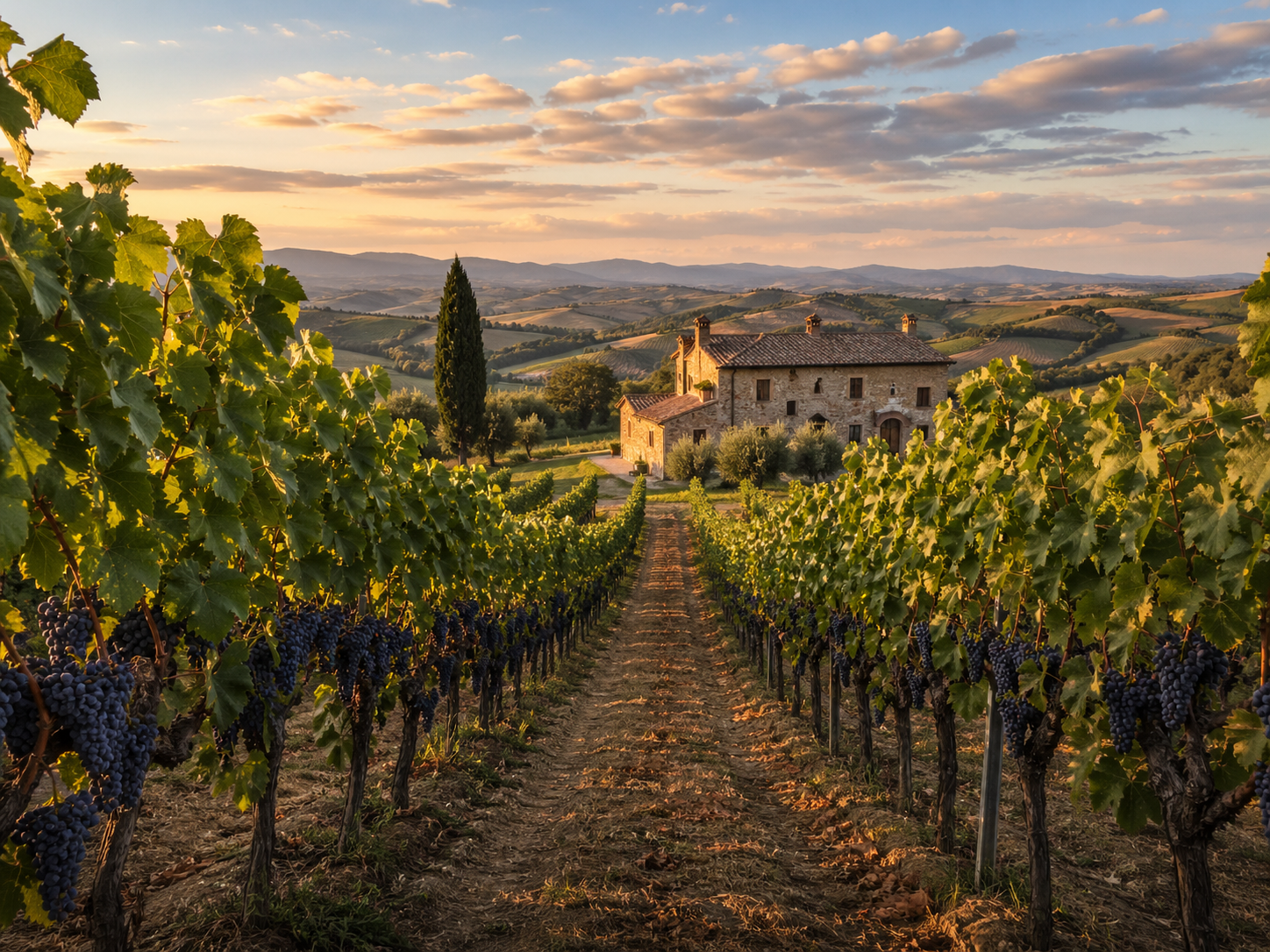
The pattern is consistent across every country I have visited. The producers who care most about the land usually farm close to organic, whether or not they carry the seal. Find those producers, and you find the wine worth drinking.
You probably still have a few practical questions, so let us answer the most common ones now.
Frequently Asked Questions
Is organic wine better for you?
Not necessarily. Organic wine is grown without synthetic pesticides, but it still contains alcohol, sugar, and natural sulfites. The honest health benefit is reduced exposure to vineyard chemicals, not a magic cure for hangovers.
Do organic wines have sulfites?
In most cases, all wine contains sulfites because they are a natural byproduct of fermentation. In the U.S., certified organic wines cannot have added sulfites. In the European Union and in U.S. wines labeled “Made with Organic Grapes,” added sulfites are permitted at reduced levels. There are, however, producers like Frey Vineyards that will bottle wine after the naturally occurring sulfites have diminished to less than 1 ppm.
What is the difference between organic wine and wine made from organic grapes?
Both start with grapes farmed without synthetic chemicals. The difference is in the cellar. Certified organic wine in the U.S. forbids added sulfites. Wine made with organic grapes allows the winemaker to add small amounts of sulfites for stability and aging.
Do sulfites cause headaches?
In most cases, no. Wine headaches are more often caused by alcohol, sugar, histamines, or dehydration. If sulfites were the main culprit, dried fruit would put most people in bed.
Is biodynamic wine the same as organic?
No. Biodynamic wine is organic plus an additional holistic farming philosophy certified by Demeter. All biodynamic wine is organic, but not all organic wine is biodynamic.
How do I find genuine organic wine at a restaurant?
Ask the sommelier or server two questions. First, which wines on this list are made with organic grapes, certified or not? Second, which producers do you personally know and trust? The second question is the one that finds you the best bottle on the list.
The Bottom Line: Why This Matters at the Table
Organic wine is not a yes or no conversation. It is a deeper conversation about farming, integrity, craft, and trust. The label is a starting point. The producer, the place, and the person pouring for you are the real story.
When I was 19, I worked at The Depuy Canal House in upstate New York, and I had the privilege of meeting Kevin Zraly, the legendary cellar master of Windows on the World and one of the most influential wine educators of the modern era. He told me something that has guided every wine list I have ever built: “If you learn wine, you will make ten thousand dollars more a year as a chef.” The deeper lesson was simpler. Wine is about people, stories, and integrity. Labels are just packaging.
Decades later, after nearly 400 wineries and six countries, that lesson still holds. If you want better wine, organic or not, stop chasing labels. Start chasing people.
Want to Taste the Difference?
If you want to experience wine the way it was meant to be poured, with story, integrity, and a curated point of view, come visit us at Aroma Thyme Bistro. Our Libation Library holds more than 800 selections from small, independent producers around the world, including a deep bench of organic and made with organic grapes bottles that you will not find on a typical restaurant list.
You can also explore the wineries behind the bottles directly through VIP Winery Vacations, where I lead intimate, relationship driven trips to the same family estates I have built relationships with over the past 20 years.
Either way, the goal is the same. Drink better wine. Trust the people behind it. Stop being fooled by labels.