






I grew up in an Italian family. My father’s side comes from Fasano, in Puglia, about 45 minutes south of Bari. Pasta was never just dinner in our house. It was part of our identity, and we respected the traditions that had been passed down through generations.
So imagine my surprise when, as an adult and a professional chef, I discovered spaghetti all’assassina. Here was a pasta dish from my own region that I had never heard of. Not once. No aunt, no grandmother, no cousin ever mentioned it. Discovering it changed the way I look at Italian cuisine forever. By the end of this story, you will understand why a plate of deliberately charred spaghetti is worth traveling for.
A Dish That Belongs to Bari
Some Italian culinary traditions date back centuries, but spaghetti all’assassina is relatively modern. Food historians trace it to Al Sorso Preferito, a restaurant in central Bari, in the late 1960s. The name translates to “assassin’s spaghetti,” a joke that stuck because diners swore the fiery chili heat was trying to kill them. Bari takes the dish so seriously that a group of local experts founded the Accademia dell’Assassina in 2013 to protect the original recipe.
But age is not what makes a dish authentic. Place does. Spaghetti all’assassina is not simply “from Puglia.” It is Barese, a dish that belongs to Bari. That is why someone like me, with family roots in Puglia, could grow up surrounded by Italian food and never encounter it. It is also why you rarely see it anywhere else.
Key takeaway: Spaghetti all'assassina was born at Al Sorso Preferito in Bari in the late 1960s and its identity is tied to that one city rather than to Puglia or Italy as a whole, which is why even Italian families from 45 minutes away can go generations without ever tasting it.
The Pasta That Breaks Every Rule
Every cook learns the same basic technique. Bring a pot of salted water to a boil, cook the pasta, drain it, and finish it with the sauce. Spaghetti all’assassina throws that entire rulebook away.
Instead of being boiled first, dry spaghetti goes straight into a screaming-hot pan, where it begins to fry in olive oil with garlic and chili. Tomato broth is then added gradually, ladle by ladle, almost like a risotto. The pasta does not simply cook. It toasts, chars, and caramelizes against the pan.
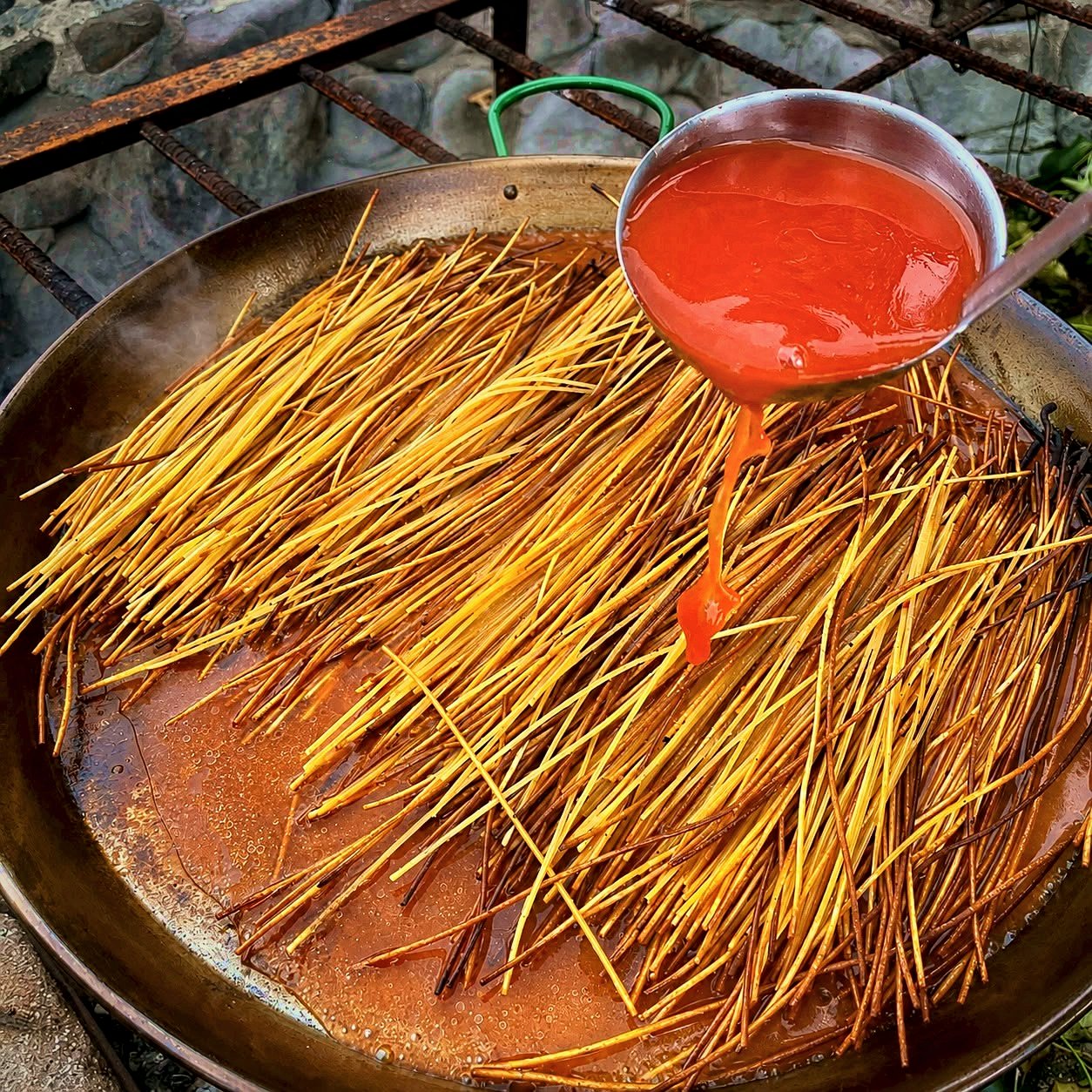
Here is how completely the technique inverts everything you were taught.
| Element | Classic pasta method | Spaghetti all’assassina |
|---|---|---|
| How the pasta starts | Boiled in salted water | Dry, straight into a hot oiled pan |
| The liquid | Drained away before saucing | Tomato broth added gradually, like risotto |
| Movement | Stirred and tossed freely | Left alone so a crust can form |
| Texture goal | Uniform al dente | Crispy charred strands next to tender ones |
| Burnt edges | A mistake | The entire point |
The result is unlike any pasta you have probably ever eaten. Some strands turn crispy while others stay tender, the tomato concentrates into something deep and smoky, and the edges taste almost caramelized. Locals even call the dish spaghetti bruciati, which literally means burnt spaghetti. Ironically, it is one of Italy’s most distinctive pasta dishes precisely because it ignores what most people think of as “the Italian way.”
Key takeaway: Assassin's spaghetti inverts every rule of pasta cookery by frying dry spaghetti in a hot pan and feeding it tomato broth like a risotto, so the strands toast and char into a crispy, smoky texture that boiled pasta can never achieve.
Learning It the Right Way (It’s Harder Than It Looks)
The first time I ate spaghetti all’assassina in Bari, I was hooked. Not just because it was delicious, but because I could not believe I had missed something this incredible my entire life.
So I went back. We ate it three different times on that trip, because I wanted to understand the dish, not just taste it. As a chef, that is what fascinates me. How was it made? Why did it taste slightly different at each restaurant? What was actually happening in that pan?
I knew before we flew home that I had to recreate it. But most people assume this is simply spaghetti cooked in a frying pan. It is not. The dish is deceptively technical, and every variable matters.
- The pan. I had to source a specialized carbon steel pan, because the cookware determines how the pasta chars and develops its signature crust.
- The broth. The tomato broth must be added gradually and in the right amount, or you end up with either soup or scorched starch.
- The timing. Move the pasta too soon and you lose the crust. Wait too long and the char turns bitter.
- The strands. Keeping the spaghetti intact while it fries is part of the technique, and it takes real practice.
It is one of those deceptively simple dishes that takes repetition to get right. That is exactly what makes it worth learning.
Key takeaway: A true assassina depends on four variables working together, the right iron or carbon steel pan, a measured tomato broth, precise timing, and intact strands, which is why a recipe alone rarely produces the real thing on the first try.
Bringing Bari Home
The first people I served spaghetti all’assassina to were not random restaurant guests. They were travelers who had experienced it with me in Bari during one of our VIP Winery Vacations tours through Puglia. We had shared that incredible meal together in Italy.
When we returned home, I recreated the dish at Aroma Thyme Bistro, and for several months it ran as one of our specials. Watching guests relive that experience, or discover it for the first time, was incredibly rewarding.
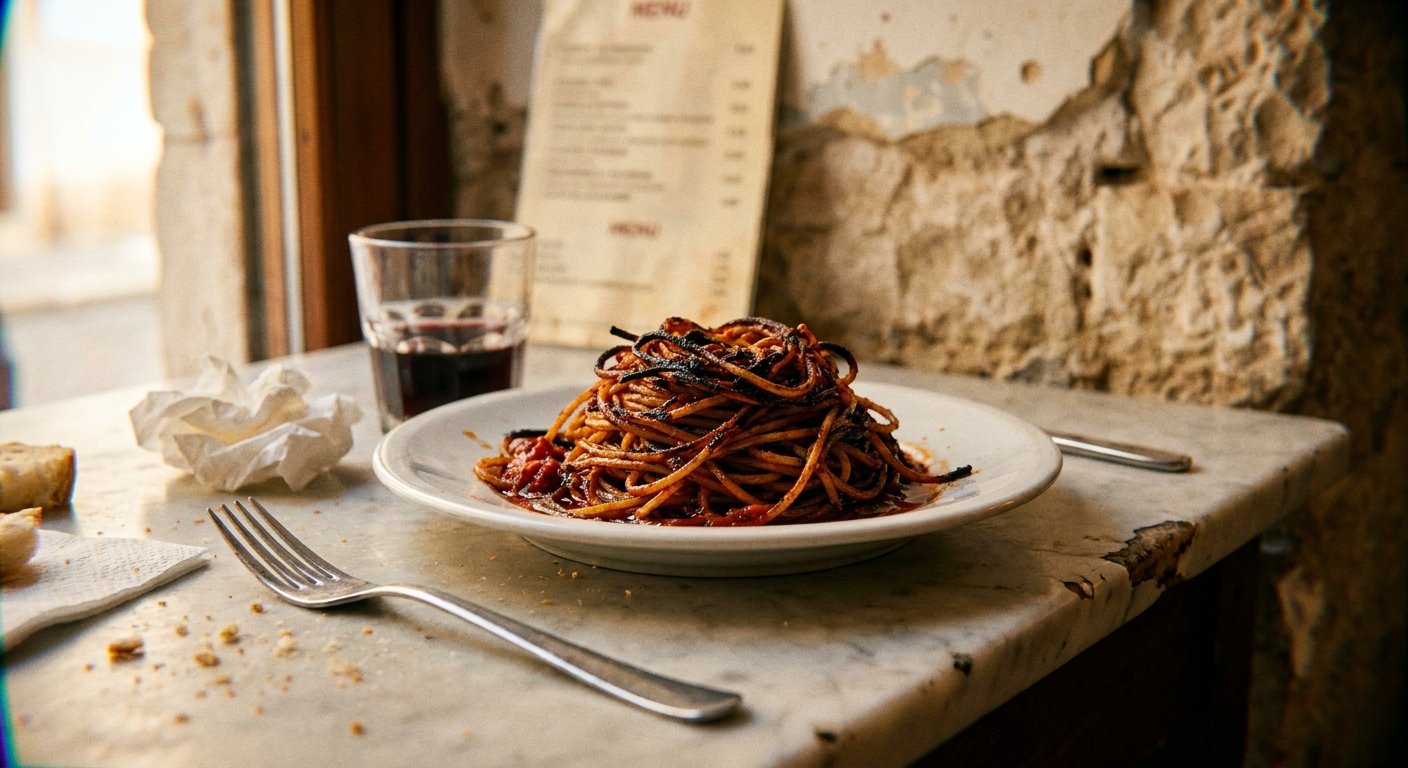
A single bite of that smoky, charred crust can take you right back to a tiny trattoria in Bari.
Key takeaway: The assassina special at Aroma Thyme Bistro began with guests who first tasted the dish in Bari on a VIP Winery Vacations Puglia tour, proof that the best menu ideas come from standing where a tradition was born rather than reading about it.
Why You Rarely See It in America
People ask a fair question. If this dish is so incredible, why don’t more restaurants make it? The answer is simple. Most Italian restaurants in America are not cooking the regional cuisines of Italy. They are cooking Italian-American cuisine.
There is nothing wrong with that. Italian-American food has its own rich history and deserves respect. But it is not the same as what authentic Italian really means, the village-to-village traditions you only find by going there. Italy teaches you these lessons in person, the same way it taught me the truth about butter and olive oil on pasta and how to spot real mozzarella.
Many of the most authentic Italian pasta dishes never left the towns where they were born. Spaghetti all’assassina is one of them, and that is exactly what makes discovering it so exciting.
Key takeaway: You rarely find spaghetti all'assassina in America because most Italian restaurants here cook Italian-American food, a worthy but separate tradition, while many of Italy's greatest regional dishes never left the cities that created them.
Frequently Asked Questions
What is spaghetti all’assassina?
Spaghetti all’assassina is a pasta dish from Bari, Italy. Instead of being boiled, dry spaghetti is cooked directly in a hot pan with olive oil, garlic, chili, and tomato broth. The pasta toasts and chars as it absorbs the broth, creating a crispy, smoky texture that is unique among pasta dishes.
Why is it called assassin’s spaghetti?
The name is a joke that stuck. Diners in Bari found the dish so fiery that they claimed the chef was trying to kill them, so it became spaghetti cooked “in the assassin’s manner.”
Is spaghetti all’assassina just burnt spaghetti?
Yes and no. Locals also call the dish spaghetti bruciati, which means burnt spaghetti, but the char is intentional and controlled. The goal is caramelized, crispy edges on some strands, not a scorched pan of pasta.
Can I make a spaghetti all’assassina recipe at home?
Yes, with the right setup. You need an iron or carbon steel pan, a simple tomato broth, and the discipline to leave the pasta alone while the crust forms. Expect to practice a few times before it comes out right.
Do you need a special pan for spaghetti all’assassina?
The pan matters more than any other piece of equipment. Tradition calls for iron, and I sourced a carbon steel pan before running the dish at my restaurant. Nonstick pans cannot build the same char, because the crust needs direct contact with hot bare metal.
Where can you try spaghetti all’assassina?
Bari is the answer, and the dish tastes different from one Barese kitchen to the next. Outside Italy it is still rare, which is why we recreated it as a special at Aroma Thyme Bistro after tasting it on a Puglia tour.
This Is Why I Travel
People often ask why I spend so much time traveling through Italy. This is exactly why. Not to check famous landmarks off a list or eat at tourist restaurants. I go to sit with local chefs, learn from families, and discover traditions that never made it into cookbooks or onto American menus.
Every region tells a different story, and every village has its own identity. Sometimes, as I learned in Bari, even one city can hold a dish unknown just 45 minutes down the road. That is the beauty of regional Italian cuisine. It is not one cuisine. It is hundreds of them, and the only way to truly understand Italy is to experience it where those traditions were born.
If you ever have the chance to visit Bari, do not leave without ordering spaghetti all’assassina. You will not just eat one of Italy’s most unique pasta dishes. You will taste a piece of culinary history that remains proudly and deliciously Barese. And if you want to make discoveries like this one with a fork in your hand, come travel through Puglia with us at VIP Winery Vacations. Or stop into Aroma Thyme Bistro and ask what we brought home last.
Upcoming Event: Join us for Italian Night in the Garden on Sunday, July 19 at 4 PM to experience Italy’s legendary Spaghetti all’Assassina cooked over a live fire. Get your tickets here.
About the author. Chef Marcus Guiliano has spent 30+ years in professional kitchens, including The Greenbrier, The Broadmoor, and Michelin 3-star La Tante Claire in London under chef Pierre Koffmann. He is the chef-owner of Aroma Thyme Bistro in Ellenville, NY, and co-leads small-group wine and food tours through Italy with his wife Jamie. His family's roots are in Fasano, Puglia, 45 minutes from Bari.