

In 1997, while living in London, I had the chance to work briefly at Mosimann’s Dining Club under Chef Anton Mosimann. I had already seen the pressure of a three-Michelin-star kitchen at Pierre Koffmann’s La Tante Claire. Mosimann’s kitchen expected precision too, but the atmosphere I remember was different: calm, measured, and built around letting ingredients do their work.
That short experience helped me see that technical standards, respect for a team, and lighter cooking can belong together. I carried those ideas back into my career, and I still think about them when I make decisions at Aroma Thyme Bistro in the Hudson Valley.
What is Anton Mosimann’s Cuisine Naturelle, and how did it influence Chef Marcus Guiliano?
Cuisine Naturelle is Anton Mosimann’s approach to cooking that brings the natural flavor of ingredients forward instead of relying on excessive butter, cream, or heavy sauces. For me, it was a new way to think about luxury in food. A dish could feel refined because of its ingredients and technique, not because it was loaded with richness.
Anton Mosimann developed this philosophy during a career that included leading the kitchen at The Dorchester in London. His official history describes an ingredient-led style that later became central to Mosimann’s Dining Club. What I can speak to personally is how that idea landed with me during my brief time there.
One dish has stayed in my memory: a steamed beef tenderloin. Steaming beef was not the approach I expected from a fine-dining kitchen shaped by classical French traditions. But the point was clear. Choose an ingredient worth serving, respect it, and use a technique that makes sense for the result you want.
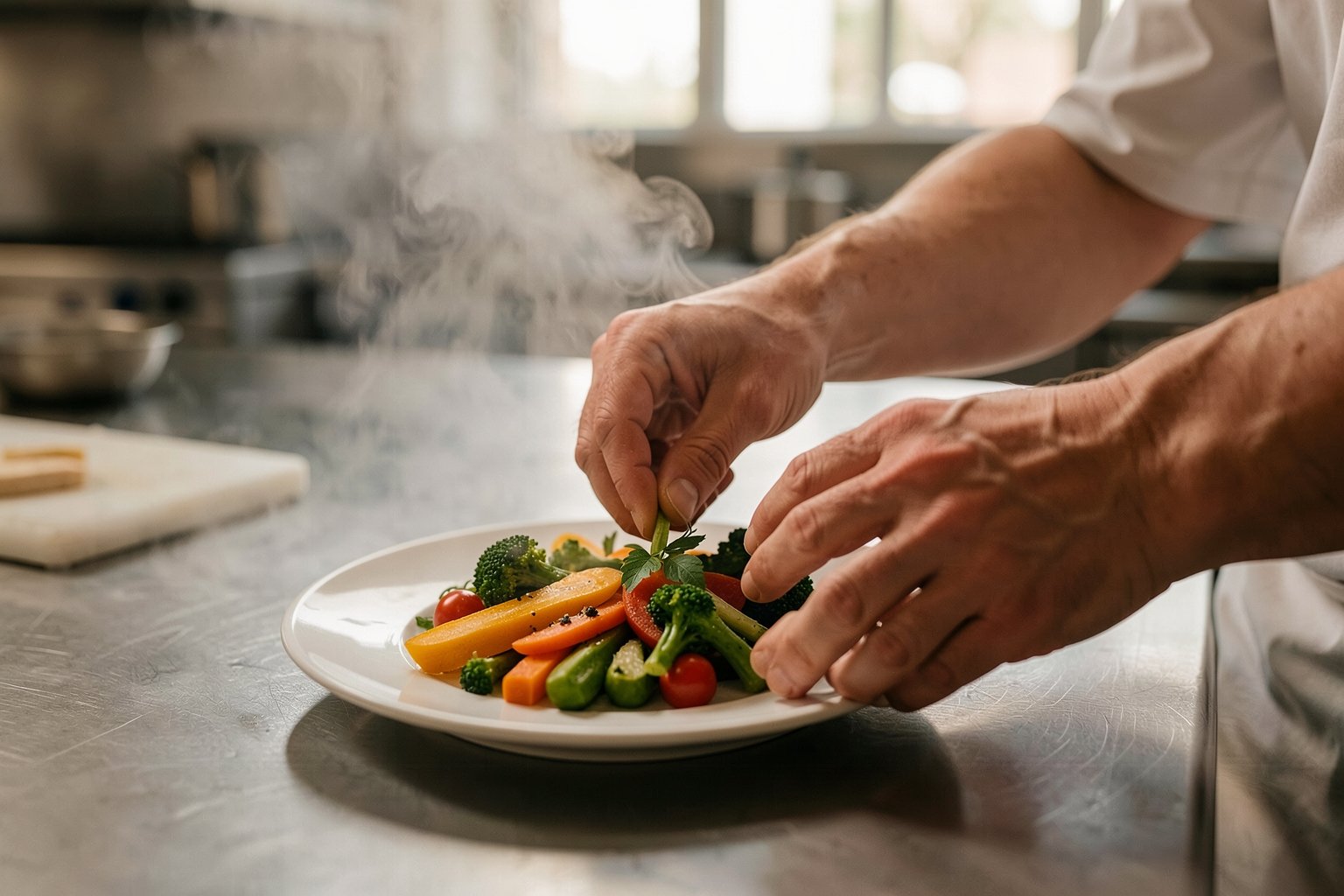
It also changed how I looked at vegetables. They did not need to sit at the edge of a plate as an afterthought. When they were carefully chosen and properly cooked, they had a place at the center of a meal.
What lighter cooking means—and what it does not
Lighter cooking does not mean that every dish must be low in fat, or that butter and cream are forbidden. It means deciding what they add and whether the ingredient needs them. Sometimes restraint brings more clarity to a dish; sometimes a classical technique depends on richness for its texture.
I think of Cuisine Naturelle as a discipline of choices rather than a rulebook. For me, lighter cooking techniques begin with the ingredient, not with a ban on richness. Consider heat, moisture, seasoning, and balance. Only then decide how much richness belongs on the plate.
Why Anton Mosimann’s career made me think beyond the stove
Anton Mosimann became head chef of The Dorchester at 28, according to his official biography. He later opened Mosimann’s Dining Club in 1988 in a converted church. Both achievements mattered to me, but it was the decision to build a different kind of dining business that made me think.
He had already reached a level of professional recognition that many chefs spend their careers chasing. Then he created a private dining club around a distinct experience and a distinct culinary philosophy.
Watching that approach from my position as a young chef taught me something about reinvention. Technical ability matters, but so does the experience surrounding the food. A chef should understand what guests expect, how the team works, and what makes a restaurant distinctive.
Today, I run Aroma Thyme Bistro and work in other areas of hospitality. I do not see those paths as separate from cooking. The discipline that shapes a menu also shapes how you welcome a guest, organize a team, and earn trust over time.
What did Chef Marcus Guiliano learn about kitchen leadership and precision at Mosimann’s Dining Club?
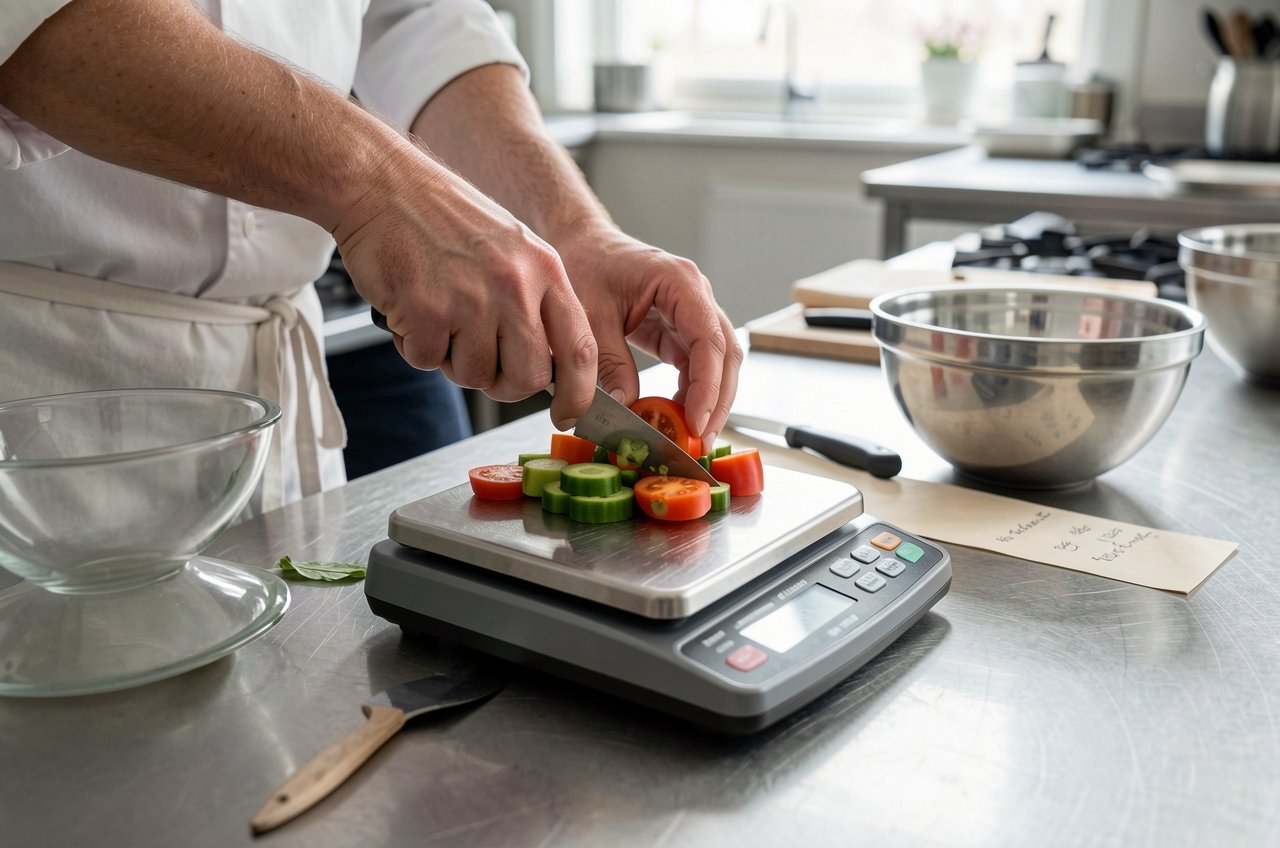
I learned that high standards do not require aggression. My memory of Mosimann’s is a kitchen where portions were weighed, preparations were measured, and expectations were clear. Chef Mosimann appeared calm and respectful, yet there was little doubt about the level of execution he expected.
I remember his chef’s coat, the tie beneath it, and an office with glass walls overlooking the kitchen. Those are small observations from my own experience, not a claim to know everything about how he led over the years. Still, they made an impression: he could see what was happening without needing to turn every moment into a confrontation.
Coming from more intense kitchen environments, I noticed the contrast. Systems made standards visible. When a recipe specified a weight or method, the team could follow the expectation without guessing. Careful preparation took some of the drama out of service. Those chef leadership lessons still shape how I set expectations with my team.
There is a related lesson in my time with Chef Paul Gayler at The Lanesborough. That kind of culinary mentorship showed me that different chefs can lead in different ways. The best lessons I took from London were never about personality alone. They were about how a kitchen gets good work done, repeatedly, for real guests.
The value of clear systems
A kitchen becomes more reliable when people know what good work looks like before service begins. The basics are not glamorous, but they are powerful:
- Weigh and portion ingredients consistently when precision matters.
- Set a clear standard for seasoning, preparation, and presentation.
- Make it easy for team members to ask questions and correct mistakes.
- Judge the result by what reaches the guest, not by how much noise happens behind the scenes.
None of that eliminates creativity. It gives creativity a dependable foundation.
Two London kitchens taught me different forms of discipline
Before Mosimann’s, I had trained in the demanding environment of Pierre Koffmann’s La Tante Claire. I associate that experience with intensity, technical fundamentals, and the pressure to execute perfectly. I have written elsewhere about the fundamentals I learned from Pierre Koffmann and why they mattered beyond the kitchen.
Anton Mosimann added restraint and another model of leadership. The point is not that one chef cared about standards and the other did not. Both cared deeply. But their differences helped me understand that there is more than one way to build an excellent team.
The reason I was in London at all was that I believed I still had more to learn. Earlier in my career, I chose continued training over an opportunity with a bigger title. I have told that story in why I turned down an executive chef promotion. Looking back, that decision gave me a chance to see contrasting approaches before forming my own.
You can copy a technique. It takes longer to decide what kind of chef, mentor, and restaurant owner you want to be.
How Anton Mosimann’s Cuisine Naturelle changed my cooking at Aroma Thyme Bistro
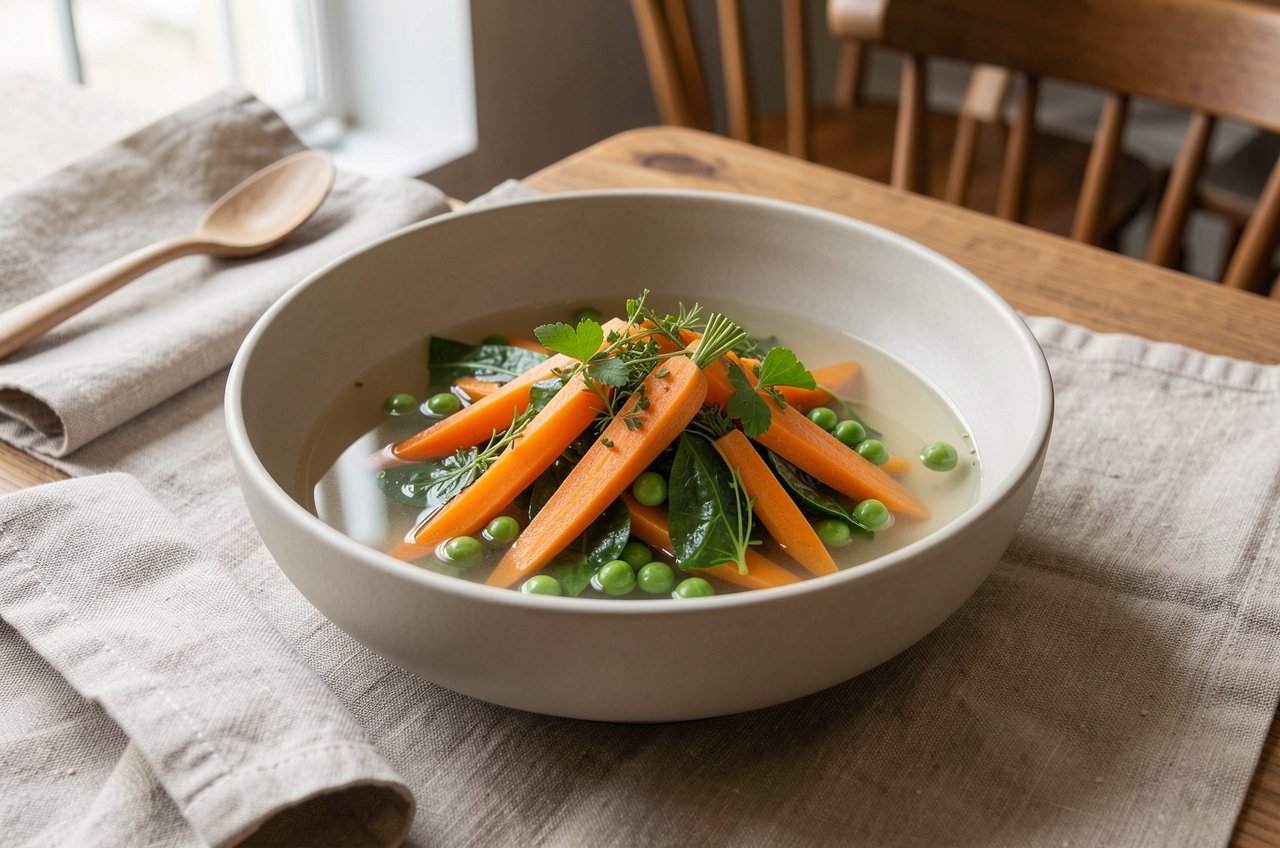
At Aroma Thyme Bistro, I still ask simple questions when developing a dish. Does it need more butter? Does cream improve the result, or does it cover a flavor I want the guest to notice? Is there a cleaner way to present the ingredient?
I rarely reach for heavy cream as the default solution, and I try to use butter intentionally. That does not mean I reject classic preparations. A proper risotto, for example, may depend on butter for the texture I want. The important thing is knowing why it belongs there instead of adding it out of habit.
The same thinking comes up with desserts. I enjoy a classic crème brûlée, but I also know how rich a traditional custard can be. At Aroma Thyme, we have experimented with plant-based versions. They can be enjoyable, but they are not identical to the original. For me, that is a useful culinary question, not a contest to pretend one version is the other.
The ingredient-first mindset also affects purchasing and sourcing. Choosing good produce and treating it well matters before a cook ever reaches for a sauce. I explored that idea further when writing about how culinary training shaped my sourcing.
When vegetables, herbs, grains, or a carefully selected protein have real flavor, I want diners to experience it. A simple dish demands attention because there is nowhere for careless cooking to hide.
Precision and restraint belong together
It is easy to mistake a simple plate for an easy plate. A lightly dressed vegetable dish may have only a few elements, but the temperature, texture, seasoning, and timing still have to be right. Without those details, simplicity becomes blandness.
That is where Anton Mosimann’s example continues to help me. Precision is not the enemy of natural cooking; it is what makes natural cooking convincing. The less you put between an ingredient and the diner, the more important each decision becomes.
A measured kitchen also has an effect beyond flavor. Consistency helps guests know what to expect and helps a team deliver quality without relying on one person’s mood or last-minute improvisation. I would rather build habits that work on a busy Tuesday than depend on a dramatic rescue on Saturday night.
For a restaurant owner, this is practical hospitality. People do not see every measured portion or every decision to use a lighter touch. They experience a meal that feels considered.
The lesson I still carry from Anton Mosimann
My time at Mosimann’s was brief. I do not want to stretch it into a long apprenticeship or claim that it explains every decision I have made since. But some lessons stay with you because they arrive at exactly the right stage of your career.
From Koffmann, I learned about intensity and fundamentals. From Anton Mosimann, I learned how much can be achieved through refinement, respectful leadership, and knowing when not to add more.
Today I might be planning a menu, developing a vegetable dish, or reviewing standards with the team at Aroma Thyme Bistro. I come back to the same questions. Is this necessary? Is it balanced? Does it respect the ingredient and the guest?
That is what Anton Mosimann’s Cuisine Naturelle and kitchen precision mean to me. Excellence is not always about doing more. Often, it comes from doing the important things carefully enough that the result seems effortless.