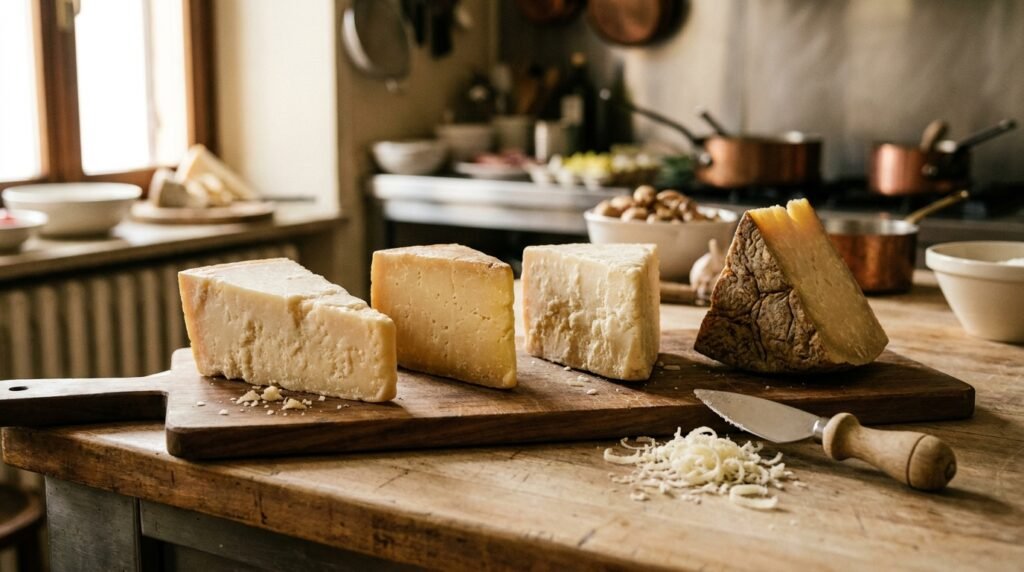



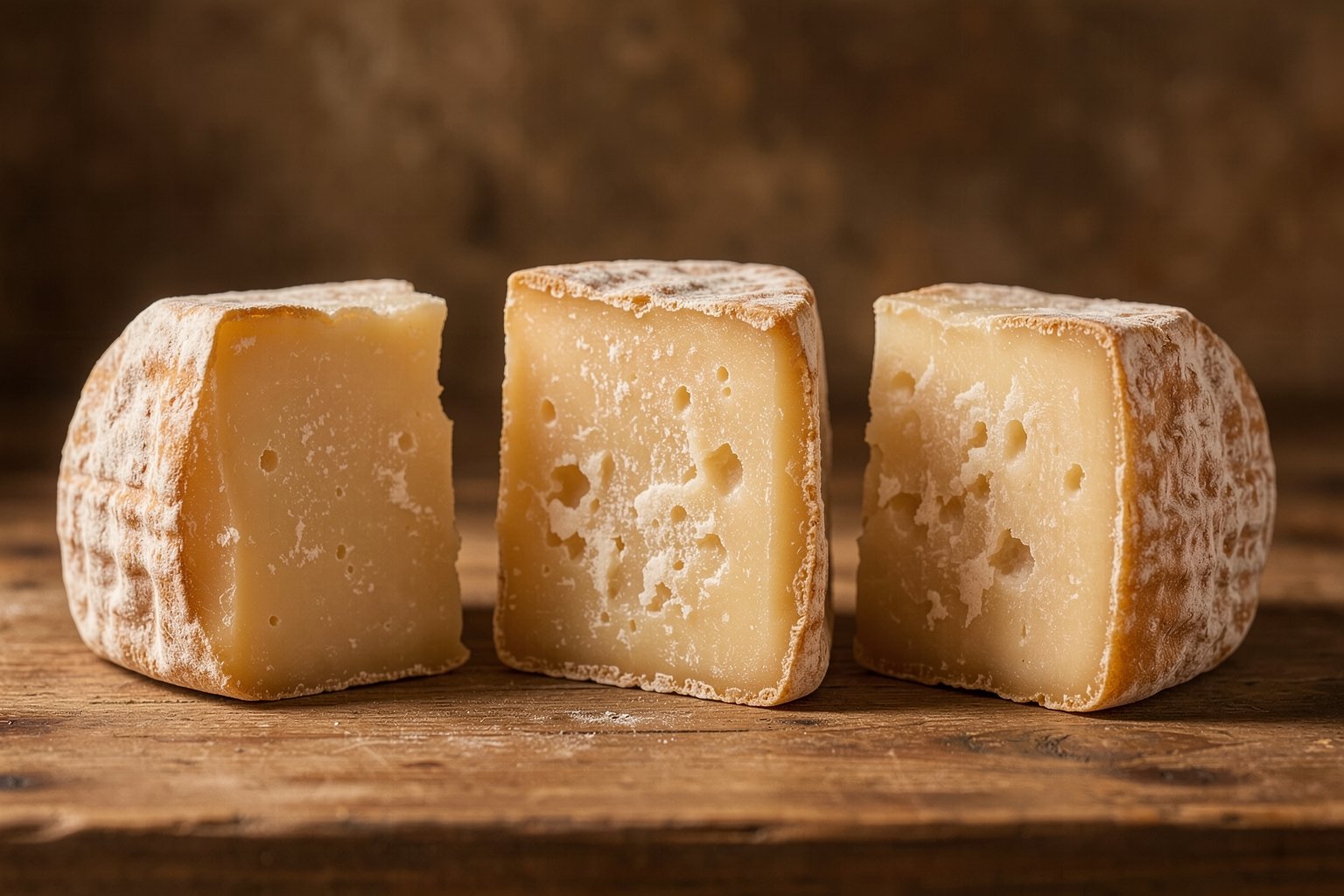
Parmigiano Reggiano changes noticeably between 12, 24, and 36 months. At 12 months it is younger and more delicate. Around 24 months it becomes grainier, more crumbly, and more savory. By 36 months the texture is firmer and more granular, while the aroma and flavor become more pronounced.
I have watched the process at the source, from milk arriving at the dairy to wheels resting in aging rooms. That experience changed how I taste Parmigiano Reggiano. The age on the label is not trivia. It tells you what time has done to texture, aroma, and how the cheese behaves at the table.
What are the key characteristics of genuine Parmigiano Reggiano?
Genuine Parmigiano Reggiano is a PDO cheese made in a defined area of northern Italy. The official production area covers Parma, Reggio Emilia, Modena, part of Bologna, and part of Mantua. The Parmigiano Reggiano Consortium FAQ states that the cheese is made with milk, salt, and rennet, with no additives or preservatives.
The same official guidance sets 12 months as the minimum maturation. Whole wheels also carry origin and grade marks that help identify the protected cheese. When I say Parmigiano Reggiano cheese in this guide, I mean that protected product, not every hard grating cheese sold under a broader Parmesan label.
12 vs. 24 vs. 36 Months: The Fast Comparison
The age does not create three unrelated cheeses. It moves the same cheese along a sensory path. The Consortium’s sensory analysis guide describes increasing granularity and crumbliness as maturation advances.
| Age | Texture | Flavor and aroma direction | How I would use it |
|---|---|---|---|
| 12 months | Younger, more elastic, less crumbly | Delicate, milky, yogurt-like, fresh-fruit notes | Shaved over salads, simple tasting, lighter dishes |
| 24 months | More soluble, grainy, and crumbly | Balanced savory depth with fruit, nut, and stock notes | Grating, pasta, risotto, vegetables, everyday table use |
| 36 months | Firm, distinctly granular, more crumbly | More pronounced spice, nut, and meat-stock notes | Slow tasting, baked pasta, filled pasta, bold pairings |
That middle point matters. The Consortium says Parmigiano Reggiano begins to express its typical characteristics most fully at about 24 months. I think of 24 months as an easy age for learning the cheese. Younger milk character and deeper aged notes can still meet in the same bite.
What Does 12-Month Parmigiano Reggiano Taste Like?
At 12 months, the cheese is legally mature, but it is still at the young end of the range. The texture has more elasticity and less of the pronounced crumble that develops later. Official sensory guidance points toward milk, yogurt, and fresh-fruit aromas.
This is the age I would use when I want Parmigiano Reggiano to feel lively rather than dominant. Shave it rather than burying it under a heavy sauce. Taste a piece by itself first, then notice how much softer the edges feel compared with an older wheel.
A younger wheel also helps you understand why age is not a simple quality ranking. Twelve months is not an unfinished version of 36 months. It is a different point in the same maturation process, with a different job at the table.
Why 24-Month Parmigiano Reggiano Is the Benchmark
Around 24 months, the texture becomes more soluble, crumbly, and grainy. The Consortium describes notes of fresh fruit, nuts, and meat stock, with a balance between milder and stronger flavors. This is the profile many cooks picture when they think of classic Parmigiano Reggiano.
For everyday cooking, 24 months is hard to beat. It has enough moisture to grate well, enough maturity to carry through pasta or risotto, and enough complexity to eat on its own. It gives you depth without demanding that every other ingredient move out of the way.
This is also where fresh grating matters. In my kitchen I want the aroma released when the cheese hits the dish, not lost in a bag long before service. If you want the practical reason, my guide to why we grate cheese fresh explains the difference.
What Changes at 36 Months?
By 36 months, the sensory profile is more assertive. The cheese is distinctly crumbly and grainy, and the Consortium describes stronger notes of spices, nuts, and meat stock. That makes it a cheese I want to taste more deliberately.
A small piece can carry a long finish, so I do not treat an older wheel as something that automatically needs more quantity. Give it space. Let it warm slightly on the plate, smell it before you eat it, and notice how the texture fractures under your teeth.
Thirty-six months is not automatically “better” than 24. It is more mature and more intense. If you want a gentler cheese for a cold dish, 12 months may fit better. If you want a balanced grating cheese, 24 months may be the smarter choice.
What Actually Changes as Parmigiano Reggiano Ages?
Time changes the structure as well as the aroma. The official sensory guide says granularity, crumbliness, and solubility become more pronounced with longer maturation. These are useful clues when you taste several ages side by side.
You may also notice small white crystals in the paste. The Consortium identifies these as tyrosine crystals that can be felt while chewing. They are a maturation characteristic, but I would not use crystals alone as proof that a cheese is authentic.
That distinction matters because food marketing loves a visual shortcut. Authenticity comes from the protected production system, origin, and identifying marks. Crystals tell you something about maturation, not everything about the cheese.
What Visiting a Parmigiano Reggiano Dairy Teaches You About Aging
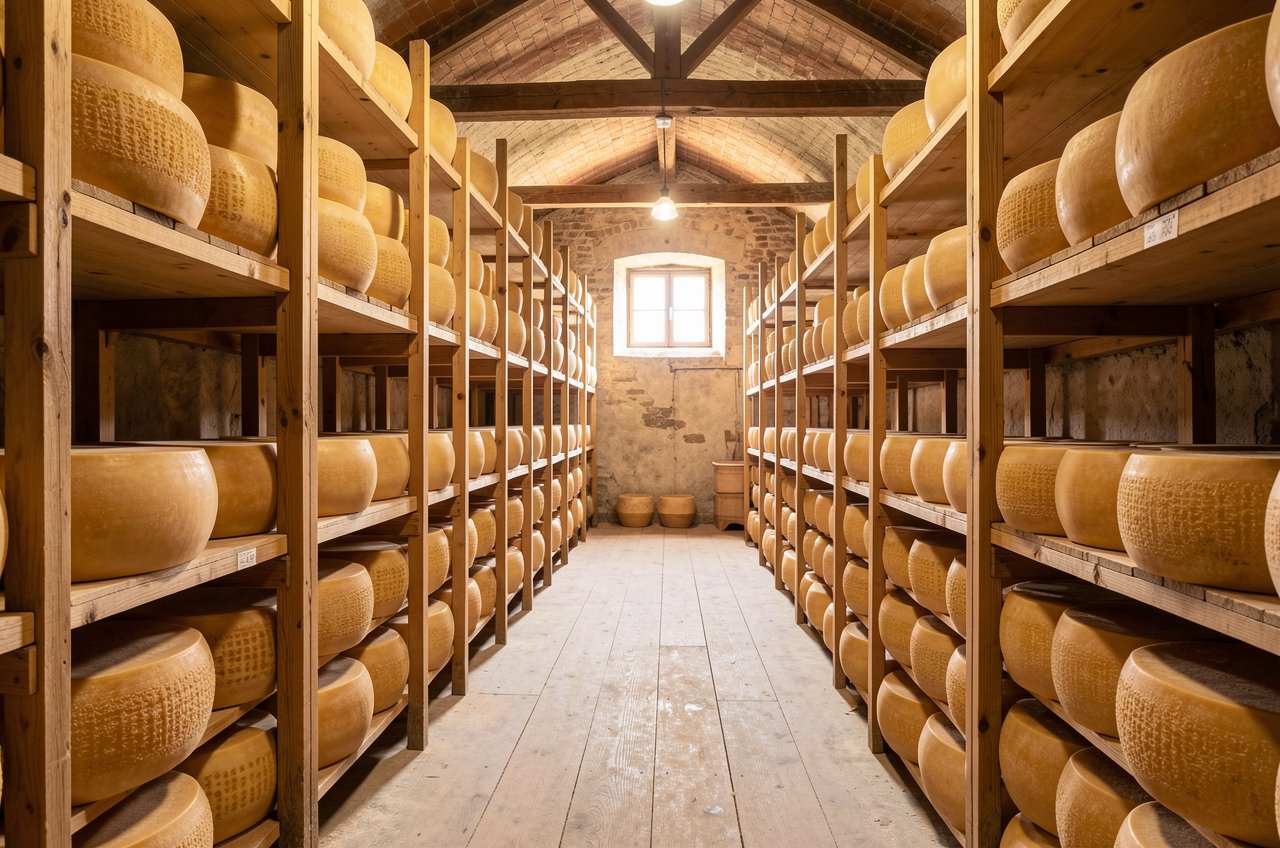
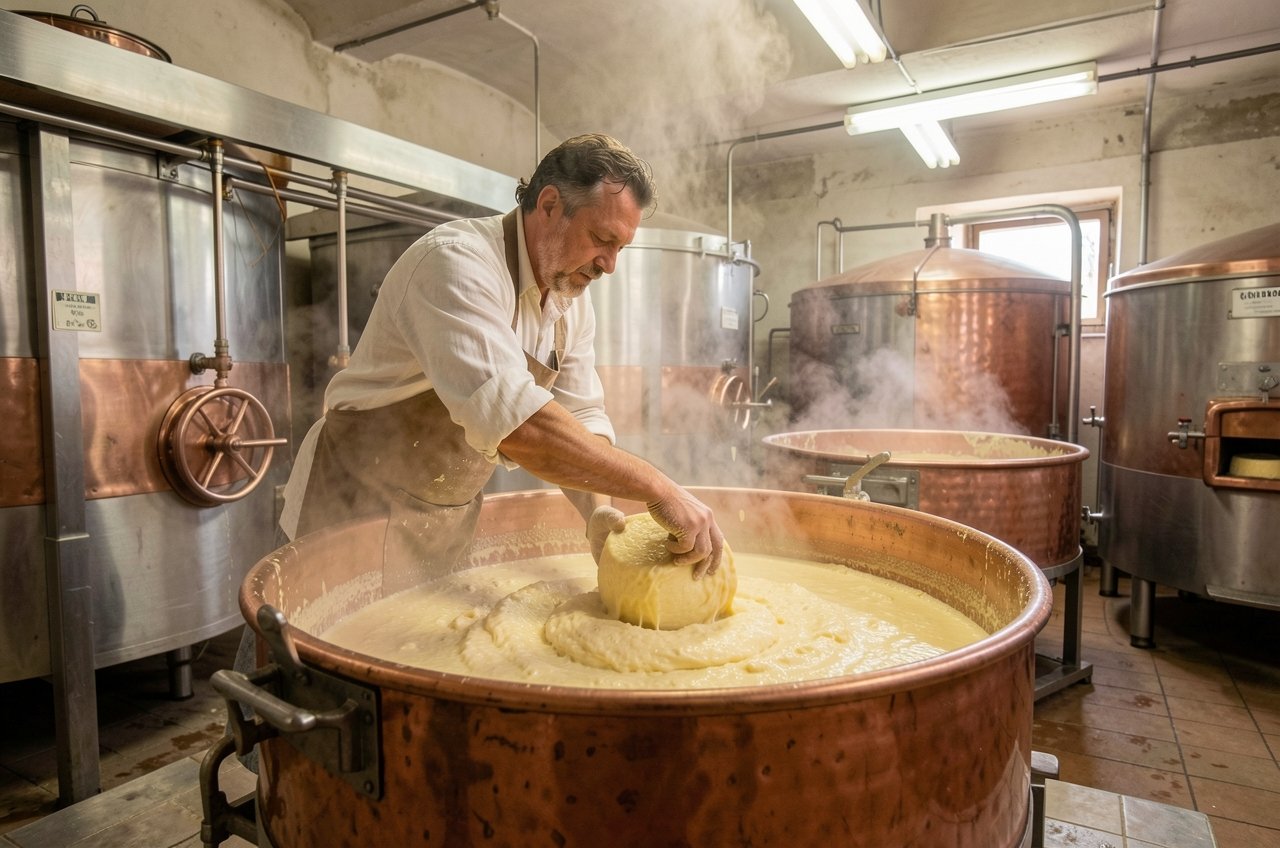
I have seen milk arrive at dawn, watched curd break, seen wheels formed and salted, and stood inside aging rooms. That firsthand experience is one reason I keep coming back to source. My article on what Michelin-level sourcing taught me explains why seeing production changes the way I judge ingredients.
The aging room makes time visible. You can talk about 12, 24, and 36 months at a cheese counter, but rows of wheels make the commitment physical. Nothing about that room needs a slogan. The scale and repetition are enough.
People comparing Parma food tours often focus on the tasting at the end. I would pay just as much attention to the production and aging rooms. If you are planning a food tour in Parma, Italy, ask whether you will see how the cheese is made and matured, not only sample a finished wedge.
That is also why I am careful with named-producer stories. Access and itineraries can change. The durable lesson is the process itself: milk, cheesemaking, salting, inspection, and time.
How to Taste 12, 24, and 36 Months Side by Side
A side-by-side tasting is the fastest way to understand the age label. Keep the setup simple so the cheese, not the accessories, is doing the teaching.
- Start with 12 months. Then move to 24 and 36 so intensity builds rather than resets.
- Break each piece instead of cutting perfect cubes. Notice elasticity, grain, fracture, and crumble.
- Smell before chewing. Look for the shift from milky and fresh notes toward nuts, stock, spice, and deeper savory aromas.
- Taste again after a few minutes. Notice which age you would grate, shave, cook with, or serve by itself.
Do not turn the tasting into a contest. The question is not which age wins. The useful question is which texture and flavor fit the dish, the moment, and your own palate.
Parmigiano Reggiano vs. Parmesan Cheese: Read Past the Age Number
An age statement is useful only after you know what product you are buying. If you search for aged parmesan cheese, do not assume every result is Parmigiano Reggiano. Look for the protected name and the product’s identifying information before comparing maturation.
The same rule applies when a recipe says parmesan cheese in a generic way. Sometimes you need authentic Parmigiano Reggiano. Sometimes another hard cheese can do the job. My chef-tested Parmigiano Reggiano substitute guide explains how I make that choice without pretending the alternatives are identical.
For this tasting, keep the comparison clean. Use real Parmigiano Reggiano at three ages if you can find them. That lets time be the main variable instead of changing the cheese at the same time.
Which Age of Parmigiano Reggiano Should You Choose?
Choose 12 months when you want a younger texture and delicate dairy notes. Choose 24 months when you want the most versatile balance for grating, cooking, and eating by itself. Choose 36 months when you want a firmer texture and a more pronounced aged profile.
My own advice is to buy two ages before you buy a bigger piece of one. Taste them next to each other with no sauce and no complicated pairing. Your palate will tell you more than a shelf tag ever can.
And if tasting at the source is part of the reason you are planning a trip, keep the travel piece secondary to the food. Our Emilia-Romagna and Veneto experience includes the region’s food culture alongside wine and other producers. The point is not to collect stops. It is to understand why place and process still matter.
Parmigiano Reggiano rewards that kind of attention. Twelve, 24, and 36 months are not marketing tiers. They are three useful snapshots of what time can do to the same protected cheese.