




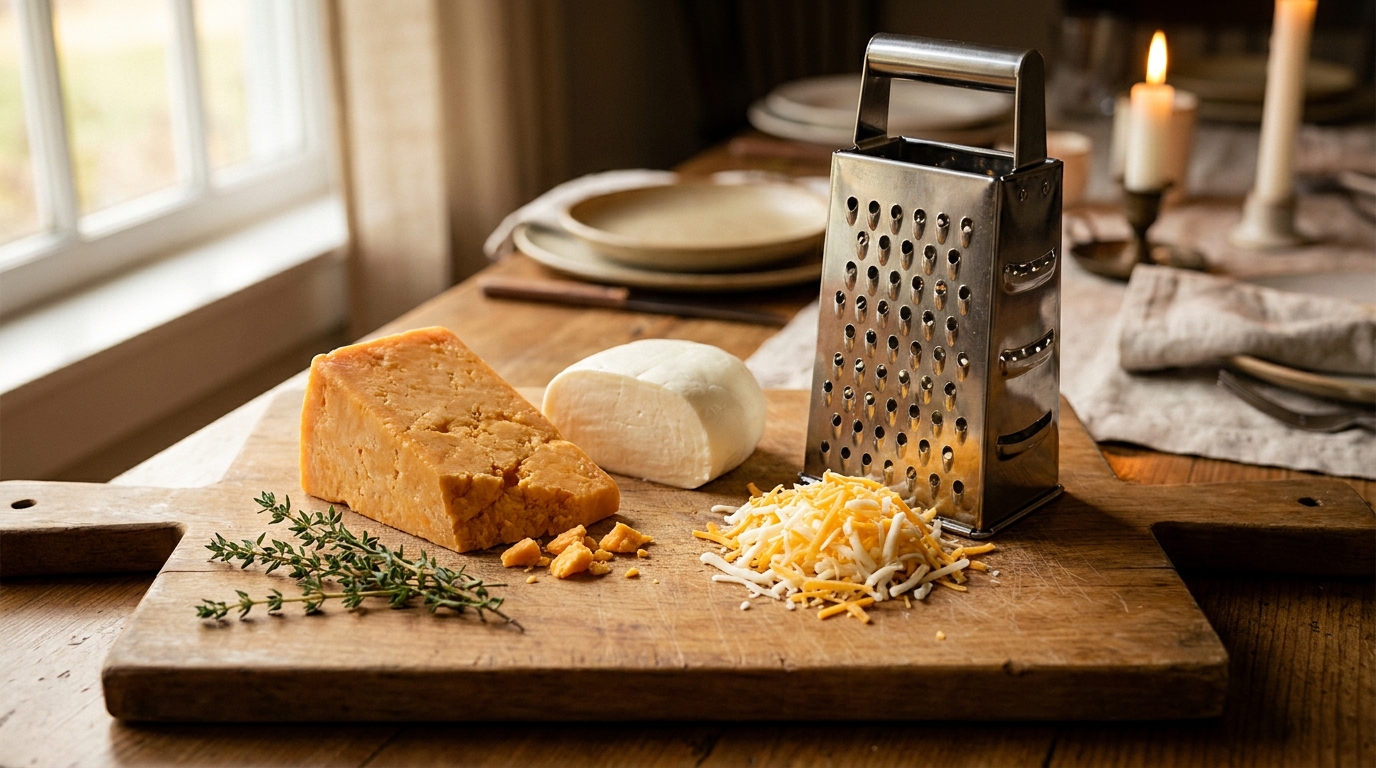
What Most Restaurants Won’t Tell You (And Why We Do It Differently at Aroma Thyme Bistro)
Walk into almost any grocery store or restaurant kitchen today and you’ll find bags of pre-shredded mozzarella, cheddar, and Parmesan.
It’s convenient. It’s consistent. It saves time.
But here’s the question most people never ask:
What’s actually in that pre-shredded cheese?
And more importantly…
Why doesn’t it melt the same way as freshly grated cheese?
At Aroma Thyme Bistro in the Hudson Valley, we’ve built our reputation on transparency, real food, and doing things the right way, even when it’s harder. As Chef Marcus Guiliano, I’ve been recognized as one of the Top 5 Food Activists Making a Difference by One Green Planet. For decades I’ve questioned ingredients, challenged norms, and pushed for better food standards.
This is one of those topics that seems simple, but once you go down the rabbit hole, it changes how you look at cheese forever.
Key takeaways: Pre-shredded cheese is real cheese coated with anti-caking agents like cellulose, potato or corn starch, calcium sulfate, and the mold inhibitor natamycin, all added for shelf life and easy handling rather than flavor. Those same coatings absorb moisture and keep proteins and fats from binding, which is why bagged cheese melts unevenly and turns oily or grainy compared with cheese you grate fresh. At Aroma Thyme Bistro we shred in-house every day and lean on naturally low-moisture cheeses like 24-month Parmigiano Reggiano, and you can do the same at home by buying blocks, keeping the cheese cold, and shredding only what you need.
The Hidden Ingredients in Pre-Shredded Cheese
Let’s start with the basics.
Most pre-shredded cheeses, including mozzarella, cheddar, and Parmesan, are not just cheese.
They typically include:
- Cellulose (a plant fiber)
- Potato starch or corn starch
- Sometimes calcium sulfate
- Natamycin (a mold inhibitor)
Now, are these ingredients “allowed”? Yes. Are they commonly used? Absolutely. Are they there to improve flavor? Not at all.
They exist for one reason: to make the product easier to handle, store, and sell.
What Cellulose Actually Does
Cellulose is one of the most talked-about ingredients in shredded cheese.
It’s essentially a fine plant fiber that coats the cheese shreds so they don’t stick together in the bag. That’s it.
But here’s the tradeoff:
- It absorbs moisture
- It dries out the cheese
- It interferes with melting
So instead of silky, creamy melted cheese… you often get something that’s slightly grainy, oily, or separated.
Why Pre-Shredded Cheese Doesn’t Melt Properly
This is where it really matters, especially if you care about cooking.
The same ingredients that prevent clumping… also prevent proper melting.
When you heat cheese, you want proteins and fats to bind together into a smooth, unified melt. But anti-caking agents create a barrier.
So instead of melting together, the shreds:
- Stay slightly separate
- Clump unevenly
- Release oil before fully melting
The Second Problem: Moisture Loss
There’s another issue most people don’t think about.
Pre-shredded cheese has more surface area exposed to air, which means:
- It dries out faster
- It loses moisture
- It loses that luxurious melt
And from a chef’s perspective, that changes everything.
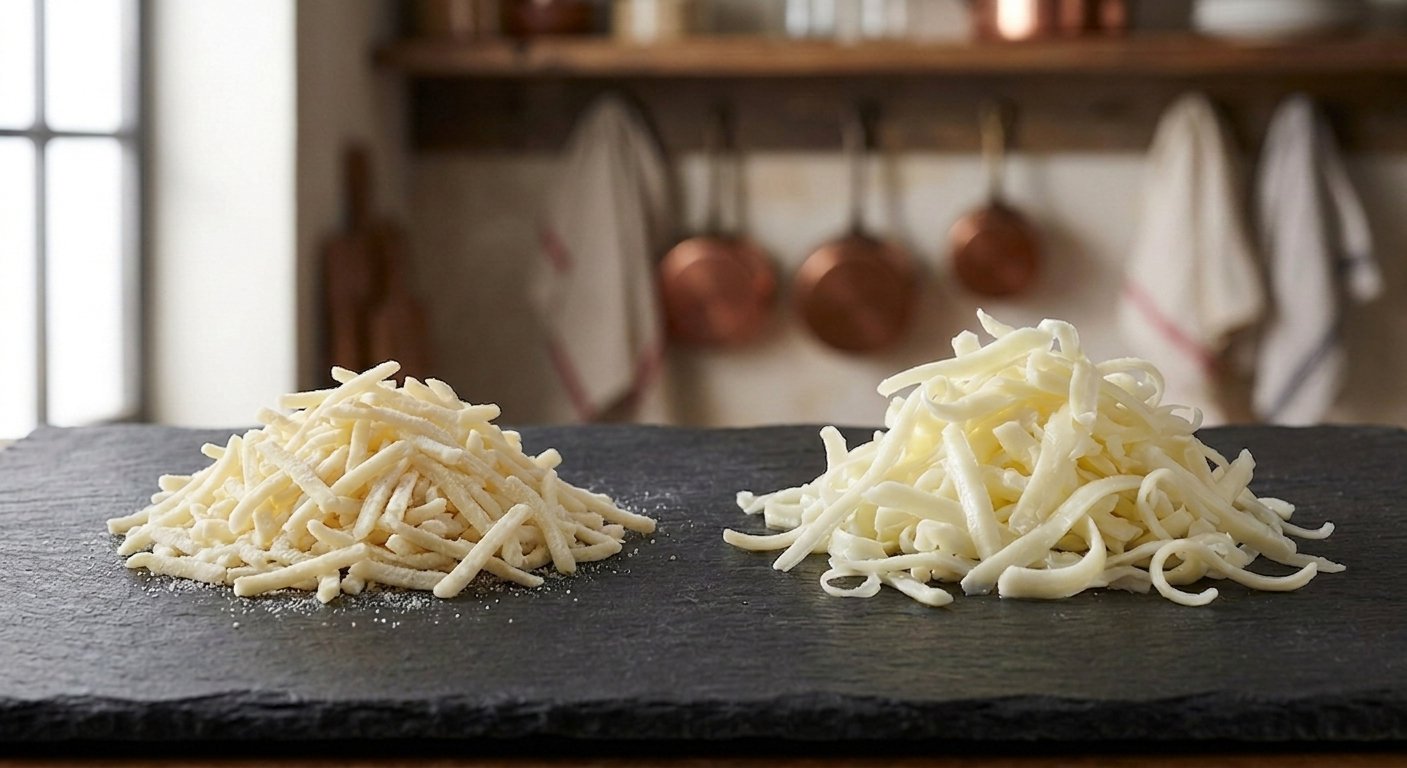
| Factor | Pre-shredded (bagged) | Freshly grated |
|---|---|---|
| Added ingredients | Cellulose, starch, calcium sulfate, natamycin | Just cheese |
| Melt quality | Uneven, oily, can stay separate | Smooth, even, stretchy |
| Moisture | Dries out from added surface area and coatings | Retains natural moisture |
| Flavor | Muted by the coatings | Full and true to the cheese |
| Best for | Speed and convenience | Quality and final-dish integrity |
My “Aha Moment” in the Kitchen
This topic is personal for me.
I grew up in a household where cheese was always grated fresh. My mother didn’t buy shredded cheese. If we needed cheese, we grated it. That was normal.
So when I got into professional kitchens like pizzerias, hotels, and large operations, I was shocked. They were buying pre-shredded cheese. Bags of it. Especially mozzarella.
At first, I thought: “Wow… that’s efficient.”
But then I started noticing something. The melt wasn’t the same. The texture wasn’t the same. The final dish wasn’t the same.
And once you see it, you can’t unsee it.
That was the moment I realized: convenience was replacing quality.
Why Restaurants Use Pre-Shredded Cheese
Let’s be real for a second.
Restaurants are under pressure:
- Labor is expensive
- Time is limited
- Consistency is critical
Pre-shredded cheese solves problems:
- No prep time
- No clumping
- Easy portion control
But it creates new ones:
- Lower quality melt
- Altered texture
- Less integrity in the final dish
At Aroma Thyme Bistro, we made a decision: we would not sacrifice quality for convenience.
What We Do at Aroma Thyme Bistro
At Aroma Thyme Bistro in the Hudson Valley, we shred our cheese in-house. Every day.
Why? Because we care about:
- Ingredient integrity
- Flavor
- Texture
- The guest experience
When you melt freshly shredded mozzarella on a pizza… it stretches differently. It melts evenly. It tastes like real cheese.
That’s not marketing. That’s reality.
Not All Cheese Is the Same
Here’s something most people don’t realize: even within the same type of cheese, everything can change.
Take cheddar, for example. You have:
- Mild cheddar
- Sharp cheddar
- Extra sharp cheddar
As cheddar ages:
- Moisture decreases
- Flavor intensifies
- Texture becomes firmer
And here’s the interesting part: aged cheeses naturally resist clumping. They don’t need as much help.
Parmesan and Reggiano
Parmesan is a perfect example.
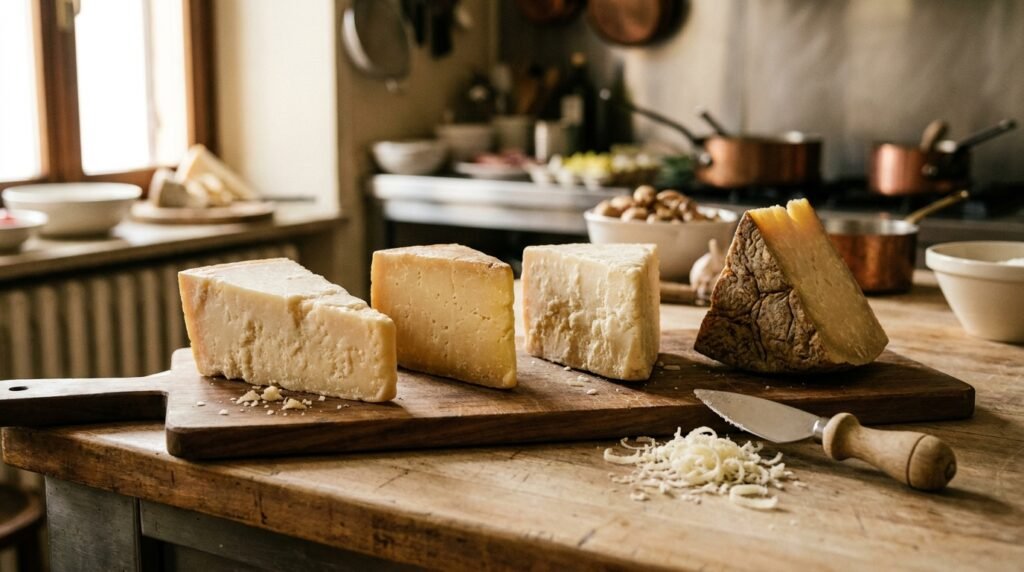
At Aroma Thyme Bistro, we use Parmigiano Reggiano aged 24 months. That cheese is:
- Naturally low in moisture
- Easy to grate
- Less prone to clumping
We can shred a whole block and it holds beautifully. No additives needed.
The Corn Allergy Conversation (And Better Alternatives)
Here’s something that doesn’t get talked about enough: a lot of people are sensitive or allergic to corn.
And guess what’s commonly used in shredded cheese? Corn starch.
So now you’re not just dealing with texture issues… you’re dealing with potential dietary concerns.
A Better Option: Arrowroot
If you’re shredding cheese at home and want to prevent clumping naturally, you can use a very light dusting of arrowroot.
Arrowroot is:
- More neutral
- Less processed-feeling
- A good alternative for those avoiding corn
Is it perfect? No. But it’s a better option for many people.
And that’s what the real food movement is about: better choices, not perfection.
How to Shred Cheese Properly (Chef Tips)
If you want to upgrade your cooking instantly, start here.
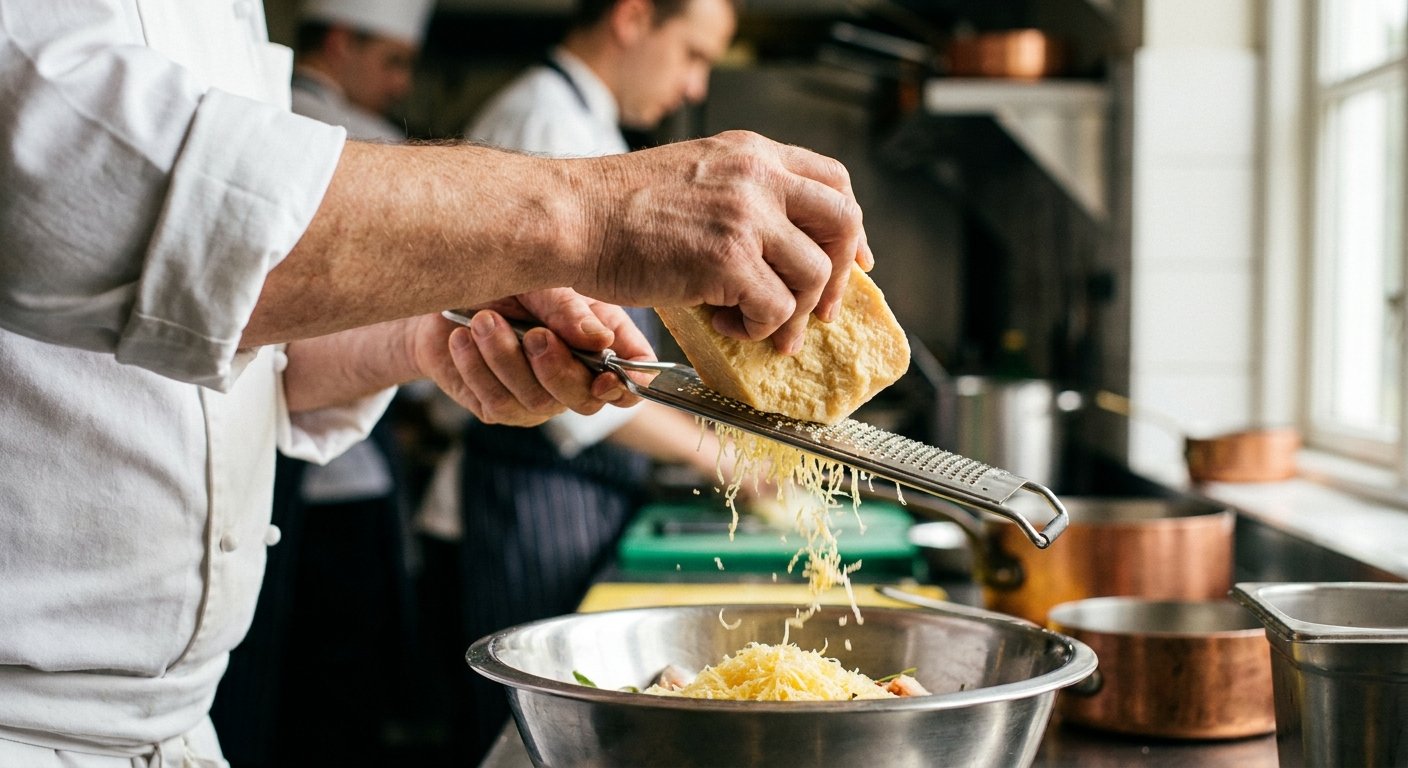
1. Keep Cheese Cold
This is critical. Cold cheese:
- Shreds cleanly
- Doesn’t clump as easily
- Holds its structure
Mozzarella especially must stay cold.
2. Shred What You Need
Don’t shred a week’s worth. Freshly shredded cheese performs best immediately.
3. Use the Right Tools
- Box grater
- Food processor
- Electric shredder
All work. Just keep things cold and clean.
4. Store It Properly
If you must store it:
- Airtight container
- Minimal air exposure
- Back into the fridge immediately
Storage and Freezing Tips
Short term:
- Refrigerate in airtight container
- Keep at 35–40°F
Long term:
- Freeze in small portions
- Lay flat
- Remove as much air as possible
When thawing: do it slowly in the refrigerator.
What to Expect
Frozen cheese may become:
- Slightly drier
- More crumbly
But it’s still excellent for cooking.
Are Anti-Caking Agents Safe?
Let’s address the elephant in the room.
Yes, according to regulatory standards:
- Cellulose is considered safe
- Starches are generally safe
- Natamycin is allowed within limits
But here’s my stance as Chef Marcus: just because something is allowed… doesn’t mean it’s ideal.
The bigger question is: why eat it if you don’t have to?
The Real Food Movement Mindset
At Aroma Thyme Bistro, we’ve always stood for:
- Transparency
- Ingredient integrity
- Real food
I’ve been doing this since the 1990s, long before it was trendy.
Being recognized by One Green Planet as one of the top food activists isn’t about perfection. It’s about intention.
It’s about asking:
- What’s in this?
- Why is it here?
- Can we do better?
And the answer is almost always: yes.
Empowering You as a Consumer
This is where it gets important. You have the right to ask questions.
At restaurants:
- “Do you shred your cheese in-house?”
- “What kind of cheese are you using?”
At the grocery store:
- Read labels
- Look for simple ingredients
- Choose blocks over bags
Every choice you make sends a message.
The Bottom Line
Pre-shredded cheese is:
- Real cheese
- Plus anti-caking agents
- Plus sometimes preservatives
It’s designed for:
- Convenience
- Shelf life
- Ease of use
But it comes at a cost:
- Melt quality
- Texture
- Ingredient purity
The Better Way
- Buy a block
- Shred it fresh
- Keep it cold
- Use it immediately
Simple. Powerful. Better.
Final Thoughts from Chef Marcus
At Aroma Thyme Bistro in the Hudson Valley, we don’t claim to be perfect. But we do commit to getting better every day.
That means:
- Questioning ingredients
- Avoiding unnecessary additives
- Choosing real food whenever possible
Because at the end of the day… food should be honest.
And when you start paying attention, even to something as simple as pre-shredded cheese, you begin to see the difference everywhere.
If you’re ready to experience the difference for yourself, come visit us at Aroma Thyme Bistro and taste what real food is supposed to be.
Or start at home. Pick up a block of cheese. Grab a grater. And taste the difference.