




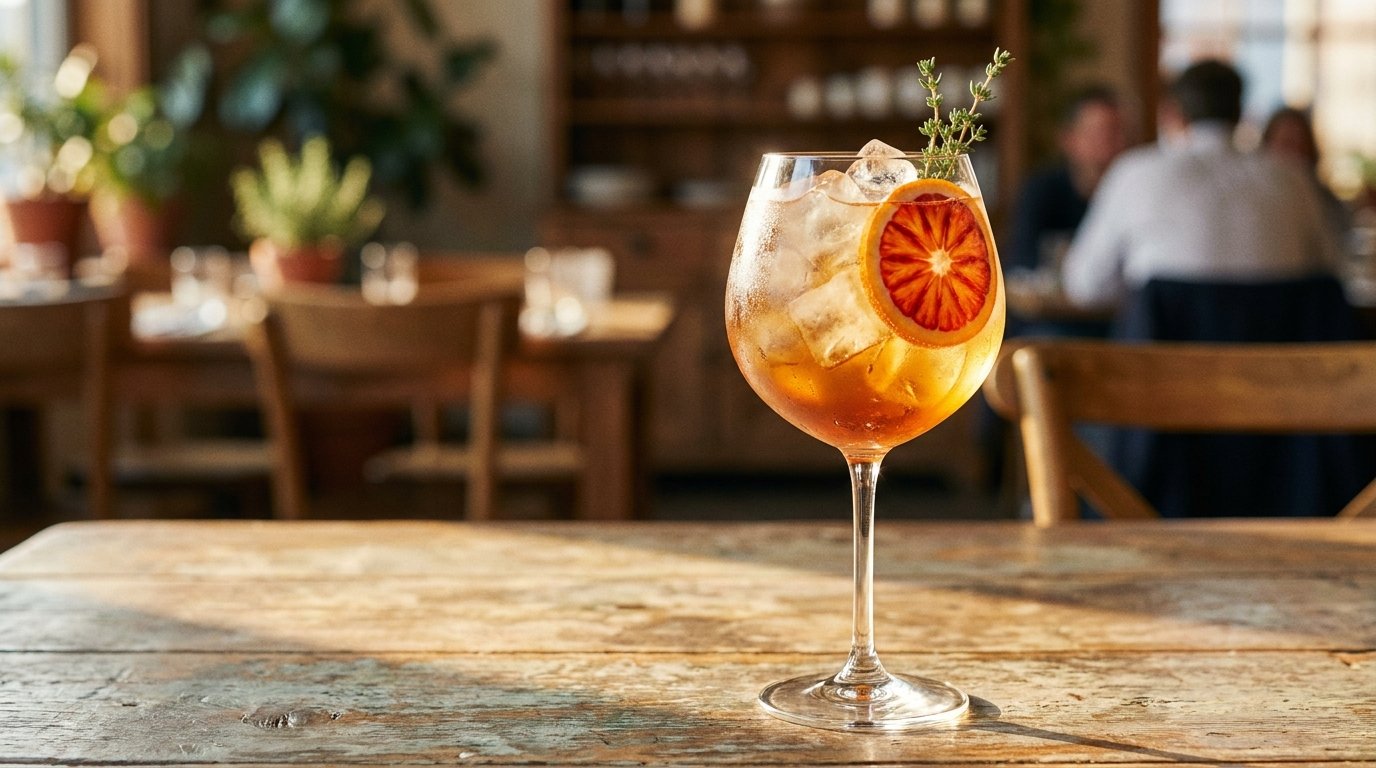
Spritz season arrives and suddenly that bright orange drink is on every table, every menu, and every feed. Most people order it by a single name. They ask for an Aperol Spritz.
Here is what almost no one stops to consider. A spritz is not a brand. It is a style. The drink in your glass is a whole category of aperitivo, and Aperol is only one way to build it.
After more than two decades running Aroma Thyme Bistro and tasting my way through small producers across Italy, I want to show you what is really in that glass. If you have ever looked for aperol spritz alternatives, this is the honest, chef’s-eye guide to what you are drinking and what you could be drinking instead.
A Spritz Is a Style, Not a Brand
Let me clear up the biggest misunderstanding first. The spritz is a method, not a single product. At its core it is three things: a bitter aperitivo, sparkling wine, and a splash of something fizzy.
Aperol just happens to be the brand that won the marketing war. The International Bartenders Association lists the Spritz with versions built on Campari, Cynar, or Select, not only Aperol. In the Veneto, where aperitivo culture was born, the bitter in the glass changes from town to town and bar to bar.
So when you order a spritz, you are ordering a shape of drink. The brand is your choice, and you have far more options than the menu suggests.
What Is Actually in an Aperol Spritz?
This is the question I get most often, so let me answer it plainly. A classic Aperol Spritz is built from three parts Prosecco, two parts Aperol, and one part soda water, served over ice with an orange slice.
The part people really want to understand is the Aperol itself. So what is Aperol made of? It is a bitter aperitivo of around 11 percent alcohol, built from gentian, rhubarb, cinchona, and a blend of herbs and roots. It carries a bittersweet orange flavor and that famous glowing color.
It is also owned by a very large company. Aperol sits inside the Campari Group portfolio, which it joined in 2003. That matters more than it sounds, and I will explain why in a moment.
Is There Food Coloring in Aperol?
Here is where the conversation gets interesting, and where most diners are genuinely surprised. People assume that vivid orange comes from the rhubarb and the citrus. It does not.
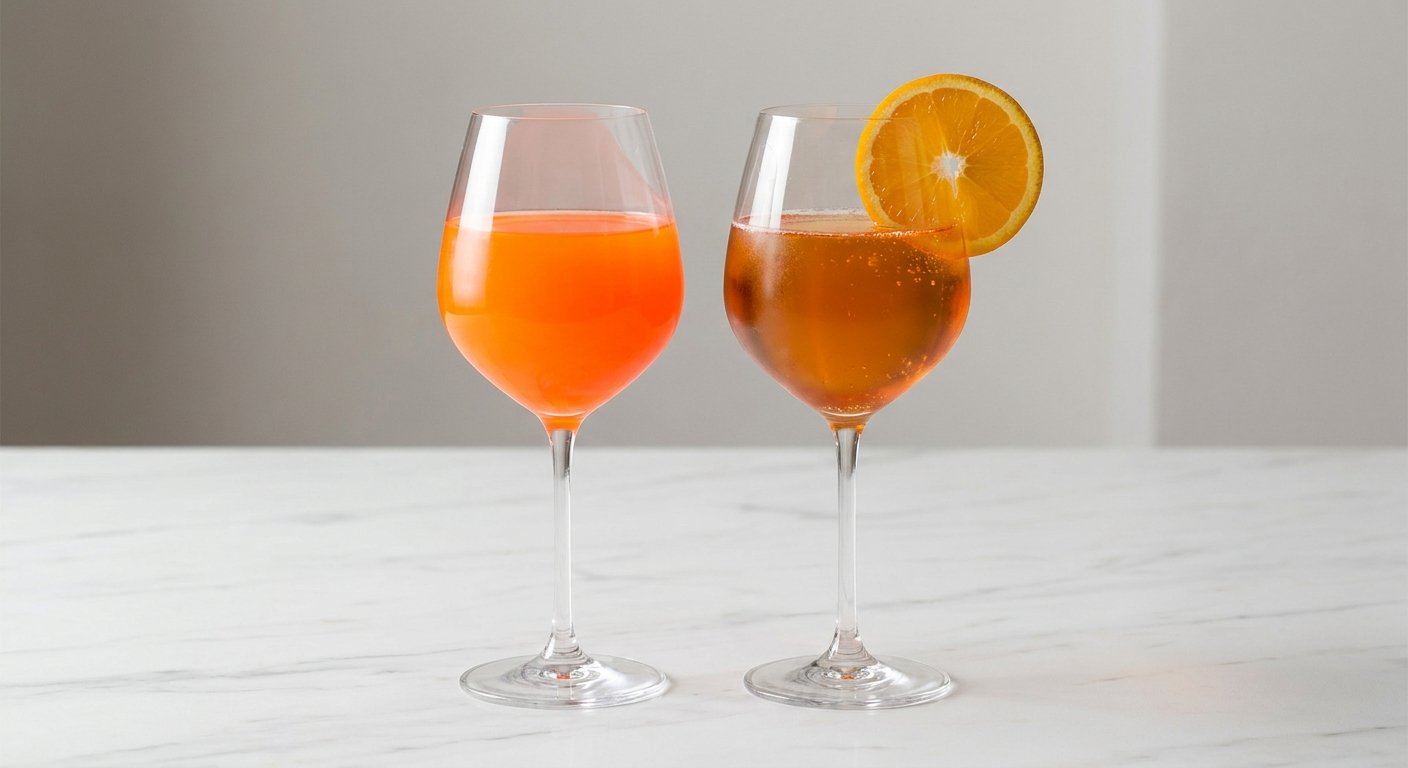
Aperol’s own European ingredient information lists artificial colorings E110, Sunset Yellow FCF, and E124, Ponceau 4R. That uniform, neon orange is engineered for shelf consistency, so every bottle looks identical from Milan to Manila.
There is nothing unsafe about a regulated coloring. My point is about transparency. When a drink is mass produced for perfect consistency, the color stops telling you anything about the ingredients.
Natural color behaves differently. Beetroot, purple carrot, and cochineal all give real, plant or insect based color that shifts batch to batch. One worth knowing: cochineal, also called carmine or E120, is natural but not vegan, since it comes from insects. Natural does not always mean what people assume.
Campari vs Aperol: Who Owns Your Spritz?
People often treat Campari and Aperol as rivals. In reality they share a parent. Both are Campari Group brands, so the campari vs aperol debate is really a debate between two products from the same house.
They are not the same drink, though. Here is how they compare.
| Factor | Aperol | Campari |
|---|---|---|
| Alcohol by volume | Around 11 percent | Around 25 percent |
| Flavor | Lighter, sweeter, orange and rhubarb | Bolder, drier, more bitter |
| Color | Bright orange | Deep crimson red |
| Owner | Campari Group | Campari Group |
| Best for | An easy daytime spritz | A Negroni or a bolder spritz |
Both are made on an industrial scale, and both rely on added coloring to stay visually identical year after year. Knowing they come from the same company helps you see the spritz for what it is, a flexible style you can upgrade.
Why We Don’t Serve Aperol or Campari at Aroma Thyme Bistro
At Aroma Thyme Bistro we pour neither Aperol nor Campari. That surprises guests, so let me explain the thinking.
My whole career has been about asking where ingredients come from and how they are made. I have applied that same question to wine, to beef, and to the relationships behind every product we source. A spritz deserves the same scrutiny.
When a product is engineered for identical color and flavor across millions of bottles, something is lost. I would rather pour a bitter aperitivo from a small maker who tells me what is in it. That is a choice about transparency, not a knock on anyone’s summer drink.
The Best Aperol Spritz Alternatives Worth Pouring
This is the fun part. The best alternatives to Aperol are the small, artisan bitter aperitivos made by people who still do it by hand. Here are the makers I have visited and pour with pride.
- Crimson Amaro, Hudson Valley, New York. A small-batch amaro made close to home, with real botanical color and a bittersweet depth that store brands cannot match.
- Don Ciccio & Figli, Washington, DC. A maker reviving old southern Italian family recipes, with bright, honest aperitivos built for spritzing.
- Montanaro, Bordiga, and Contratto, Piedmont, Italy. Historic houses that still make vermouth and bitters the traditional way, with character in every pour.
These are craft aperitivos and Italian aperitivo brands that treat color as a result of ingredients, not a marketing target. If you want a natural Aperol alternative, start here.
How to Make a Better Spritz Without Aperol
You do not need a bar full of bottles to build a spritz without Aperol. You need good sparkling wine, a bitter aperitivo you trust, and a little care. Here is the traditional build next to the one we pour at the bistro.
| Element | Traditional spritz | The Aroma Thyme spritz |
|---|---|---|
| Sparkling wine | 4 oz Prosecco | 5 oz Prosecco |
| Aperitivo | 2 oz bitter aperitivo | 2 oz artisan bitter aperitivo |
| Fizz | 2 oz club soda | None, we let the Prosecco carry it |
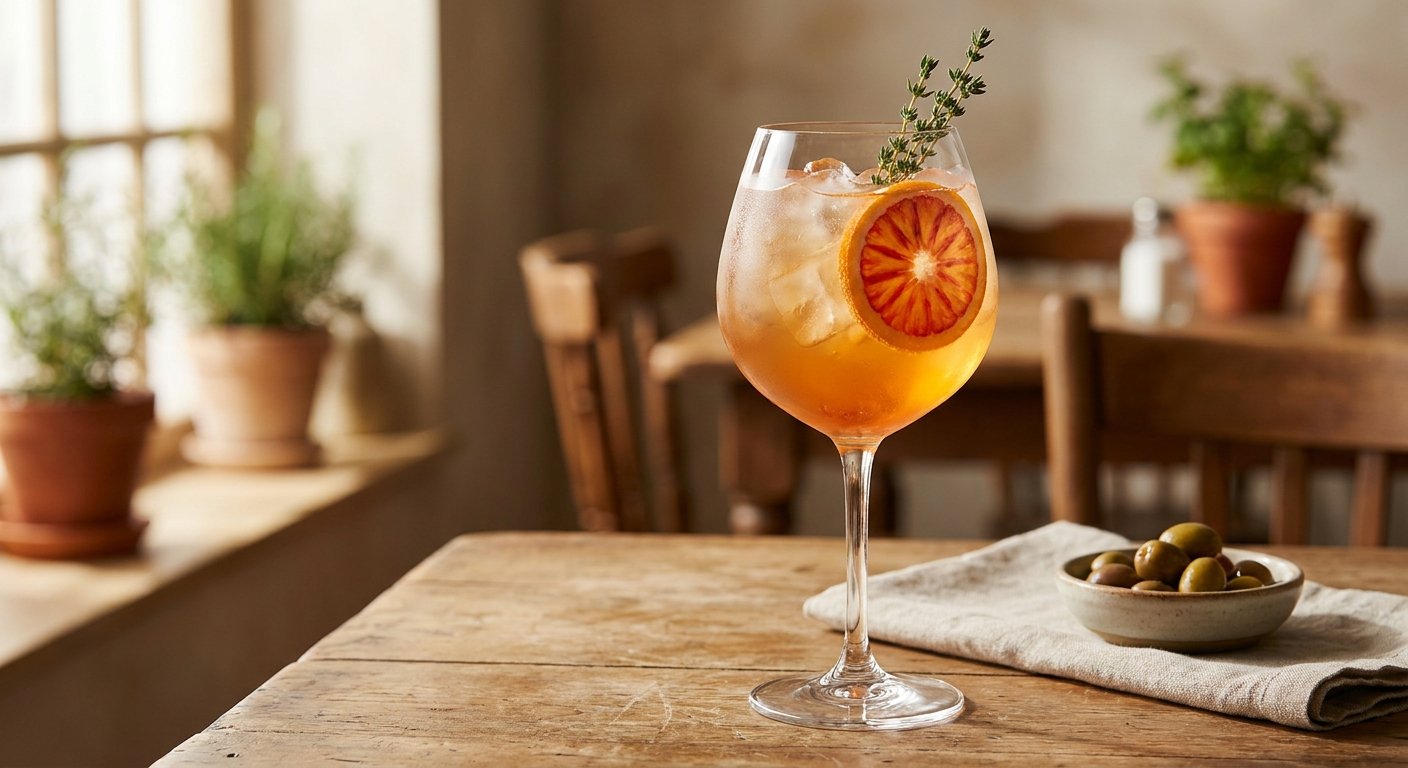
| Garnish | Orange slice | Fresh blood orange |
The method is simple, and it rewards a steady hand.
- Chill everything first. Cold Prosecco and a cold glass keep the spritz crisp instead of flabby.
- Fill a large wine glass with ice. A big glass lets the aromas open and leaves room for garnish.
- Build in order. Pour the Prosecco first, add your aperitivo, then a splash of soda only if you want it.
- Stir gently and garnish. One slow stir keeps the bubbles, then add your citrus.
Garnishes Matter More Than You Think
The garnish is not decoration. It is the first aroma you meet and it shapes every sip. A thoughtful garnish can lift even a simple pour.
- A fresh blood orange slice for a deeper, sweeter citrus note.
- A wide ribbon of grapefruit peel for a bright, slightly bitter lift.
- A sprig of fresh thyme or rosemary for a savory, herbal edge.
- Castelvetrano olives on the side for a classic Veneto, food-friendly touch.
Frequently Asked Questions
What is in an Aperol Spritz?
An Aperol Spritz is Prosecco, Aperol, and a splash of soda water, served over ice with an orange slice. The classic ratio is three parts Prosecco, two parts Aperol, and one part soda.
What is Aperol made of?
Aperol is a bitter aperitivo of around 11 percent alcohol, made from gentian, rhubarb, cinchona, and a blend of herbs and roots, plus added coloring for its signature orange hue.
Is there food coloring in Aperol?
Yes. Aperol’s own European ingredient information lists artificial colorings E110, Sunset Yellow FCF, and E124, Ponceau 4R. The bright orange is not from the botanicals alone.
What is the difference between Campari and Aperol?
Both are Campari Group brands. Aperol is lighter, sweeter, and around 11 percent alcohol, while Campari is bolder, more bitter, deep red, and around 25 percent alcohol.
What is the best Aperol spritz alternative?
The best alternatives are small-batch bitter aperitivos such as Crimson Amaro, Don Ciccio & Figli, and traditional Piedmont houses, where color and flavor come from real botanicals.
Can you make a spritz without Aperol?
Yes, easily. Use cold Prosecco, any artisan bitter aperitivo you trust, and an optional splash of soda, then garnish with citrus or fresh herbs.
Your Better Spritz Starts With What Is in the Glass
A spritz should be fun, and it should also be honest. The orange drink everyone orders is delicious, but it is one option among many, and the brand is yours to choose.
So the next time you reach for a bottle, ask the same question I ask of every ingredient at Aroma Thyme. What is really in this, and who made it. Once you start exploring aperol spritz alternatives, you find more flavor, more transparency, and a better glass in your hand. Come visit us, and let us pour you a spritz worth talking about.