




Why I Turned Down an Executive Chef Job at a NY Times–Rated Restaurant
(And Why It Was the Best Decision of My Career)
There’s a moment in every chef’s career when the ego gets tested.
The phone rings.
The executive chef title is shiny.
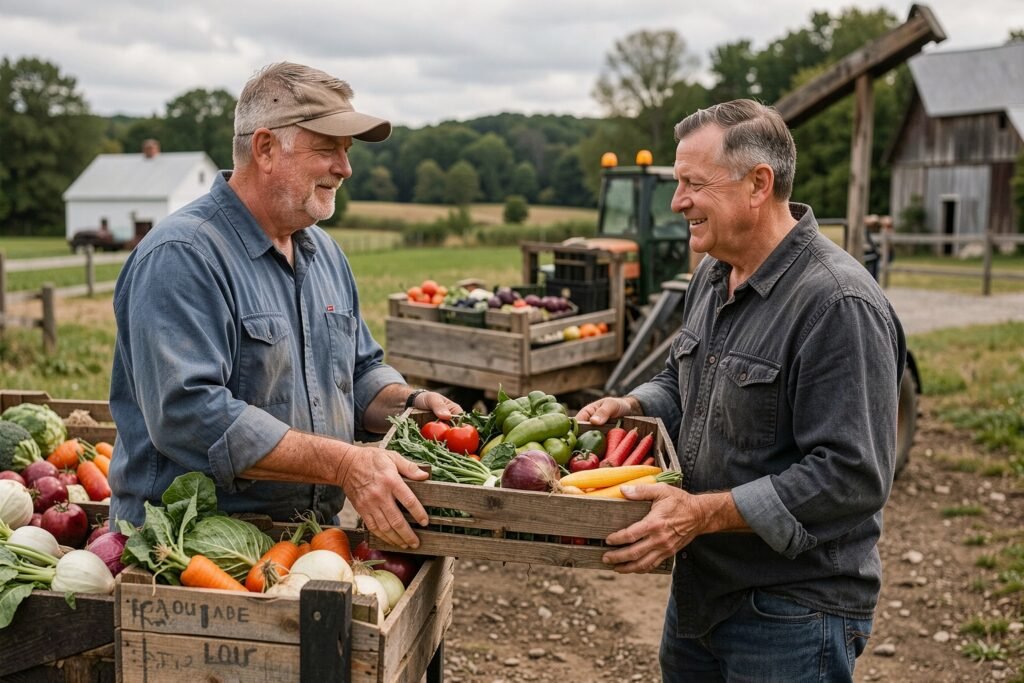
The restaurant was The DePuy Canal House, a culinary landmark led by Chef John Novi, the “Father of New American Cooking.”
It held a rare four-star rating from The New York Times. It was the place that pioneered farm-to-table dining in a historic 1797 stone tavern long before it was a trend.
And everyone around you says, “You’d be crazy to say no.”
I said no.
Not because I couldn’t do the job.
Not because I was scared.
But because I knew something most people ignore:
I wasn’t ready to become the person that job needed.
The Conversation That Changed Everything
I sat with the owner and told him the truth—something you almost never hear in this industry:
“I could do this job well.
But I know there’s more I need to learn.”
Let that sink in.
In an industry built on bravado, fake confidence, and résumé inflation, I chose honesty over hierarchy.
And then I did something even more uncomfortable.
I didn’t just turn down the promotion.
I resigned.
Why I Chose to Go 5,000 Miles Away
The question everyone asked me: “Why London? Why not just stage in New York?”
Fair question.
New York had great restaurants. Talented chefs. Michelin dreams are happening in Manhattan.
But here’s the truth I understood even then:
Comfort is the enemy of growth.
I didn’t need proximity. I needed discomfort.
I needed to be in a place where I didn’t know anyone, where the standards were uncompromising, and where I’d be stripped down to fundamentals and rebuilt.
London in the ’90s had something most American kitchens didn’t: a culture where mastery wasn’t optional—it was the baseline.
The French technique wasn’t a trend. It was the language.
Precision wasn’t impressive. It was expected.
I wanted to train in kitchens where excellence was so deeply embedded that mediocrity couldn’t survive a single service.
So I went 5,000 miles away.
On purpose.
From Executive Chef Track… to Working for Free
Instead of climbing the ladder, I stepped off it.
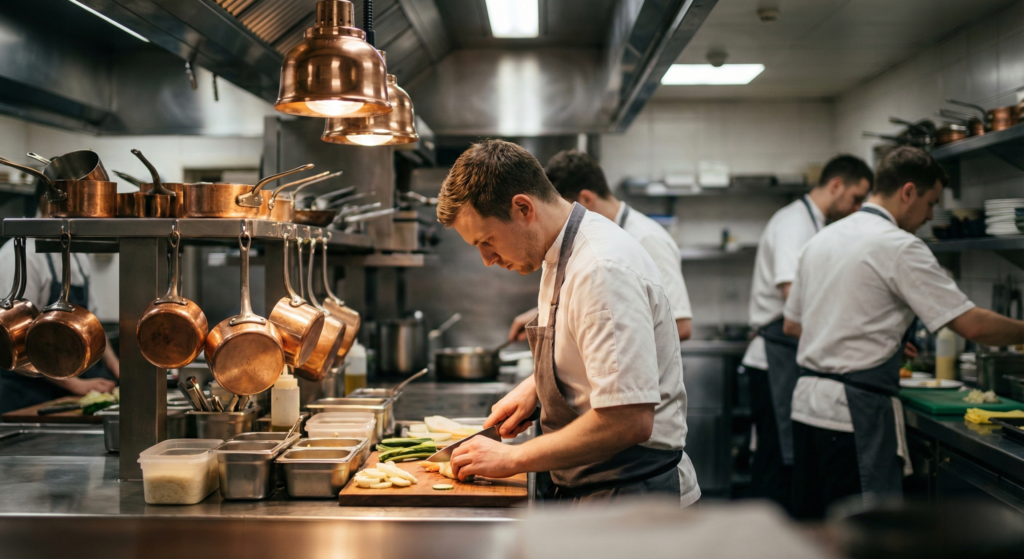
I packed my bags and went to London—not to get paid, but to get educated.
I staged at some of the most demanding kitchens in the world.
This wasn’t just training—it was chef mentorship from legends.
Let me be clear for the younger cooks reading this:
This wasn’t romantic.
This wasn’t Instagram-worthy.
This was humbling, exhausting, and surgical.
What Pierre Koffmann Taught Me About How to Become an Executive Chef
Pierre Koffmann taught me that technique is non-negotiable.
Not “nice to have”—non-negotiable.
Every cut, every sauce, every plating had a reason rooted in French fundamentals. He showed me that respecting the ingredient means understanding it completely. Not just cooking it. Knowing where it came from, how it should be handled, and what it’s capable of.
His kitchen operated like surgery.
No wasted movement. No shortcuts.
If you couldn’t execute the technique perfectly, you had no business being there.
That precision became non-negotiable for me.
What Paul Gayler Taught Me at The Lanesborough
At The Lanesborough, Paul Gayler was doing something unheard of: earning four AA rosettes for hotel dining and proving it could rival any standalone restaurant.
He taught me that vegetables deserve the same respect as protein.
He was a visionary who launched the Menu Potager, a dedicated gourmet vegetarian menu, decades before the plant-based movement took off.
Paul showed me that elegance comes from editing. In America, we tend to over-compose plates with too much noise. Paul’s food was sophisticated yet accessible, blending international flavors with impeccable British seasonal ingredients. He taught me that you don’t need to hide behind heavy sauces if your produce is perfect.
What Anton Mosimann Taught Me at Mosimann’s
Anton Mosimann created a culinary sanctuary in a converted church in Belgravia, serving royalty (including King Charles III) and the global elite.
But what he really taught me was the philosophy of Cuisine Naturelle.
He stripped away the heavy butter, cream, and alcohol that defined classic French cooking. Instead, he focused on the pure, natural flavors of the ingredients.
He showed me that healthy food didn’t have to be boring—it could be Michelin-standard.
His private club was a masterclass in atmosphere and exclusivity, but behind the silver animal table decorations was a kitchen that ran with military precision. He proved you could deliver exquisite, health-conscious food while running a profitable, consistent business operation.
No ego.
No shortcuts.
No applause.
Just standards.
The Lesson Most Chefs Don’t Want to Hear
Every week I see posts in Facebook chef groups asking about executive chef vs sous chef roles:
“Hey everyone! I just got promoted to sous chef / executive chef. Wish me luck! Any pointers?”
And I cringe—not because I’m not happy for them, but because they’re asking the wrong question.
Here’s the truth from a chef who’s lived it:
Promotion does not equal preparation.
You might have the title, but do you have the executive chef qualifications that go beyond a résumé?
A new title doesn’t magically give you:
- Leadership skills
- Emotional control
- Systems thinking
- Cost discipline
- Vision
- Culture-building ability
Those are earned, not announced.

My Chef Career Advice (Read This Twice)
If you’re stepping into a bigger role, ask yourself these questions.
Not in front of your boss. Not on your résumé.
Just you, sitting with a beer after service, being honest:
Who have I trained under that was better than me?
If the answer is “nobody” or “not recently,” that’s a problem. Growth comes from people who make you uncomfortable with how much they know.
When was the last time I felt uncomfortable in a kitchen?
If you’re always the best cook in the room, you’ve stopped learning. Discomfort = growth. Comfort = plateau.
Am I chasing a title—or chasing mastery?
Be honest. Is this about the Instagram bio update, or is it about becoming someone who actually deserves the role?
Would I still do this if no one was watching?
Because leadership in a kitchen—real leadership—is about what happens when no one’s looking. The systems you build. The culture you create. The standards you hold when it’s just you and the line.
Here’s the hard truth:
The industry is full of chefs who climbed too fast and burned out even faster.
Don’t be one of them.
Why This Decision Paid Off for the Rest of My Life
Turning down that job didn’t slow my career.
It compounded it.
Everything I learned in those London kitchens—the technique, the restraint, the systems—became the foundation for everything I built after.
It shaped how I:
- Lead teams: Not through ego or volume, but through standards and culture
- Build systems: Operations that work whether I’m in the building or not
- Create culture: Kitchens where integrity isn’t a value statement on the wall—it’s how we operate
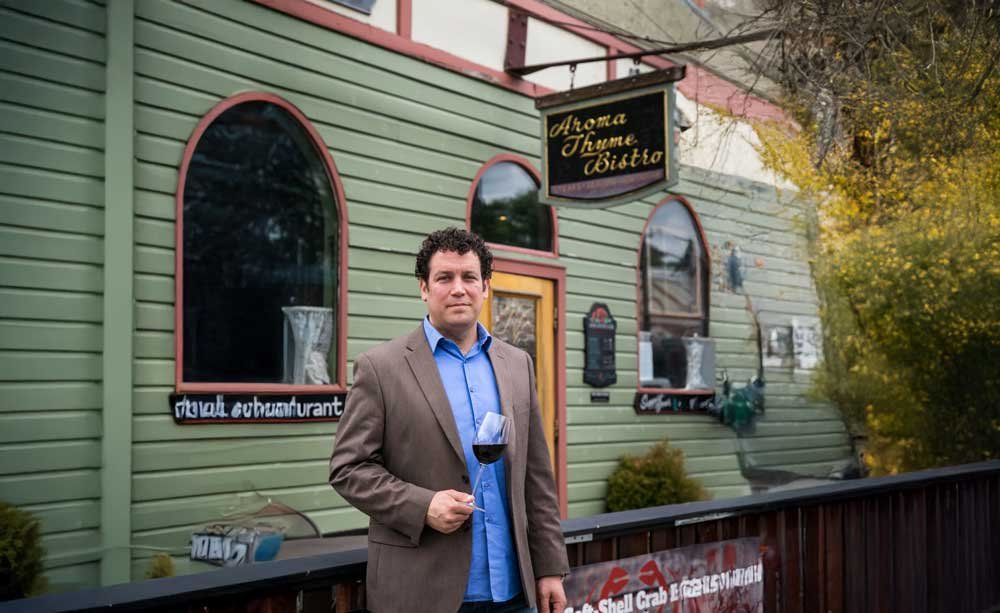
- Run profitable, ethical restaurants: Proving you don’t have to compromise values to succeed at Aroma Thyme Bistro
- Teach other operators: Showing them the path I took so they don’t have to figure it out alone through restaurant consulting and coaching
Years later, I didn’t just have a title.
I had something sustainable, not just impressive.
A career built on mastery, not marketing.
A reputation built on consistency, not hype.
And the ability to look back and know I did it the right way—even when the right way was harder.
Final Thought from a Chef on a Mission
If you’re offered an executive chef seat at the table before you’ve learned how to build the table…
Have the courage to say no.
Go learn.
Go scrub floors in great kitchens.
Go stand next to people who intimidate you.
Because confidence without depth is fragile.
And mastery?
Mastery lasts a lifetime.
Chef on a Mission