





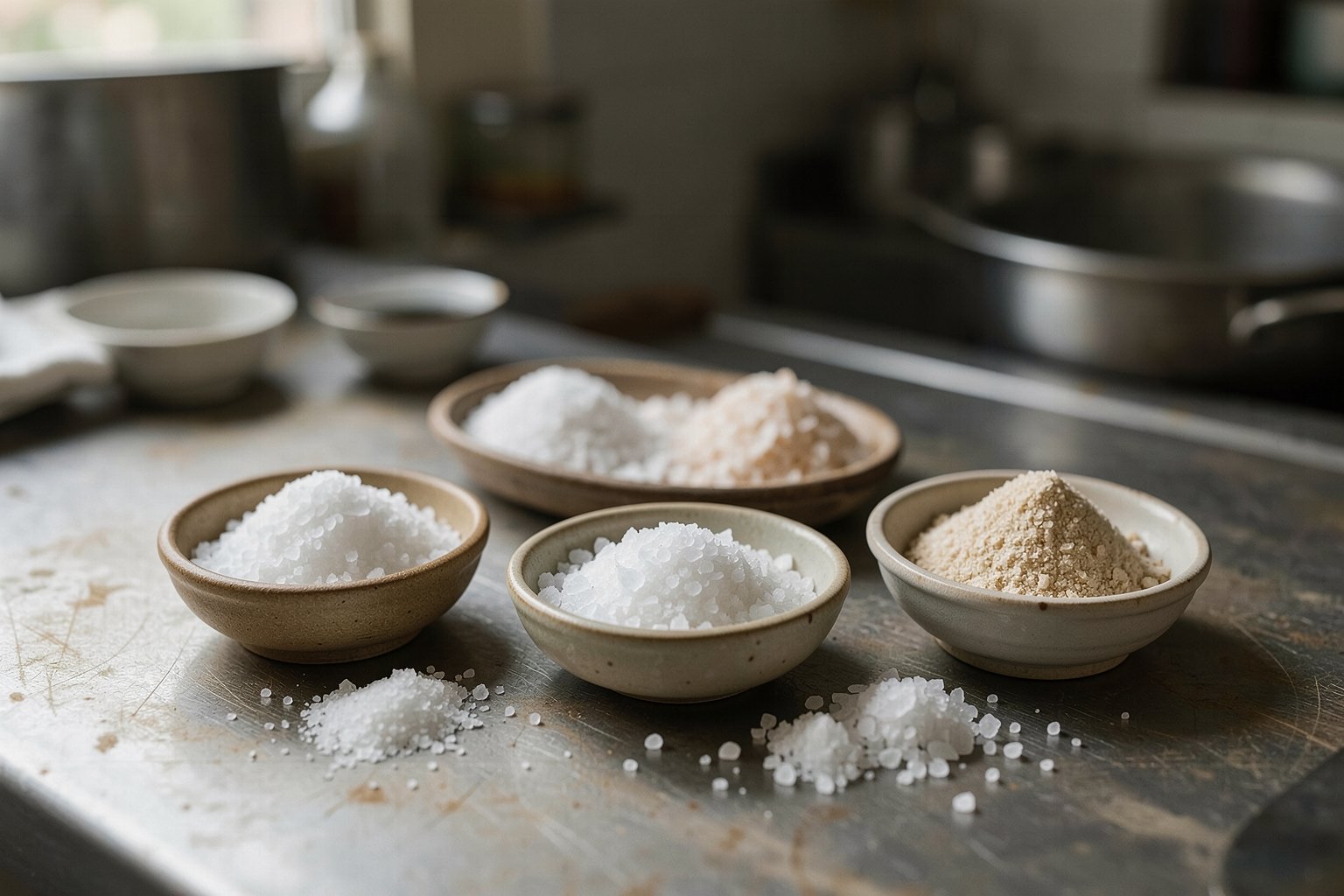
The types of salt for cooking are not equal in my kitchen, and processing is the first thing I look at. I want salt that stays as close as possible to the way it came from the earth or sea: mined or naturally evaporated, minimally handled, and not stripped down only to be rebuilt later. Crystal size and texture still matter for cooking, but source and processing come first.
I have taken salt seriously for a long time. Back in 1998, while I was working at The Broadmoor in Colorado Springs, I taught a cooking class that began with salt because seasoning is a fundamental, not an afterthought. Years later, I discussed gourmet salts on Good Morning America. The same lesson has stayed with me through professional kitchens: understand what an ingredient does before you get distracted by the story on the package.
My position is simple: the less processing, the better. I am not choosing salt because it is trendy, pink, French, kosher, iodized, or expensive. I want to know where it came from, how it was produced, whether it was dissolved and recrystallized, whether it went through heated industrial evaporation, whether additives were introduced, and how much of the ingredient’s natural character remains.
What is the best type of salt for everyday cooking?
The best salt for everyday cooking is a minimally processed salt you understand and can season with consistently. In my own kitchen, I prefer Redmond Real Salt because I know how it behaves in my hands and because its production fits the kind of ingredient I want to use. Redmond says its food-grade Real Salt is mined and undergoes no processing beyond crushing and screening.
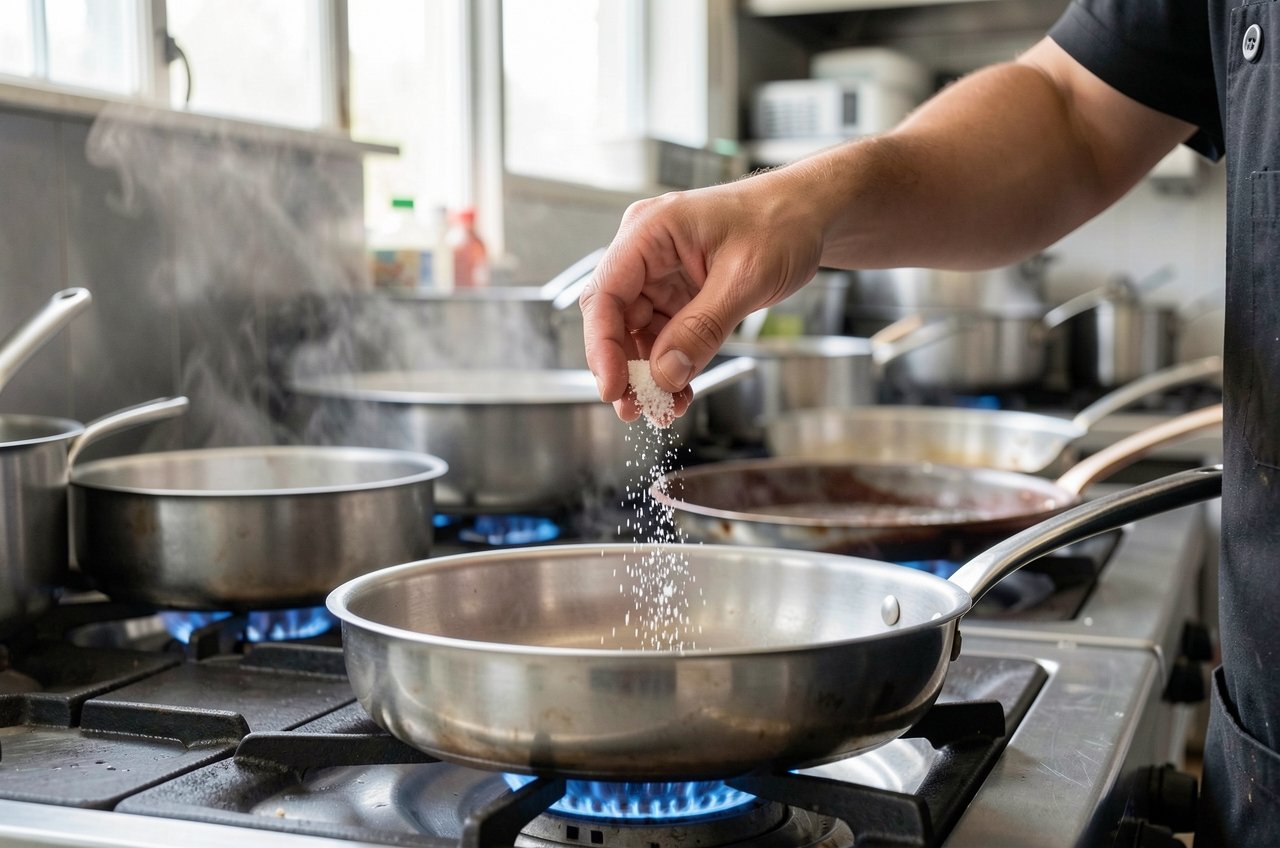
For another cook, a minimally processed sea salt may be the everyday choice. I would not default to table salt or kosher salt just because the grain is familiar. Learn the salt you use most often, but first learn how it was made. Then notice how dense it is, how quickly it dissolves, how much fits between your fingers, and how it changes a dish when you add it in stages.
This is where I come back to the same principle I learned in demanding professional kitchens: master the fundamentals of cooking before chasing flash. A finishing salt cannot rescue weak seasoning technique.
Salt does more than make food taste salty
Salt changes the way other flavors register. Used well, it can make a tomato taste more like a tomato, sharpen the contrast in chocolate, and help savory ingredients feel more complete. That is why salt belongs in conversations about vegetables, sauces, bread, pastry, desserts, and almost every other part of a kitchen.
But more salt is not automatically better. Sometimes a flat dish needs acidity. Sometimes it needs more browning, a better stock, fresher herbs, or a stronger base ingredient. Good seasoning starts with tasting and diagnosing, not reaching for the salt every time something feels dull.
Understand umami and the five basic tastes and salt becomes easier to use well. Saltiness is one part of flavor. A cook who understands the other levers can season with more restraint and purpose.
Source, processing, crystal size, and texture all matter
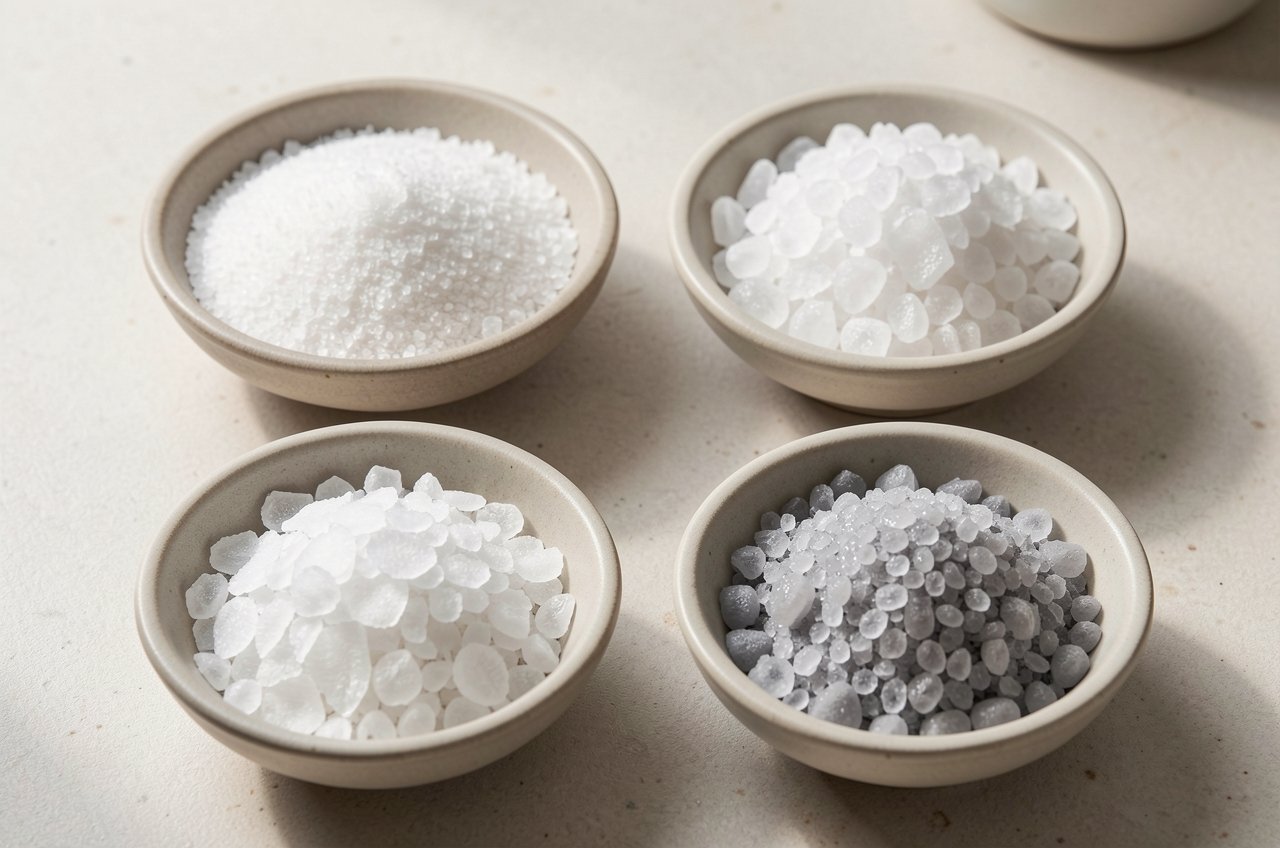
Salt can reach the kitchen by very different routes. It can be mined as rock salt, produced by solar evaporation, or made by dissolving salt into brine and crystallizing it again in commercial evaporators. Morton Salt’s own production overview describes solar evaporation, underground mining, and steam-heated vacuum-pan evaporation as distinct methods. That processing history matters to me before I ever get to grain size.
A fine, dry grain dissolves quickly and packs tightly into a measuring spoon. A coarse crystal takes longer to dissolve and occupies more space. A moist grey sea salt feels different from a finishing flake. That physical structure matters because cooking is tactile.
I care about ingredient sourcing with intention for the same reason I care about sourcing meat, produce, cheese, and wine. I want to know where an ingredient came from and what happened to it before it reached me. I also want enough producer information to make an informed choice.
For me, unrefined salt is a useful starting point because I want fewer processing steps, not more. I still want to know the source, handling, testing, and culinary performance, but I would rather begin with a salt that has not been dissolved, purified, recrystallized, dried, and rebuilt when a simpler option exists.
Redmond says its food-grade Real Salt does not undergo processing beyond crushing and screening. That is the kind of straightforward producer information I want: tell me exactly what happened between the deposit and the package.
Why does processing matter when choosing salt?
Processing matters because it tells me how far the finished ingredient has moved from its original source. I prefer salts that are mined or naturally evaporated and then minimally handled. If a salt was dissolved into brine, recrystallized, dried, fortified, or otherwise heavily refined, I want to know that before I decide whether it belongs in my kitchen.
This is not the same as saying every minimally processed salt is automatically perfect. Source, cleanliness, testing, crystal structure, and culinary performance still matter. But processing is the first filter I use.
Different types of salt and where I use them
When people compare the types of salt for cooking, ranking them from “best” to “worst” misses the point. I think in terms of jobs. That is the practical way to understand the different types of salt.
| Salt type | What stands out | Where it makes sense |
|---|---|---|
| Fine table or fine sea salt | Fine texture and predictable measuring; processing can vary widely | Useful when the production method meets your standards; fine grain alone does not tell you whether the salt is minimally processed |
| Kosher salt | Larger grains, but the category does not tell you how the salt was produced | Not my default; check the actual brand and process instead of assuming “kosher” means better salt |
| Coarse or moist sea salt | Texture and moisture can remain closer to the original salt; production still varies | A strong option when it is naturally evaporated, minimally processed, and appropriate for the dish |
| Flaky finishing salt | Light, brittle crystals with noticeable crunch | Tomatoes, vegetables, meat, chocolate, and finished plates where texture is part of the experience |
| Himalayan pink salt and other mineral salts | Mined source, natural color, grain, and mineral character can vary by product | Judge the actual source, processing, testing, and kitchen performance rather than the color alone |
The table is a starting point, not a rulebook. Two brands in the same broad category can differ in crystal size, density, moisture, and flavor. Learn the actual salt in your kitchen.
Why I do not give kosher salt a free pass
The usual kosher salt vs table salt conversation focuses on crystal size. That is incomplete for me. I care more about how the salt was made. A coarse crystal can feel great in your fingers and still come from a production process I would not choose for an everyday salt.
I do not automatically reject every kosher salt. Diamond Crystal says its kosher salt is additive-free and made with its proprietary process. That is exactly why I evaluate the actual product instead of making the word “kosher” a quality stamp.
Most of the time, I would rather start with a minimally processed mined or naturally evaporated salt and learn that grain than choose a salt simply because professional kitchens have made the kosher category familiar.
Redmond Real Salt: my everyday preference
Redmond Real Salt has been my everyday preference for years. I like that it has a specific source, a less-refined character, and grain options that work in a real kitchen. I know what it feels like in my fingers and how it seasons the food I cook.
Redmond describes its salt as containing naturally occurring trace minerals, and its food-grade process is limited to crushing and screening. That combination matters to me because I want a salt that still looks and behaves like a whole ingredient rather than something refined toward uniform purity and then modified again.
I am not asking salt to be a supplement. I am asking it to be as intact and minimally processed as practical.
Maldon and finishing salt: pay for texture where you can taste it
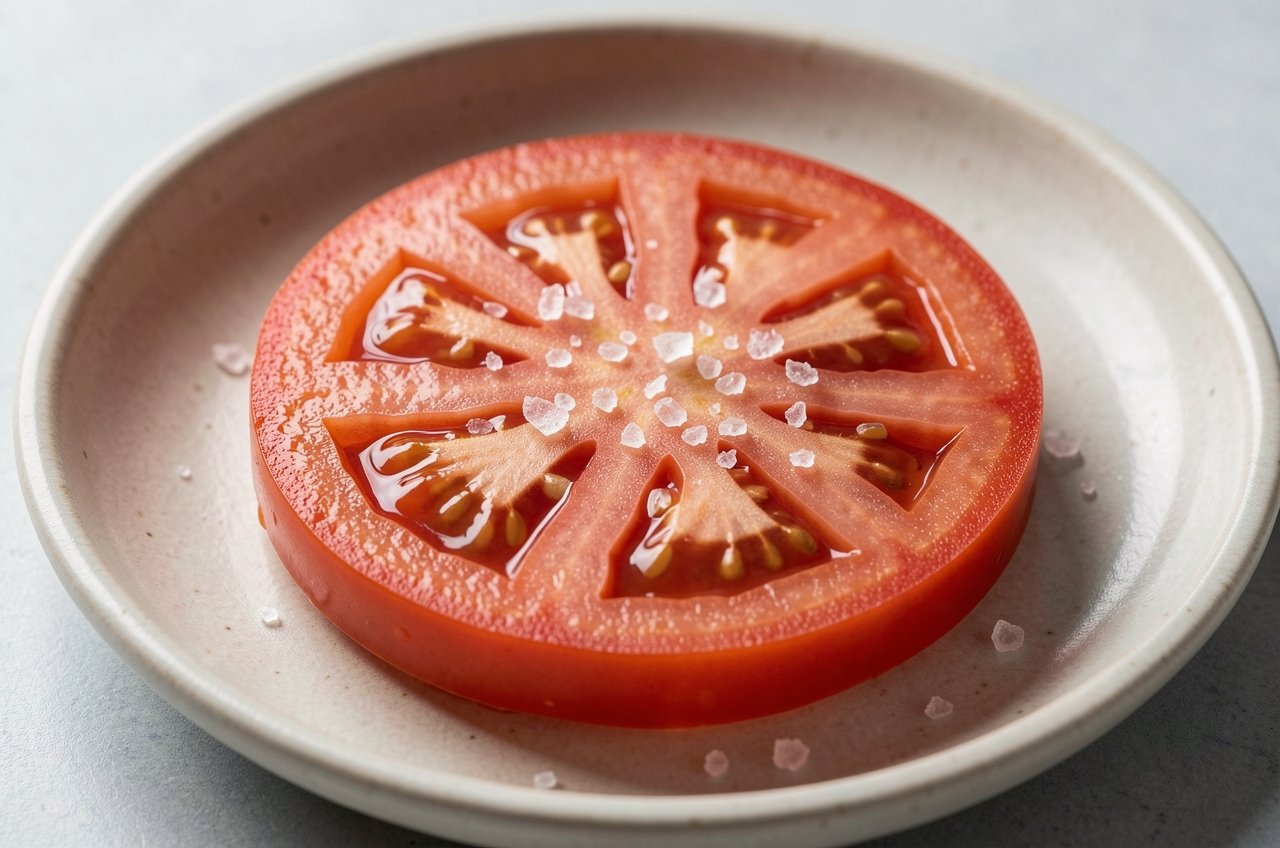
Maldon shows why finishing salt exists. Its flakes add crunch and a burst of seasoning on the surface of food.
I like finishing flakes on ripe tomatoes, grilled vegetables, a finished piece of meat, or a chocolate dessert. In those places, the crystal itself becomes part of the eating experience. Dissolving an expensive flaky salt into a large pot of water usually defeats the reason you paid for that texture in the first place.
This is one of my simplest rules for spending intelligently: pay more when you can actually experience the difference.
Brittany salt: grey salt and fleur de sel are not the same thing
Salts from the Guérande area of Brittany show how harvesting method and moisture change the ingredient. Grey salt, or sel gris, is typically moist and mineral-tinted from the salt pans, while fleur de sel refers to more delicate crystals gathered from the surface.
I use coarse grey salt where its grain and moisture make sense, and I reserve fleur de sel for finishing. The broader lesson is not “French salt is better.” Learn which salt you are actually buying instead of stopping at a regional label.
Baja Gold and mineral salts: read the numbers, then ask what they mean
Baja Gold is another specialty salt that emphasizes mineral composition and publishes product specifications. I appreciate that level of transparency because actual composition gives a cook more information than a vague phrase such as “mineral rich.”
But numbers still need context. A mineral panel can tell me what is present; it does not tell me by itself whether the salt was sourced responsibly, minimally processed, or right for a particular dish.
I use those numbers as one piece of the decision. Then I go back to the questions that matter most to me: Where did it come from? What happened to it? Was it dissolved and recrystallized? Was it naturally evaporated? Was anything added? Does the producer test it and explain the process?
Himalayan pink salt: I care more about processing than color
I do not choose Himalayan pink salt because pink automatically means better salt. I choose or reject it the same way I judge every other salt: source, processing, testing, mineral character, crystal structure, and how it performs in the kitchen.
For sea salt vs Himalayan salt, the label is only the beginning. “Himalayan” is a broad market category, not a complete quality standard. I want to know where it was mined, how it was milled, whether anything was added, how the producer tests it, and whether the company can explain the path from deposit to package.
Color can tell you that the salt is not a perfectly uniform white crystal, but color alone does not tell me whether it is a product I want to cook with. Processing transparency does.
Why I care about trace minerals in salt
I care about trace minerals in salt because they are part of the whole ingredient. I do not need a pinch of salt to act like a multivitamin before I value the fact that a less-refined salt can keep more of its natural mineral character than a salt refined toward nearly pure sodium chloride.
When an ingredient starts with natural complexity, my instinct is not to strip it down more than necessary. I would rather begin with a clean, tested, minimally processed salt and then decide whether its grain and flavor fit the job.
That is an ingredient standard, not a medical promise. I am not claiming that every mineral salt provides a specific health benefit or that every white salt is automatically inferior. I am saying that, as a chef, I prefer the whole ingredient over unnecessary refinement.
Why I do not use iodized salt
I do not use iodized salt in my kitchen. My issue is not that the word iodine exists on the label; my issue is the direction of the processing. Most iodized table salt I encounter is a highly refined product that has been purified for uniformity and then fortified afterward. That is the opposite of the whole-ingredient approach I want in my kitchen.
I prefer to start with a minimally processed salt that already has its natural character intact rather than a salt that has been stripped down and rebuilt. That is my culinary and ingredient philosophy.
This article is not medical advice about anyone’s iodine needs. My point is narrower: when I choose salt as a chef, I choose by source and processing first, and iodized table salt is not where I start.
My framework for choosing the right salt
When I look at a salt, I now put the decision in this order: processing → source → production method → mineral character → testing and transparency → crystal and texture → culinary job → price. Processing comes first because I want to know what happened to the ingredient before I decide what the marketing language means.
Was it mined and crushed? Was seawater concentrated by sun and wind? Was salt dissolved into brine and crystallized again? Was it dried, purified, fortified, or blended with additives? Those questions tell me more than “kosher,” “sea salt,” “pink,” or “gourmet.”
This framework keeps the phrase best salt for cooking in perspective. The best choice for me is the least-processed salt that still gives me the texture, consistency, transparency, and performance I need for the job.
Five habits that will make you better with salt
- Read the process before the marketing. Find out whether the salt was mined, naturally evaporated, dissolved and recrystallized, fortified, or otherwise refined before you decide what the front of the package means.
- Taste throughout the process. Seasoning is easier to control in stages than with one desperate correction at the end. Taste, adjust, and notice what changed before adding more.
- Know the grain you are using. Fine salt, coarse salt, moist sea salt, and flakes do not measure or distribute identically. If you switch products, recalibrate instead of assuming the same pinch or teaspoon will behave the same way.
- Use weight when precision matters. A teaspoon can hold very different amounts of fine salt and coarse salt. For baking, brines, and repeatable recipes, weighing the salt gives you a more dependable starting point.
- Save specialty texture for a place where it survives. If you bought a flaky or moist salt because of the way it feels, use it where the diner can experience that texture. Do not dissolve it where the distinction disappears.
Those habits matter more than owning a shelf full of expensive salts. Technique gives the ingredient context.
Salt is simple, but choosing it should be deliberate
Salt is not just salt in the kitchen because the path from source to package can be completely different from one product to the next. My bottom line is simple: less processing is better. I want a clean, transparent salt that has been handled as little as practical and still carries the character of the original ingredient.
Before you buy another salt, ask: Where is it from? Was it mined or naturally evaporated? Was it dissolved and recrystallized? Was it heated or dried as part of an industrial evaporation process? Was anything added afterward? What mineral character remains? Is there testing and transparency? And does the crystal structure fit the way you plan to cook?
That is the standard I want in my kitchen: start with a whole ingredient, avoid unnecessary processing, understand the source, and then use the right crystal for the job.