




In 1997, while living and working in London, I got a real education in kitchen leadership from Chef Paul Gayler. The opportunity came through Chef Peter Timmins, who would later become Executive Chef at The Greenbrier in West Virginia. Peter believed I needed to be in the kitchens of some of the best chefs in London at the time, so he reached out on my behalf to both Pierre Koffmann and Paul Gayler. Because of that connection, I worked for both.
Working under Paul Gayler at The Lanesborough changed me in ways that still show up every day at Aroma Thyme Bistro in the Hudson Valley.
Kitchen Leadership Means Jumping on the Line
The Executive Chef Who Cooked Beside You
Paul Gayler was Executive Chef at The Lanesborough, a Rosewood property and one of the most refined kitchens in London. He could have stayed at the pass, inspected plates, and remained the executive presence. He didn’t. If the kitchen was in the weeds, he jumped on the line with his sleeves up, cooking, organizing, and executing.
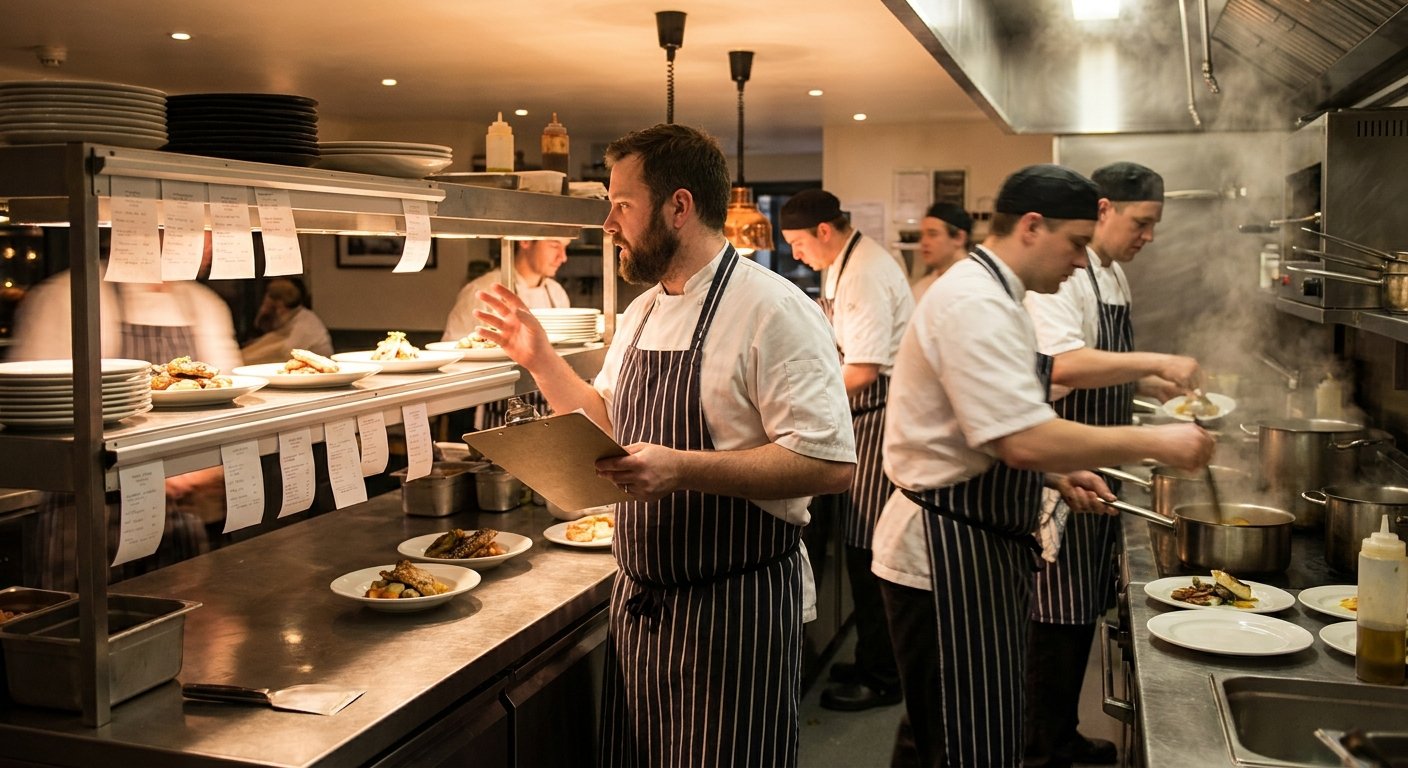
That image never left me. As a young chef, watching a chef of that caliber cook shoulder-to-shoulder with his team was powerful. He wasn’t above the line. He was part of it. That is executive chef leadership: not a title, but leading from the front.
Today, at Aroma Thyme Bistro in Ellenville, New York, I do the same thing. Yes, I expedite at the pass and oversee systems. But especially on holidays and busy nights, I roll up my sleeves and jump in, because lead by example leadership is the only kind a kitchen crew truly respects. It’s also why, years later, I turned down an executive chef job at a NY Times rated restaurant when I knew the timing wasn’t right.
And honestly, I love it. There is nothing like the rhythm of a busy line: tickets firing, stations communicating, timing aligning. That rush has been with me since I was a young apprentice. Paul Gayler reinforced that no matter your title, real kitchen leadership shows up in the heat.
Key Takeaway: Kitchen leadership is proven on the line, not from behind the pass. An executive chef earns direct respect by cooking beside the team when service gets heavy.
Vegetarian Cuisine Before It Was Trendy
Paul Gayler’s Influence on Plant-Forward Cooking
Paul Gayler was ahead of his time when it came to vegetarian fine dining. He authored one of the most influential vegetarian cookbooks in London at the time, long before plant-based became mainstream. He proved that gourmet vegetarian cuisine could be elegant, layered, professional, and worthy of fine dining.
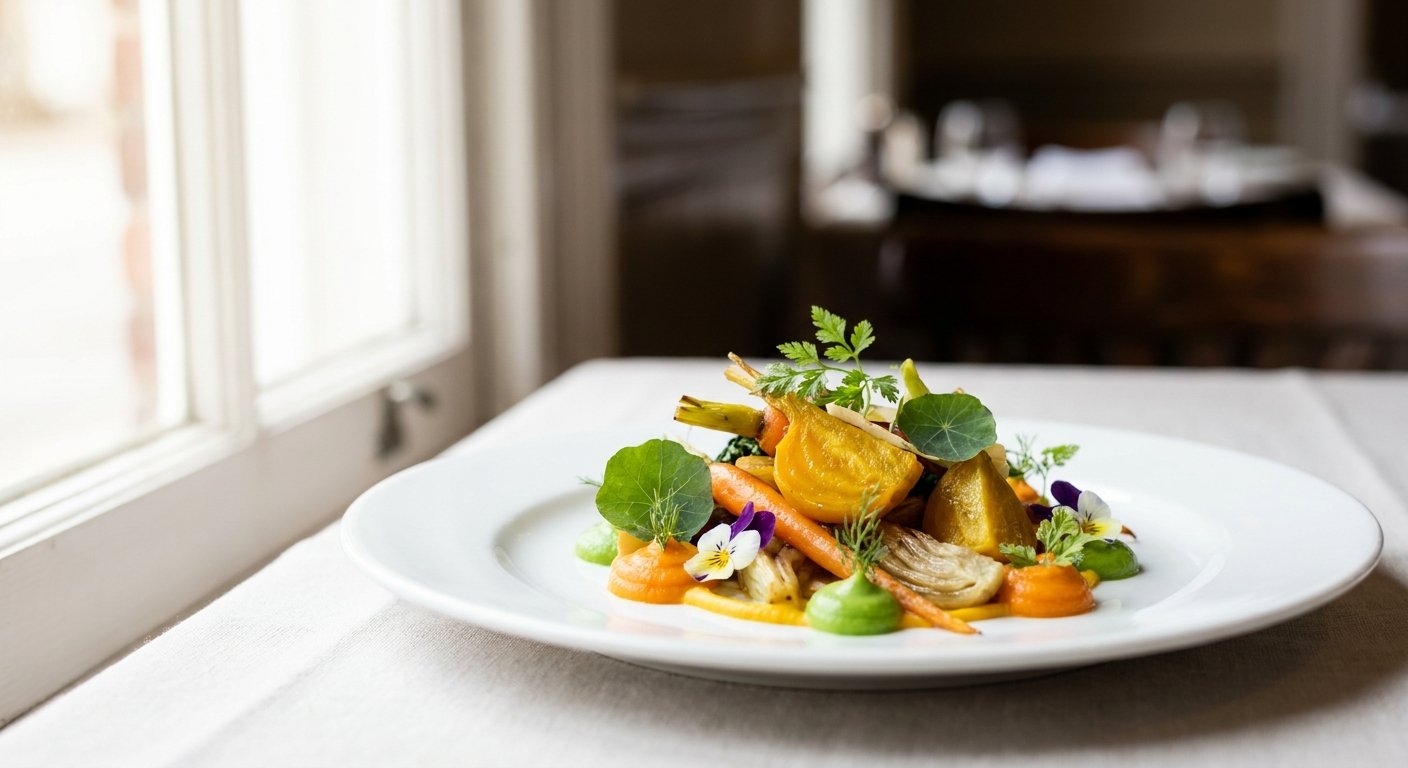
That deeply influenced me. As a Michelin-trained chef and owner of Aroma Thyme Bistro in the Hudson Valley, I pride myself on understanding vegetarian cuisine at a serious level. At Aroma Thyme, we cater to both vegetarians and meat eaters without compromising either. Vegetarian dishes are not afterthoughts; they are fully developed. Often when I create a vegetarian dish for the menu, I catch myself thinking: is this Paul Gayler approved? That internal benchmark still guides me.
Key Takeaway: Paul Gayler set a concrete benchmark for gourmet vegetarian cuisine decades before plant-based went mainstream. Serious technique is the standard, not the exception.
Balancing Vegetarian and Meat Cuisine at Aroma Thyme Bistro
At Aroma Thyme Bistro, one of the Hudson Valley’s most awarded farm-to-table restaurants, we serve:
- Grass-fed meats
- Wild seafood
- Creative vegetarian cuisine
- Plant-forward dishes
- Additive-free food
We do not separate vegetarian cooking from serious cooking. Vegetables deserve technique, plant-forward cooking deserves depth, and flavor must be intentional. Gayler showed me that vegetarian cuisine is not about subtraction. It’s about precision. That philosophy allows us to serve both vegetarians and meat lovers at the same table, and have both feel equally valued.
Here is how those specific lessons translate from The Lanesborough to our kitchen today:
| Lesson from Paul Gayler’s kitchen | How it works at Aroma Thyme Bistro |
|---|---|
| Jump on the line when the kitchen needs you | I cook and expedite during holidays and busy services |
| Vegetarian dishes deserve full technique | Creative vegetarian and plant-forward dishes are fully developed, never afterthoughts |
| Run a calm, structured, professional kitchen | Disciplined systems, clear station communication, no yelling |
| Books and innovation are team efforts | My books and education programs are built on team systems and execution |
Key Takeaway: Serving vegetarians and meat eaters at the same table works when both menus get equal technique, exact seasoning, and intent.
Innovation, Books, and Team Collaboration
Watching a Chef Write Books in Real Time
Paul Gayler authored multiple books, including one on cheese that remains one of my favorites to this day. I own several of his books and still reference them. What fascinated me was watching how the team supported the writing process: testing recipes, organizing systems, and collaborating on execution.
That experience shaped how I approach writing today. As I write my own books and develop educational programs on wine, agave, and food, I think back to that kitchen. Books are not just solo efforts. They are built from systems, teamwork, and execution. That lesson came directly from Paul Gayler’s kitchen, and it is why I believe lifelong learning is the only real competitive advantage in this business.
Key Takeaway: Structured teamwork behind Paul Gayler's cookbooks proved that books, systems, and education are collaborative work, not solo projects.
Professionalism, Structure, and Respect
What stood out at The Lanesborough under Paul Gayler was professionalism, organization, respect, innovation, and structure. It was a calm, focused kitchen: disciplined, refined, and collaborative. That kitchen showed me what leadership in the kitchen really looks like when nobody is yelling.
Chef Peter Timmins was right. Gayler was one of the most influential chefs in London at the time, and being in that kitchen expanded my understanding of what a chef could be. Not just a technician. Not just an artist. A leader.
Key Takeaway: Leadership in the kitchen is measured by how calm, structured, and exact the room stays under pressure, not by volume.
The Lasting Lesson
From Pierre Koffmann, I learned intensity and fundamentals. From Anton Mosimann, I learned refinement and restraint. From Paul Gayler, I learned kitchen leadership and innovation, especially in vegetarian cuisine. Chef mentorship shaped everything about how I cook and lead. I have written before about the best career advice I ever got from a chef mentor, and Gayler’s kitchen is a big part of that story.
I carry those lessons daily. When I design a vegetarian dish, I think of Gayler. When I jump on the line during a busy service, I think of Gayler. When I write and teach, I think of Gayler.
Aroma Thyme Bistro is not just a Hudson Valley restaurant. It is the result of mentorship from some of London’s finest kitchens, blended into a philosophy that respects both vegetables and proteins, both leadership and execution. That’s the standard of kitchen leadership I hold, and that’s the authority I bring to every plate.
Key Takeaway: Chef mentorship compounds. The specific standards learned under Paul Gayler still drive every plate, menu, and service at Aroma Thyme Bistro.