


If you’ve ever asked what does clean eating mean, you’re not alone. The answer used to be direct. But the food industry spent billions making sure you’d never get one.
I’ve been cooking since the late 1980s. At Aroma Thyme Bistro in the Hudson Valley, I built a kitchen around one specific rule: know every ingredient. I watched the clean eating movement shift from a real food philosophy to a billion-dollar branding tool. Corporations now use it to sell you ultra-processed food in healthier-looking packaging.
What Does Clean Eating Mean? It Was Never Complicated
Eat real food. Know what’s in it. Avoid unnecessary processing. No extremes. No $8 protein bars pretending to be health food.
Key Takeaway: Clean eating originally meant eating real food and knowing your ingredients. No diet rules. No marketing.
How the Food Industry Hijacked Clean Eating
Consumers wanted fewer chemicals and more food transparency. Instead of changing how food was made, corporations changed how food was marketed. That gave us:
- Organic junk food loaded with sugar and additives
- Vegan ultra-processed snacks engineered for shelf life, not health
- “Natural” products with synthetic ingredients (the FDA has no formal definition of “natural” under food labeling USA policy)
- Clean labels that aren’t actually clean
They didn’t fix the food. They fixed the optics.
Key Takeaway: The food industry didn't reform its products. It reformed its packaging. "Clean" labels now show up on foods that are anything but clean.
Real Food vs. Processed Food: What Does Clean Eating Look Like?
Here’s the breakdown I give guests, audiences, and anyone who asks.
| Real Food | Ultra-Processed Food |
|---|---|
| Comes from plants or animals | Engineered in a facility, not cooked |
| Ingredients you recognize without Google | Additives, stabilizers, emulsifiers, “natural flavors” |
| No health claims needed on the package | Front of package covered in health claims |
| Spoils within days or weeks | Lasts months or years on the shelf |
| Tastes like what it is | Tastes like what scientists want it to taste like |
A 2024 BMJ umbrella review found that higher ultra-processed food intake was linked to a 50% increased risk of heart disease death. Anxiety and mental disorders rose 48-53%. That’s the concrete difference between real food vs processed food.
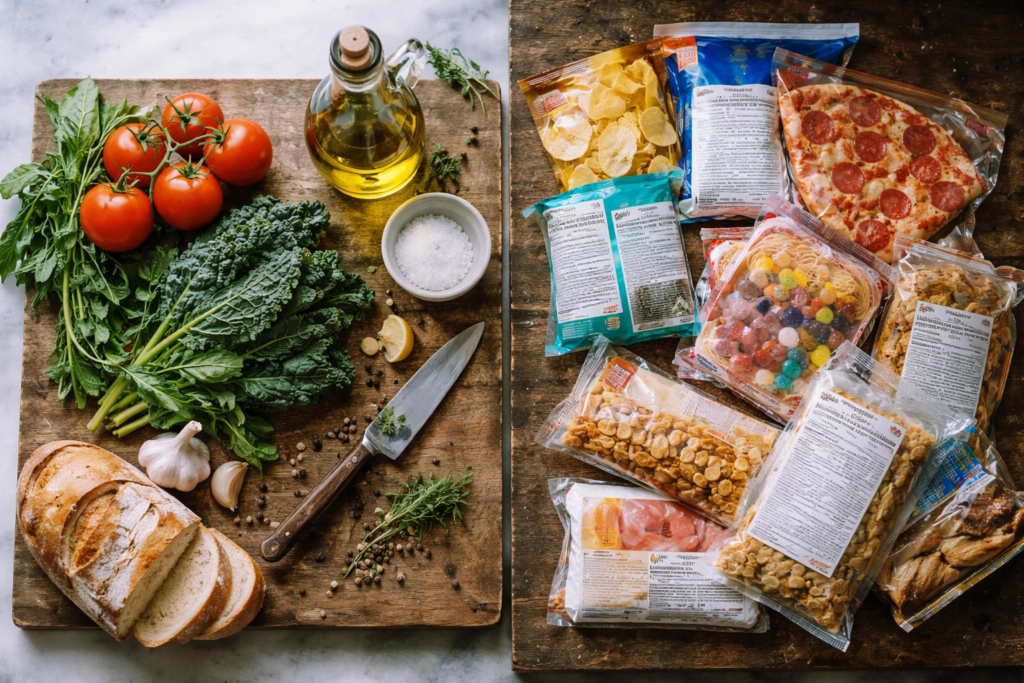
Key Takeaway: Real food comes from nature and spoils. Ultra-processed food comes from factories and lasts forever.
Label Reading Is the Real Clean Eating Superpower
Clean eating starts with consumer food education and food fraud awareness. When I read an ingredient list, I ask three questions:
- Why is this ingredient here? Does it serve the food or the manufacturer?
- Is it food, or a workaround? Emulsifiers and stabilizers are workarounds.
- Is this preserving quality, or masking bad sourcing?
I’ve covered this before. Artificial sweeteners hide in common foods. Fake wasabi gets served at most sushi restaurants. And balsamic vinegar often contains zero grape must. If you don’t read labels, someone else is making food decisions for you.
Key Takeaway: Three questions will change how you shop. Why is this ingredient here? Is it food or a workaround? Is it masking bad sourcing?
Why Restaurants Have a Responsibility
Restaurants don’t get a pass. At Aroma Thyme Bistro, chef responsibility and food ethics drive every decision. Guests should never guess what’s in their food.
Restaurant ingredient sourcing for clean eating means:
- Whole ingredients from producers we know
- Minimal handling so the food tastes like what it is
- Honest, additive-free sourcing with no shortcuts
- Zero tolerance for seed oils and hidden additives
That matters here in the Hudson Valley. We’re surrounded by farmers who do things the right way. That’s Hudson Valley real food at its core.

Key Takeaway: Restaurants that won't share their ingredients are no different from companies hiding behind clean labels.
Clean Eating for Beginners: Start Here
You don’t need to eat perfectly or cut out all food groups. Clean eating is about:
- Stronger ingredients, not fewer calories
- Transparency over trends
- Cooking over engineering
The principle applies at the grocery store and at the restaurant. I’ve seen the feta fraud at both. Understanding what does clean eating mean doesn’t require a nutrition degree. It comes down to paying attention.
Key Takeaway: Clean eating isn't a diet. It's a decision to choose real ingredients over engineered ones.
Why This Matters to Our Community
When restaurants and consumers prioritize real food:
- Local farmers survive instead of being squeezed out by industrial supply chains
- Regional food systems stay intact and create local jobs
- Dollars circulate locally instead of flowing to multinational corporations
That’s not ideology. That’s economics, health, and common sense.
Key Takeaway: Every dollar spent on real food supports local farmers and builds community resilience. Clean eating is an economic act, not just an individual one.
The Clean Eating Promise
If I won’t feed it to my family, I won’t serve it to my guests.
No hidden ingredients. No misleading labels. Learn to read labels. Ask direct questions. Demand food transparency from grocery stores and restaurants. That’s what does clean eating mean at its core. That’s not a diet. That’s power.