






Does pineapple belong on pizza? I have spent more than 30 years in the restaurant industry. I grew up in a southern Italian family where pizza was sacred and handmade. My answer might surprise you.
The concept works. Sweet and savory is one of the most powerful flavor combinations in cooking.
I trained at Michelin three-star La Tante Claire in London. I am committed to real food at Aroma Thyme Bistro in the Hudson Valley. But pineapple on pizza is not something I would ever put on my table.
The Pizza I Grew Up With: Traditional Italian Pizza in a Southern Italian Family
Let me make this clear right from the start.
I did not grow up with pineapple on pizza.
I grew up in a southern Italian family where pizza was not something you ordered. It was something you made. My grandmother, my mother, my aunts… pizza was a ritual. It was part of life.
And pineapple? It would not have even been a conversation.
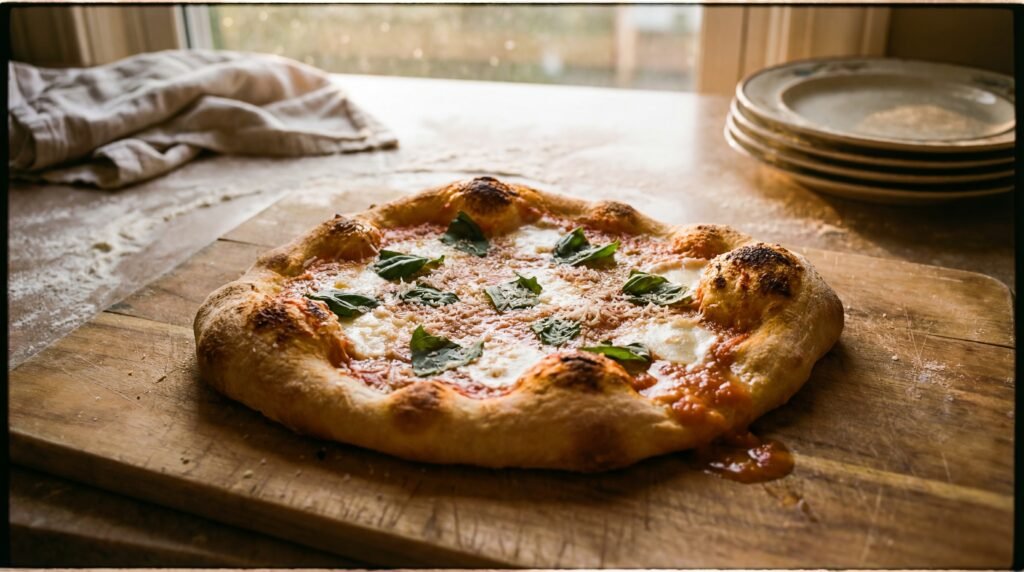
Our pizza was simple. Honest. Traditional.
- Thicker, focaccia-style crust
- Light tomato sauce
- A sprinkle of Reggiano
- Maybe a touch of mozzarella
- Herbs
That was it.
No overloaded Italian pizza toppings. No pile-it-high mentality. No distractions.
Sometimes we even ate it cold. Just bread and tomato. And it was perfect.
If we wanted something more substantial, my nonna would make stuffed pizza. Ground meat, cooked down, folded into the dough. That was our version of indulgence.
Pineapple? Not a chance.
Key Takeaway: Traditional Italian pizza is built on simplicity and restraint. A few quality ingredients, no distractions. That philosophy shapes how Italian-trained chefs approach the pineapple pizza debate.
The First Time I Saw Pineapple on a Pizza
This is important.
I did not grow up going to pizzerias. If we wanted pizza, we made it.
So the first time I walked into a pizzeria as a kid, probably during a school lunch outing, and saw all these toppings laid out…
I was shocked.
Pepperoni. Sausage. Mushrooms.
And then… pineapple.
Sitting there like it belonged.
That moment stuck with me. It was the first time I realized something: pizza had already gone in a very different direction than what I knew at home. The pineapple pizza debate had been raging long before I even knew what Hawaiian pizza was.
The Real History of Hawaiian Pizza: It Is Not Italian
The Hawaiian pizza origin story starts in Canada, not Italy.
In 1962, a Greek-Canadian restaurateur named Sam Panopoulos added canned pineapple to a pizza at his restaurant in Chatham, Ontario. The brand on the can? “Hawaiian.” That is where the name stuck.
Sam Panopoulos was not trying to reinvent Italian food culture. He was experimenting with sweet and savory combinations he had seen in Chinese cuisine. He paired pineapple with ham, and customers loved the contrast. Salty, smoky meat against bright, tangy fruit.
And just like that, something completely non-Italian became one of the most debated pizza toppings in the world.
So the next time someone asks “who invented Hawaiian pizza?” the answer has nothing to do with Italy or Hawaii. It is a Canadian creation, born from curiosity and cross-cultural flavor inspiration.
Key Takeaway: Hawaiian pizza was invented by Sam Panopoulos in Canada in 1962, not in Italy or Hawaii. The name comes from the brand of canned pineapple he used.
Does Pineapple Belong on Pizza? A Chef’s Honest Answer
As a chef, I am going to say something that might surprise you.
The concept works.
Sweet and savory pizza is one of the most powerful flavor pairings in cooking. There is no denying that. Pineapple ham pizza makes sense from a pure flavor perspective. The acidity and sweetness of pineapple cuts through the fat and salt of ham or Canadian bacon. The balance is there.
So is pineapple on pizza good? From a flavor standpoint, yes. It does what it is supposed to do.
Still, as someone who grew up in a traditional Italian household, and has spent decades immersed in real Italian food culture, it is not for me.
This is not just opinion. It is experience.
I have been to Italy many, many times. Not as a tourist. As a student of the culture.
I have traveled through the vineyards. Sat with winemakers. Eaten in small family-run osterias. Met chefs who have dedicated their lives to preserving tradition.
I have seen how pizza is treated there.
Pizza there carries weight. Every ingredient is chosen with purpose. Nothing wasted, nothing extra.
And you do not see pineapple.
Why People Love, and Hate, Pineapple on Pizza
The pineapple pizza debate is not really about pineapple. It is about two different philosophies of food.
On one side: tradition, restraint, and respect for origins. On the other: creativity, experimentation, and the belief that food should evolve.
Both have merit. Here is how the arguments break down:
| Arguments For Pineapple on Pizza | Arguments Against Pineapple on Pizza |
|---|---|
| Sweet and savory is a proven flavor combination across many cuisines | Traditional Italian pizza relies on simplicity; fruit disrupts the balance |
| Pineapple acidity cuts through rich, fatty toppings like ham and cheese | Pineapple releases moisture during baking, which can make the crust soggy |
| Hawaiian pizza has been popular for over 60 years; it clearly resonates | It has zero roots in Italian food culture or pizza tradition |
| Food evolves, and rigid rules limit creativity | Not all evolution is improvement; some classics are classic for a reason |
| About 12% of Americans rank pineapple as a top-three topping (YouGov) | Most Italian chefs and pizza purists consider it a non-starter |
So why do people hate pineapple on pizza? For many, it comes down to respect for origins. When you have spent your life around traditional Italian pizza, when you have seen how seriously pizza is treated in Naples, Rome, and Sicily, the idea of adding canned tropical fruit feels like a different conversation entirely.
I also understand the other side. If you approach pizza as a global canvas rather than a protected tradition, pineapple is just another ingredient. And flavor does not lie.
How Pizza Evolved, From Neapolitan Tradition to Global Canvas
Pizza today is not just one thing. We have:
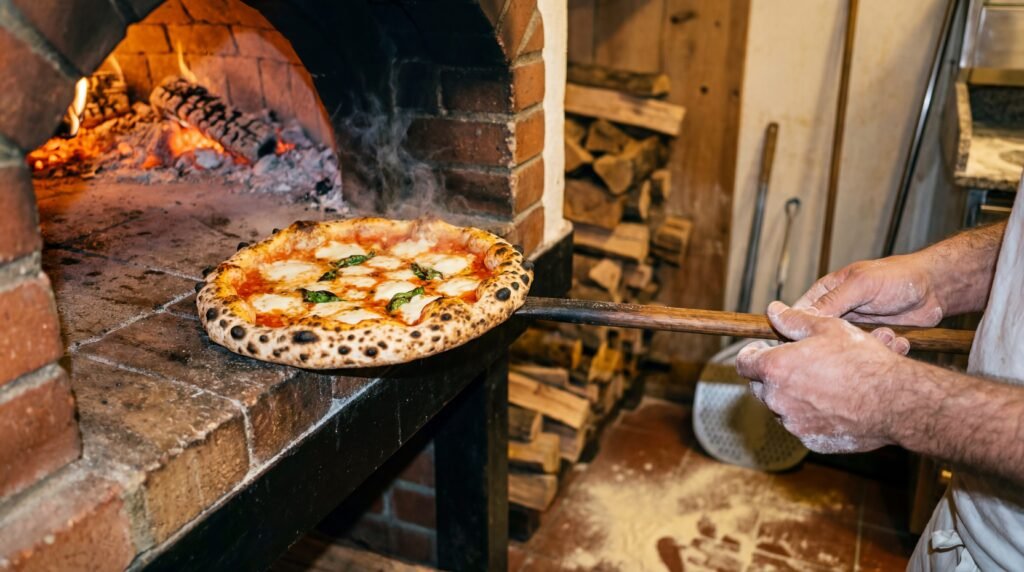
- Neapolitan pizza, the original, protected by the Associazione Verace Pizza Napoletana since 1984
- Roman pizza, thinner, crispier, built for the street
- Pinsa Romana, high hydration and long fermentation, lighter than air
- New York-style, foldable, cheesy, iconic
- Sicilian squares, thick, spongy, oil-kissed
- Artisanal flatbreads, different flours, different philosophies
Different fermentation times. Different shapes. Different toppings. Pizza has become a global canvas. And in that world, people are pushing boundaries. Some of it is incredible. Some of it is questionable. But it is all part of the pizza evolution.
What excites me most right now is the return to pizza craftsmanship. The artisanal pizza movement is bringing things full circle.
- Long fermentations
- Better ingredients
- Respect for tradition
- Focus on the dough
Pizza is now showing up on Michelin pizza menus around the world. Not as fast food. As cuisine. At my own farm-to-table pizza nights at Aroma Thyme Bistro, I see this firsthand. Guests want to know where the flour comes from. They care about fermentation time. That is the future.
Key Takeaway: Pizza has evolved far beyond its Neapolitan roots, but the artisanal pizza movement is bringing craftsmanship back to the center. Whether you are a pizza purist or an innovator, the quality of the dough and ingredients matters more than any single topping.
Want to Go Deeper Into Real Italian Food?
If this got you thinking about what real Italian food actually is, I have broken down more of these topics:
- My guide to mozzarella and what most restaurants get wrong about real Italian cheese
- What “authentic Italian” really means, a chef’s journey beyond American-Italian mythology
- The lobster roll was never fancy, and how food traditions get rewritten over time
These are the kinds of details that separate real food from mass-produced food.
Final Thought From a Chef on a Mission
Pizza was never meant to be complicated.
It was meant to be real.
So does pineapple belong on pizza? If you ask me as a chef rooted in Italian tradition: no. If you ask me as someone who understands flavor: I get it.
And that is where I stand.
The pineapple pizza debate will keep going. It always does. The next time someone asks you about it, remember this: the real question is not about pineapple. It is about what pizza means to you.
For me, it will always mean my nonna’s kitchen. Simple dough. A little sauce. A sprinkle of Reggiano.
And not a pineapple in sight.
Chef Marcus Guiliano
Chef-Owner, Aroma Thyme Bistro
Hudson Valley, New York
Chef on a Mission