




Substitute for Parmigiano Reggiano is not a one-cheese answer. In this guide, I use Reggiano as the shorthand for authentic Parmigiano Reggiano, and Parmesan only when discussing generic or imitation-style products.
I have cooked professionally since the early 1990s, and I have bought, tasted, grated, and served a great deal of cheese. After years of visiting Italy and meeting producers, I judge a substitute by more than a vague nutty flavor.
Milk, moisture, aging, salt, texture, and the job in the dish all matter. The best choice for risotto may not be the cheese I would finish a Roman pasta with.
This guide focuses on cheeses that a serious U.S. shopper can realistically find in a good market or cheese shop. I am also separating authentic protected Reggiano from generic Parmesan products, because those labels do not promise the same origin, aging, or flavor.
You do not need a professional palate to make the choice. Taste a small piece, notice whether it is sweet, salty, sharp, or brothy, then feel whether it bends, slices, crumbles, or grates. Those simple observations tell you far more about its usefulness than a list built around one tasting note. They also make shopping more enjoyable and build confidence when recipes change later.
What Is the Best Store-Bought Substitute for Parmigiano Reggiano?
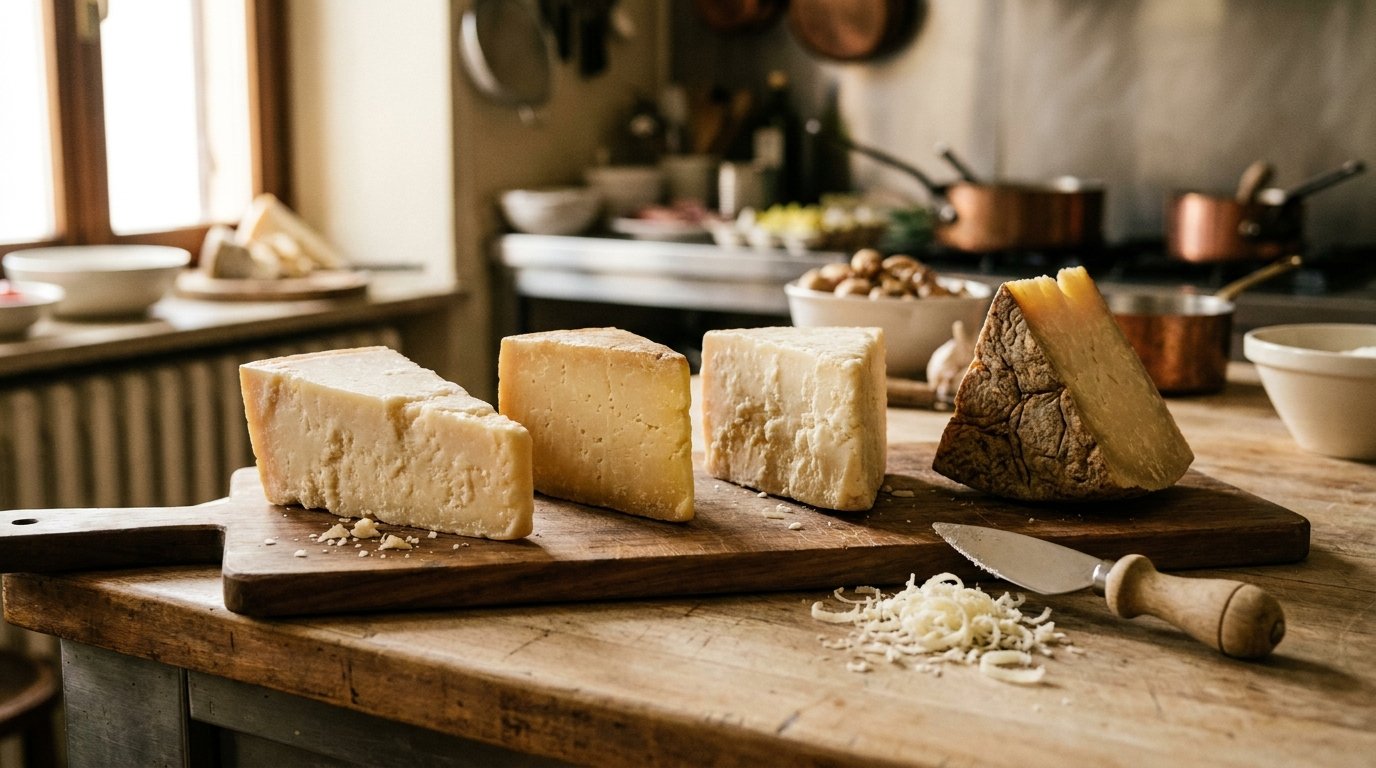
For most shoppers, Grana Padano DOP is the best Reggiano substitute because it has a familiar grainy texture and balanced savory flavor. Piave Vecchio is my next choice when I want a sweeter finish, while Pecorino Romano brings more salt and force.
Aged Asiago belongs on the list only when it is firm enough to grate. These Italian hard cheeses are not identical, but each can solve a specific kitchen problem better than a random cheese labeled “Parmesan.”
Parmesan is a hard, granular cow’s-milk cheese aged for months or years, but the name is used worldwide. Authentic Italian Parmigiano Reggiano has protected origin rules in northern Italy, while domestic Parmesan-style cheeses are made outside that system.
Availability will sometimes make the decision for you, and that is fine. If the shop has only two choices, compare their firmness, age, milk, and salt before deciding which one best matches the recipe.
My quick ranking by flavor and use
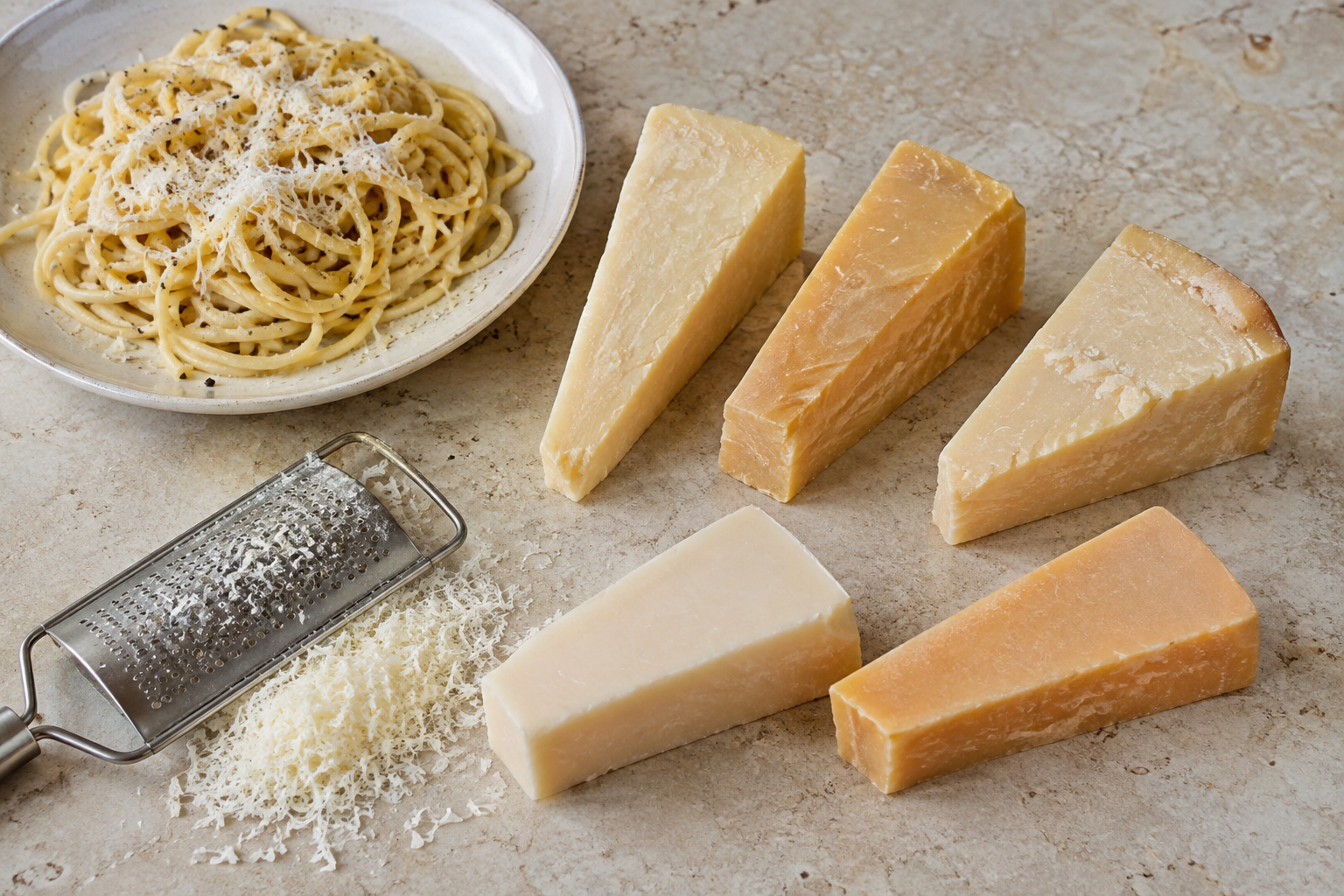
Start with Grana Padano when the recipe needs the closest everyday Parmigiano Reggiano substitute. Choose Piave for roasted vegetables or a cheese board, Pecorino for assertive Roman dishes, and aged Asiago for a deeper toasted note.
The table below compares the qualities that matter in an actual kitchen. The amount is a starting point, so taste the dish before adding more salt.
| Cheese | Milk and texture | Flavor | Best uses | Starting guidance |
|---|---|---|---|---|
| Grana Padano DOP | Cow’s milk; firm and grainy | Mild, buttery, savory | Pasta, risotto, soup, gratins | Begin near 1:1 |
| Piave Vecchio DOP | Cow’s milk; compact and crumbly | Sweet, nutty, toasted | Vegetables, pasta, salads, boards | Begin near 1:1 |
| Pecorino Romano DOP | Sheep’s milk; hard and dense | Salty, tangy, piquant | Carbonara, cacio e pepe, amatriciana | Start with less |
| Aged Asiago DOP | Cow’s milk; firm when mature | Nutty, toasted, persistent | Gratins, soups, pasta, finishing | Begin near 1:1 |
What makes one substitute better than another?
The right Reggiano substitute must do the job the recipe asks it to do. A cheese for melting into risotto needs balance, while a finishing cheese can be drier, saltier, and more aromatic.
That is why lists of cheeses similar to Reggiano can be misleading. Similarity in one quality does not guarantee the same moisture, salt level, melting behavior, or finish.
I also look at how the cheese will be used after cooking. A fine grating that melts into sauce needs a clean savory base. Broad salad shavings can carry more sweetness, aroma, and texture without changing the sauce underneath.
Temperature matters as much as the tool. Cheese grated into a very hot pan can tighten or separate, while cheese added off the heat often blends more evenly with fat and cooking liquid.
Why Is Parmigiano Reggiano So Hard to Replace?
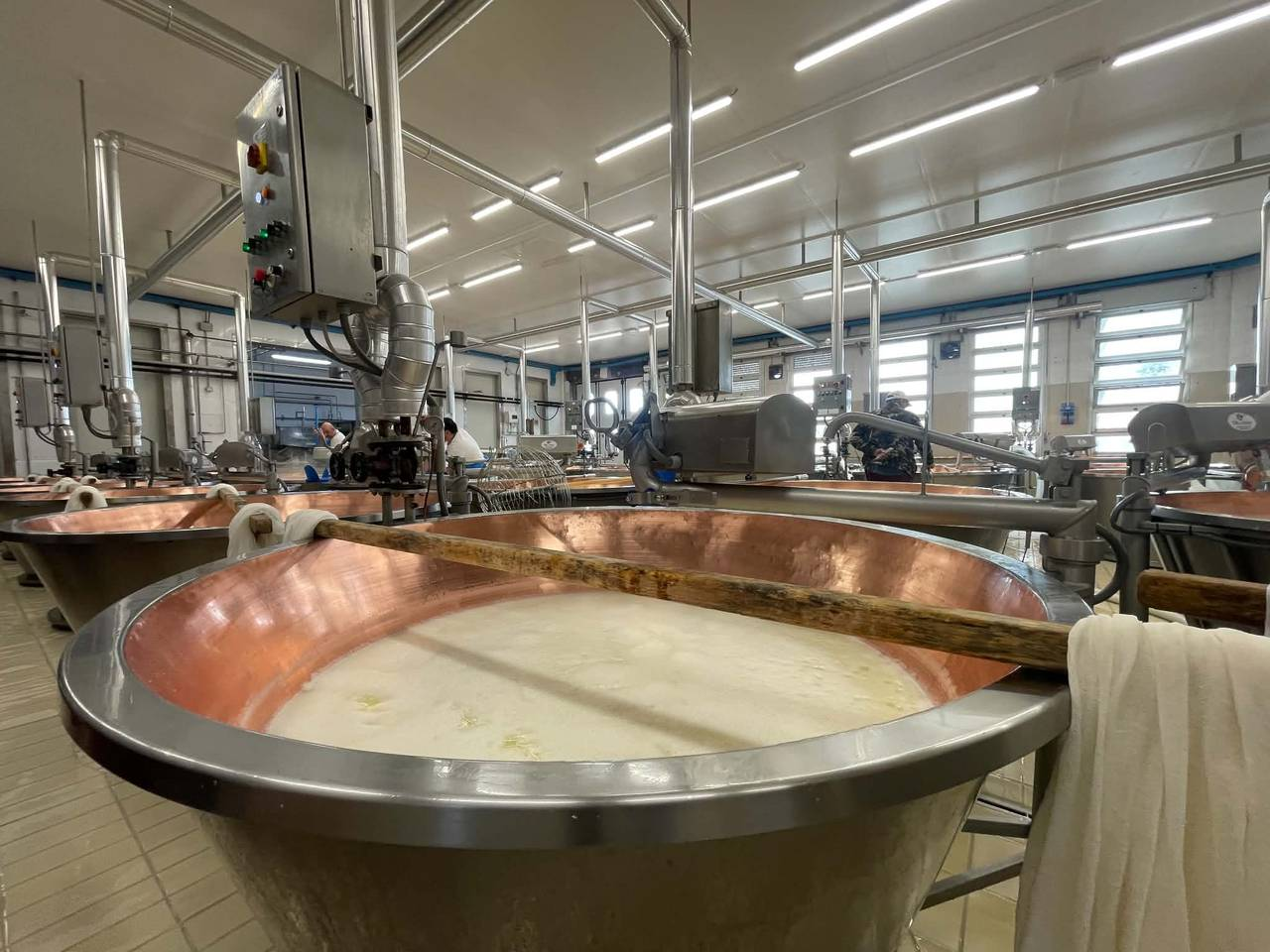
Parmigiano Reggiano is not simply a style of hard cheese. It is a protected product shaped by a defined place, raw materials, production method, and a minimum period of maturation.
Those controls create a balance that generic replacements rarely reproduce. You taste sweetness, broth, toasted nuts, fruit, and deep savor without one quality flattening everything else.
DOP rules protect more than a name
The official Parmigiano Reggiano production process begins with milk from its defined territory. Evening milk is partly skimmed, then combined with fresh morning milk before cheesemaking.
The designation protects the connection between the cheese and its agricultural system. A cheese made elsewhere may be excellent, but it is not Parmigiano Reggiano just because the package uses a familiar word.
That distinction is not snobbery, and it does not make every unprotected cheese bad. It gives the buyer accurate information and protects the work behind the name. It also lets us compare products without pretending they follow identical rules.
I have walked through Italian aging rooms lined with wheels and tasted the same cheese at different ages. That experience makes the role of time obvious before anyone explains the chemistry.
Aging changes moisture, texture, and umami
As the cheese matures, it loses moisture and becomes more granular and crumbly. Proteins break down, aromas deepen, and small crunchy crystals become more noticeable.
These changes also concentrate savory flavor, which is why a modest amount can transform pasta, soup, or vegetables. My guide to how umami works explains why that lingering savor matters.
Any cheese similar to Parmigiano Reggiano must balance aging moisture and texture, not merely taste salty. That combination is what lets the cheese disappear into a dish while leaving a long finish.
The crunchy crystals in an older wedge are another clue, although crystals alone do not prove quality. What matters is the full experience: a dry break, layered aroma, clean savor, and enough persistence to season food without burying it.
Grana Padano vs Parmigiano Reggiano: Which Is the Closest Substitute?
Grana Padano is my first recommendation when Parmigiano Reggiano is unavailable or too strong for the dish. It is a cow’s-milk cheese with a firm texture, savory character, and enough structure for grating.
It is often milder and less complex, especially at younger ages. That softer personality can be useful when the cheese should support the food instead of becoming the loudest flavor.
How the two cheeses differ
The Grana Padano PDO specification protects its origin and production across a broader northern Italian area. The cheeses also differ in feed rules, fat handling, permitted practices, and typical aging profiles.
In the mouth, Grana Padano often feels buttery and approachable. Parmigiano Reggiano commonly brings more depth, friability, and a longer savory finish as it matures.
Where Grana Padano works best
Use Grana Padano as a Reggiano substitute in risotto, baked pasta, soup, polenta, and vegetable gratins. It is also dependable for finishing pasta when you want flavor without the sharper edge of Pecorino.
Begin with roughly the amount the recipe calls for, then taste. A younger wedge may need a little more, while a mature Riserva can carry the dish with less.
Do not discard the rind from a good wedge if it is clean and genuine. Simmer it in beans, soup, or tomato sauce, then remove it before serving to draw out another layer of savory flavor.
Is Piave Vecchio a Good Parmigiano Reggiano Substitute?
Yes, especially when you want a hard grating cheese with more sweetness and fruit. Piave Vecchio is one of the most useful choices that many American shoppers still overlook.
It does not imitate Parmigiano Reggiano. Its value is that it offers firm texture and good grating performance with a warmer, rounder flavor.
Which age of Piave should you buy?
The Piave DOP system includes several aging levels. For a Piave cheese substitute, look for Vecchio, Vecchio Selezione Oro, or Riserva rather than a young, moist version.
Longer aging makes the paste harder, more compact, and easier to grate or shave. The flavor moves toward toasted nuts while keeping the gentle sweetness that makes Piave distinct.
Where Piave tastes best
I like aged Piave over roasted squash, mushrooms, asparagus, salads, and simple buttered pasta. It also earns a place on a cheese board because it is approachable without becoming dull.
Use it near 1:1 at first, then adjust for the cheese’s age and the dish. Piave may feel less salty, so season the food after tasting the finished combination.
Piave is also useful when guests find Pecorino too sharp or Parmigiano too intense. Its sweetness makes the first bite friendly, yet an older wedge still has enough structure to keep the finish interesting.
Pecorino Romano vs Reggiano: When Does the Switch Work?
Pecorino Romano is one of the world’s great hard grating cheeses, but it is not a mild stand-in. It is made from sheep’s milk, which gives it a tangier and more forceful identity.
This is the clearest example of why cow’s milk versus sheep’s milk matters. The choice changes flavor intensity and saltiness before you consider age or texture.
Sheep’s milk changes the flavor
The official Pecorino Romano characteristics describe a hard cooked cheese made from whole sheep’s milk. Mature grating cheese becomes aromatic, piquant, and distinctly salty.
That power can wake up bitter greens, beans, and tomato sauces. It can also dominate delicate risotto or mild vegetables when used with the same hand as Parmigiano.
Use less, except where Pecorino belongs
Start with about two-thirds of the Parmigiano amount in a general recipe, then taste. The exact adjustment depends on the brand, age, and salt already present in the dish.
For cacio e pepe, carbonara, and amatriciana, Pecorino Romano is not a compromise. It is the traditional flavor I want, sometimes blended with Parmigiano for a rounder finish.
Salt the pasta water with the finished sauce in mind when Pecorino is involved. Cheese, cured pork, stock, and reduced pasta water can each add salt, so the final seasoning should happen only after they come together.
Can Aged Asiago Replace Parmesan?
Aged Asiago can replace Reggiano in many cooked dishes, but the word “aged” is essential. Young Asiago is softer and moister, so it melts and tastes very differently.
For grating, I want a mature cheese with a compact paste and a lingering toasted flavor. Reading the full label matters more than recognizing the large word on the front.
Mezzano, Vecchio, or Stravecchio?
The Asiago DOP consortium’s extra-mature Asiago guidance shows how aging builds a firmer texture and a more persistent flavor. Vecchio and Stravecchio are the strongest fits for grating.
Mezzano can work when the wedge is firm, but it is usually gentler. Stravecchio brings more toasted nut, spice, and concentration, so a smaller amount may be enough.
Age names are useful, but the cut surface still deserves your attention. Look for a firm, fairly dry paste with a clean aroma. Do not assume every vacuum-packed wedge marked Asiago will behave like a mature Italian grating cheese.
DOP Asiago and domestic Asiago are not identical
American cheesemakers can produce good domestic Asiago, but the name alone does not confirm Italian origin or DOP rules. Check the country, protected designation, aging statement, and firmness of the wedge.
Use aged Asiago in soups, baked pasta, gratins, polenta, or over roasted vegetables. It can be an excellent finishing cheese when its stronger toasted note suits the rest of the plate.
In a sauce, grate it finely and give it gentle heat rather than a hard boil. A mature dry cheese can clump or turn greasy when overheated, so stir it in gradually with enough moisture to disperse it.
What Other Cheeses Are Similar to Parmesan?
Reggianito and well-made domestic Parmesan can be useful when the protected Italian cheeses are unavailable. Judge the wedge by texture, aroma, age, and performance rather than the biggest word on its package.
Some cheeses share one appealing note with Parmigiano but still fail in the dish. A pleasant nutty flavor does not cancel out the wrong moisture level or melting behavior.
Reggianito and domestic Parmesan
Reggianito is an Argentine hard cow’s-milk cheese shaped by Italian immigrant cheesemaking traditions. It tends to be smaller, saltier, and less complex than Parmigiano Reggiano, yet it can grate well.
Domestic Parmesan ranges from bland pre-grated imitation-style products to carefully aged artisan wheels. Buy a wedge when possible, smell the cut surface, and look for a dry texture that breaks into small flakes.
Why soft or high-moisture cheeses fail
Fresh goat cheese, feta, halloumi, and cheddar solve different culinary problems. Their moisture, acidity, texture, and behavior under heat keep them from serving as direct Parmigiano substitutes.
Mozzarella is another category entirely, as my guide to real Italian mozzarella shows. It is valuable for stretch and melt, not dry grating and concentrated finishing flavor.
Gruyère and Comté are magnificent cheeses, but they melt and taste in their own way. Use them when the recipe benefits from those qualities, not because a generic list called them interchangeable.
When you are unsure, break a small corner from the wedge and press it between your fingers. A useful grating cheese should feel dry and firm, then fracture or crumble rather than bend like a young melting cheese.
What Are Good Cheese Alternatives for Grating?
The best cheese alternative for grating depends on the food beneath it. Think about cooking versus finishing cheese, then match salt, moisture, and intensity to the dish.
Grana Padano is the safest broad answer, but it should not end the conversation. Piave, Pecorino Romano, and aged Asiago each become the better tool in the right setting.
Pasta, risotto, soup, and gratins
Use this practical starting list for pasta risotto and recipe use. Taste after adding the cheese because stock, cured meat, and pasta water may already bring salt.
- For creamy risotto or polenta, choose Grana Padano for balance and smooth integration.
- For carbonara, cacio e pepe, or amatriciana, choose Pecorino Romano for traditional bite.
- For baked pasta and gratins, choose Grana Padano or aged Asiago for savory browning.
- For brothy soup, choose Parmigiano, Grana Padano, or a firm rind used during cooking.
Salads, vegetables, and the final shave
Piave is excellent shaved over bitter greens, roasted vegetables, or mushrooms because its sweetness softens sharp flavors. Aged Asiago suits earthy vegetables when you want more toast and spice.
For a simple pasta finished at the table, Grana Padano remains the most flexible choice. Pecorino is better when the sauce can stand up to its salt and tang.
Grating size also changes the result. A fine microplane creates quick-melting strands for sauces, while wider shavings give salads and finished vegetables a more deliberate bite and aroma.
How Do You Buy Authentic Italian Hard Cheese?
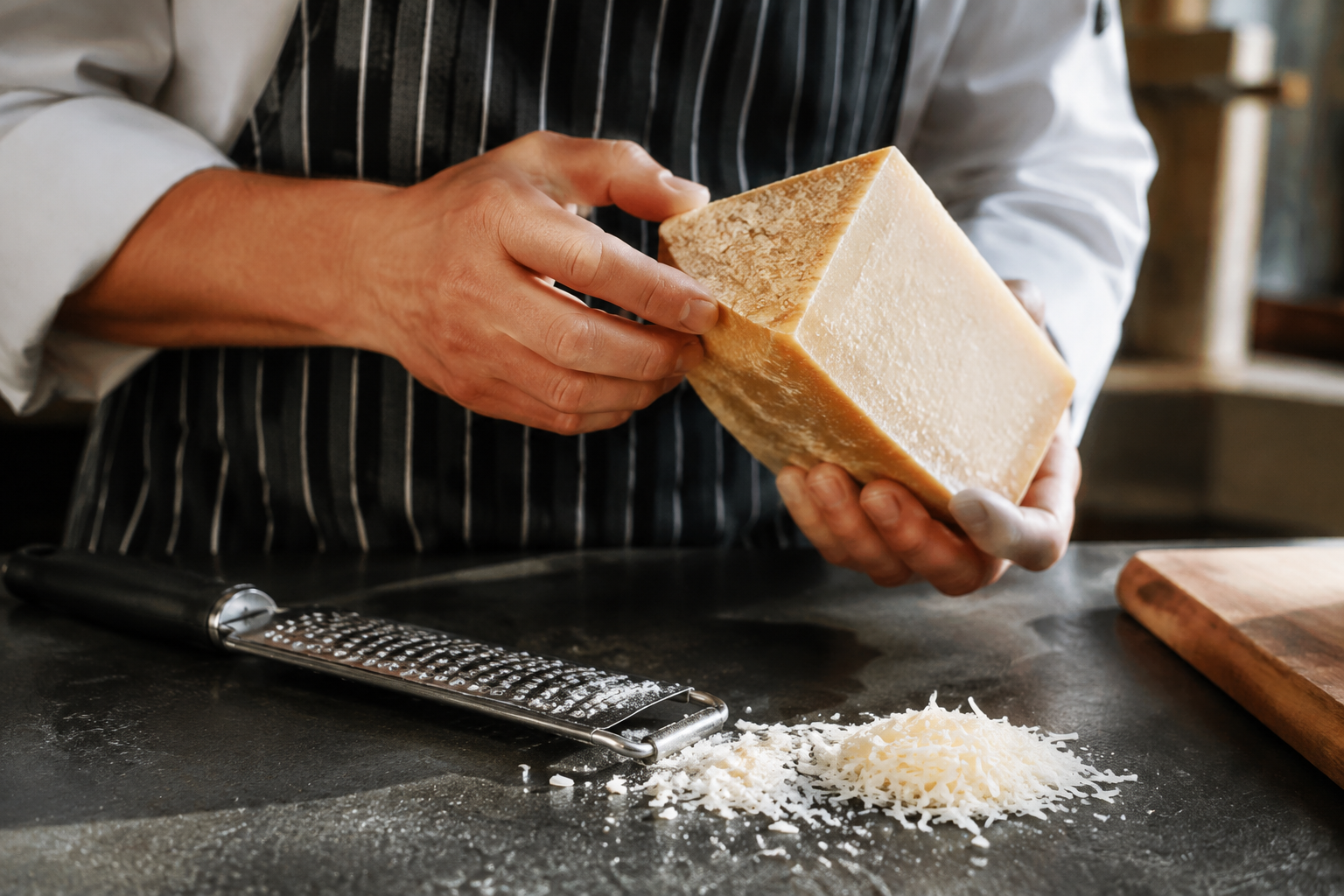
Turn the wedge over and read the details that small print reveals. Origin, DOP or PDO status, aging, ingredients, and the form of the cheese tell you more than a familiar front label.
Authenticity does not mean every meal demands the most expensive option. It means knowing what you are buying, then deciding whether its origin and production justify the cost for your purpose.
Look for DOP or PDO and a clear origin
DOP in Italian and PDO in English both indicate a protected designation of origin. The mark connects a cheese to a place and specification, not merely to a recipe name.
That distinction is central to what authentic Italian really means. Look for the full cheese name, country of origin, protected mark, and any useful aging statement.
If a cheese counter cuts wheels to order, ask to see the rind and the original label before the wedge is wrapped. A knowledgeable seller should be able to explain the producer, age, and origin without relying on a vague claim that the cheese is “Parmesan-style.”
Buy a wedge and judge value per serving
A wedge usually preserves aroma and texture better than a bag or shaker of grated cheese. Pre-shredded products can include agents that reduce clumping, which I discuss in what is really in pre-shredded cheese.
Cost and availability vary by store, region, age, and package size, so fixed dollar claims age quickly. Compare usable flavor per serving rather than price per pound alone.
A concentrated cheese may cost more per pound but require less on the plate. Grate it finely, taste, and notice whether a smaller amount gives the aroma and finish you wanted.
Store the wedge in an airtight container or wrap it tightly in food-grade film. Keep it refrigerated at 40–48°F (4–8°C). Cut away only what you plan to grate, because a freshly exposed surface gives you better aroma and texture.
Let a small portion sit briefly before a cheese-board tasting, but return the remaining wedge to cold storage. For cooking, grate only what you need and protect the rest from repeated warming, handling, and drying.
My Chef-Tested Choice for Your Next Dish
If you need the closest everyday replacement, buy Grana Padano DOP. Choose Piave Vecchio for a sweeter direction, Pecorino Romano for salt and intensity, or aged Asiago for toasted depth.
The best substitute for Parmigiano Reggiano is the cheese that performs the right job without pretending to be the original. A strong alternative should respect the dish and keep its own identity.
Buy two small wedges and taste them side by side before cooking. Smell them, feel the texture, grate each over a simple bite, and let your palate tell you where each belongs.
Then repeat the tasting over warm pasta or roasted vegetables, where heat releases more aroma. That small exercise teaches more than memorizing a list, and it helps you choose with confidence the next time the exact cheese is unavailable.