



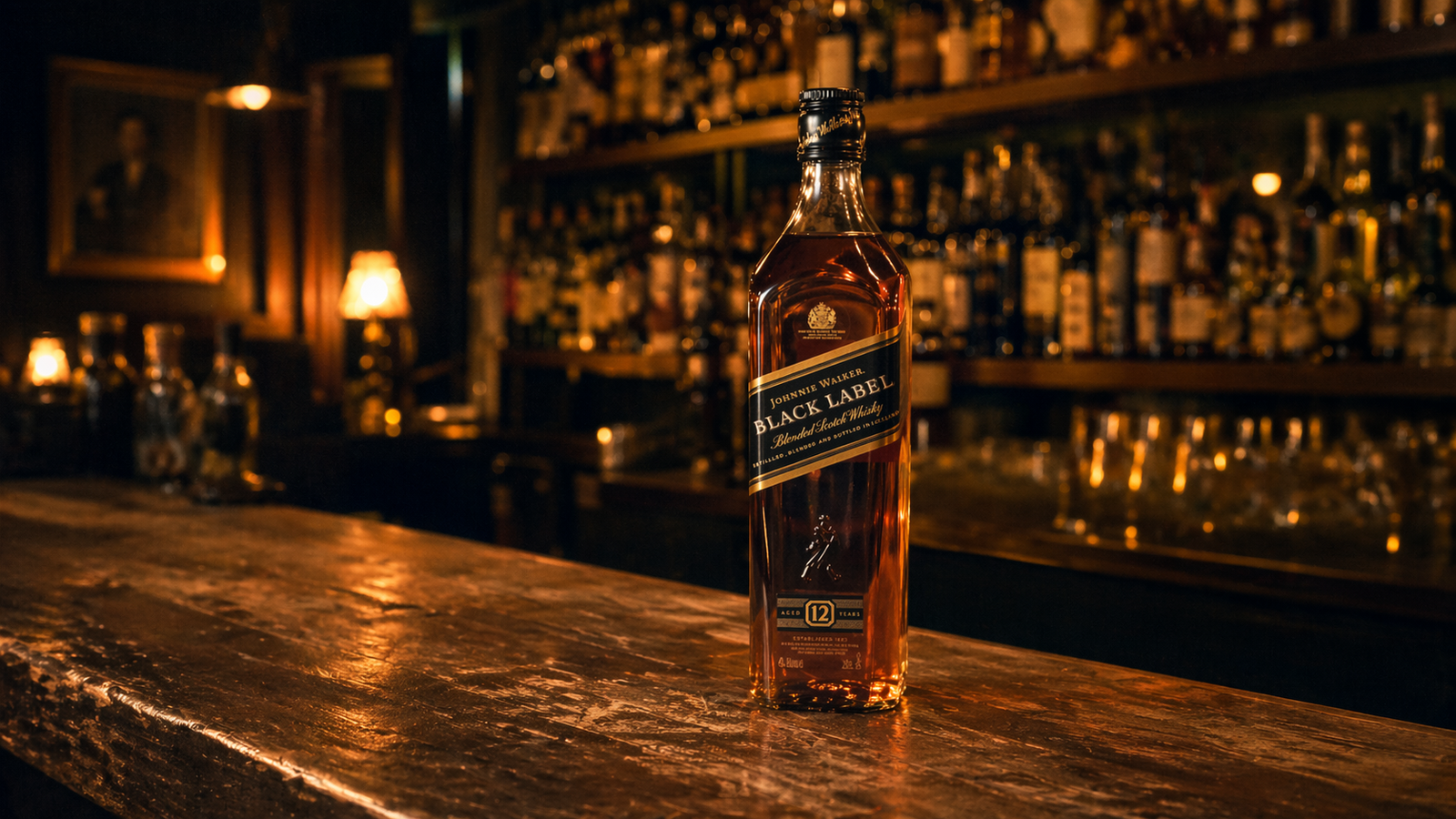
Most people know Johnnie Walker as one of the biggest whisky brands in the world. They associate it with quality, prestige, and legacy.
So let me answer the question most people never think to ask.
Who owns Johnnie Walker? Diageo. Since 1997.
And that matters more than you think.
Because when a 200-year-old brand gets absorbed into one of the largest alcohol corporations on Earth, things change. Decision-making changes. Priorities change. The relationship to community changes.
And sometimes, whole towns pay the price.
I have spent 20+ years behind my own bar. Over that time, I have visited 350+ wineries across six countries. Plus dozens of distilleries and breweries from Jamaica to Baja to Burgundy and beyond. That experience changed how I think about every bottle on my back bar.
Including this one.
The Johnnie Walker story starts proud. It does not end there.
Quality is not enough.
Key Takeaways
From Kilmarnock Grocer to Global Giant: The Johnnie Walker History
The reputation did not come out of nowhere.
Johnnie Walker built its name over generations. It started in the 1820s as a small family-run grocery store in Kilmarnock, Scotland.
John Walker began blending whisky to create something more reliable and more consistent for his customers. Over time, that small local effort turned into one of the most recognizable names in the spirits world.
That part of the story is true.
But it is not the whole story.
In 1997, Johnnie Walker became part of Diageo. Diageo is one of the largest alcohol corporations in the world. Today its portfolio includes dozens of spirits brands across every category.
Johnnie Walker stopped being a Scottish blending house with deep local roots. It became one asset in a global portfolio.
And when brands get absorbed into giant corporate systems, things change.
They always change.
So what actually happened when Diageo took over?
The Kilmarnock Closure: 700 Jobs, One Town, One Spreadsheet Decision
In 2012, Diageo closed the original Kilmarnock facility. That was the historic home of Johnnie Walker for nearly 200 years.
Around 700 jobs were lost.
Seven hundred.
That is not a footnote. That is seven hundred families directly affected because a corporation decided it was more efficient to move production elsewhere.
And this is the part I want people to think about harder.
When a major production facility closes, it is not just the workers inside the building who suffer. The damage spreads.
Local restaurants lose regular customers. Shops lose business. Tax revenue gets hit. Real estate goes vacant. Buildings that once had payroll, trucks, and families depending on them sit empty.
That is the real cost of corporate consolidation.
On a spreadsheet, moving production looks smart. In a boardroom, it sounds strategic.
But in the real world, it leaves scars.
Some small communities never recover. They lose jobs. They lose identity. They lose the anchor employer that kept a whole local economy alive.
The ripple effects last decades.
I have seen this close to home.
I grew up in the Hudson Valley. When IBM pulled out of Kingston in the mid-1990s, thousands of jobs disappeared almost overnight.
It was not just the engineers. It was the diners they ate lunch at. It was the hardware stores they shopped at. It was the tailors who hemmed their suits.
Whole blocks of that town changed. Some never came back.
That is what Kilmarnock looked like after 2012. That is what corporate consolidation actually leaves behind.

Is Johnnie Walker the only case? Not even close.
A Pattern, Not an Exception: Corporate Consolidation in Spirits
This is not unique to one brand. This is the playbook.
When giant corporations buy spirits brands, they often ride the coattails of the original founders, families, and craftsmanship. They keep the branding. They keep the story. They keep the image.
Behind the scenes, they start disassembling the original structure piece by piece.
They move production. They cut suppliers. They centralize purchasing. They replace local decision-making with corporate systems. They squeeze efficiencies out of every corner.
And the consumer is still standing there believing they are buying into the same old story.
They are not.
Here is what the corporate ownership map actually looks like for some of the biggest names on a back bar today.
| Brand | Parent Company | Status |
|---|---|---|
| Johnnie Walker | Diageo | Acquired 1997 |
| Grey Goose | Bacardi | Acquired 2004 |
| Patrón | Bacardi | Acquired 2018 |
| Casamigos | Diageo | Acquired 2017 |
| Don Julio | Diageo | Acquired 2015 |
| Hangar One | Proximo Spirits | Independent distillery brand |
| Tito’s Handmade Vodka | Fifth Generation Inc. | Independent |
Consumers see the label. They rarely see who owns it.
A similar pattern hit the beer world. When corporations absorb breweries, local sourcing changes. Production shifts to larger facilities. Towns lose manufacturing identity.
The name survives. The bottle survives. The marketing survives.
The original ecosystem does not.
Why does this hit so hard for me personally?
Why This Hits Home: 20 Years Behind the Bar
I grew up in New York’s Hudson Valley, in the Borscht Belt resort culture. I started as a busboy at fourteen. I moved into kitchens fast. I learned hospitality from the ground up.
At nineteen, I was working at The Depuy Canal House. That is where I met Kevin Zraly.
Kevin Zraly was the cellar master of Windows on the World. He built one of the most influential wine education programs in American restaurant history.
He told me something that changed my life. If you learn wine, you will make $10,000 more a year as a chef.
That conversation ignited a lifelong passion.
But Zraly taught me something more important than earning potential. He taught me that wine is about people, stories, and integrity. Not labels. Not scores.
I was nineteen. I did not fully understand what I was hearing at the time.
It took me another decade of pulling corks, walking vineyards, and meeting the people behind the labels to put the lesson all the way together.
That lesson became the lens I use for every bottle on my back bar.
Then I worked at elite properties. The Greenbrier had an 800-bottle wine list. The Broadmoor carried 1,200 bottles. These were corporate-scale programs built to impress.
I learned what scale looked like from the inside.
Then I staged at La Tante Claire in London. That was Pierre Koffmann’s Michelin three-star kitchen. His Burgundy cellar was one of the finest in the world.
Every bottle was sourced from grower-producers. Not négociants. Not corporate middlemen. Grower-producers who made the wine from grapes they grew themselves.
That was Michelin-tier fine dining. And the standard was the opposite of what most bars pour today.
Now I own Aroma Thyme Bistro. I have been in the restaurant business since 2003. I have owned my own place for over two decades.
From day one I understood the importance of local and independent purchasing when it came to food.
Most restaurants that claim to care about ingredients stop that philosophy at the bar. They talk farm to table in the kitchen. Then they pour the biggest commodity brands without asking a single harder question.
I decided early on that I was not going to do that.
If I cared about who grew the vegetables and raised the animals and baked the bread, I needed to care about who made the spirits.
That became part of the mission.
Over the last 20 plus years, I have visited 350+ wineries across six countries. Plus dozens of distilleries and breweries from Jamaica to Baja to Burgundy and beyond.
That is not theory. That is not reading brochures. That is boots on the ground, conversations in cellars, and direct relationships with the people behind the bottle.
That experience changes you.
You realize you do not need to rely on global monstrosity brands. You realize there are better options. You realize there are people making extraordinary products without giant ad budgets or celebrity endorsements.
If quality alone is not enough, what actually changes when scale takes over?
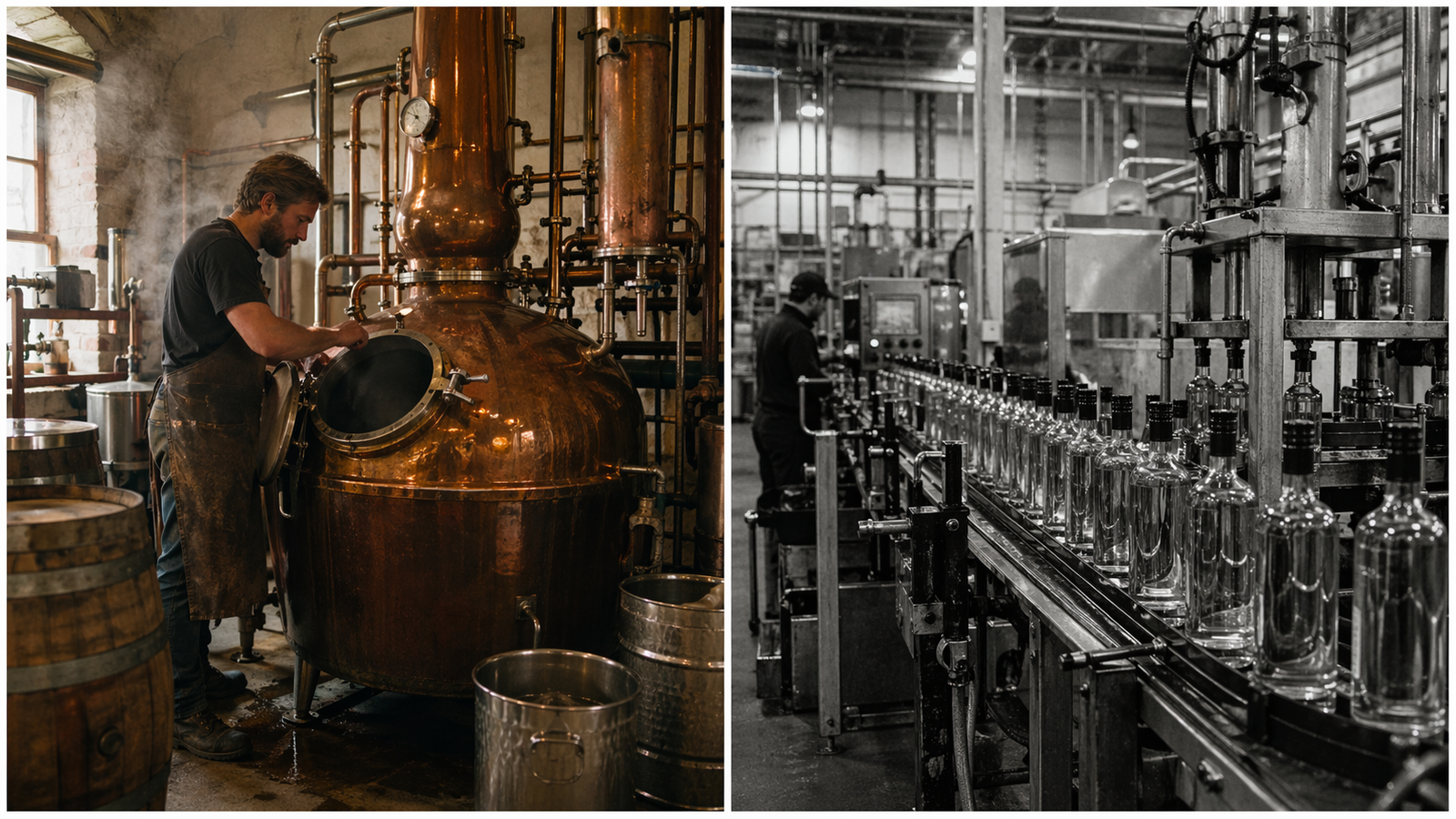
Scale Changes the Liquid: Why Mass Production Flattens Flavor
When something is made in a smaller, artisanal way, there is more room for natural variation.
A small producer can embrace batch differences. A tequila can shift in color from barrel influence. A craft beer can vary subtly from batch to batch. A true infused spirit can evolve on the shelf because it is less manipulated.
But when you make something at massive scale, it has to taste exactly the same every single time. It has to look exactly the same every single time.
The color has to be identical. The profile has to be identical. The bottle has to survive shelf conditions across thousands of accounts and massive geographies.
That requires manipulation.
That requires blending on a massive level. That often requires additives, coloring, stabilizers, and formulaic production methods. That requires removing the quirks and natural variation that make small products honest.
Consumers have been trained to mistake that uniformity for quality.
Sometimes it is not quality.
Uniformity is not quality. It is industrial consistency.
So how does a bar program actually resist that conditioning?
The Grey Goose Lesson: When Branding Beats Taste
I learned this firsthand behind my own bar.
When we first opened, I made the same mistakes most operators make. I carried big brands. Customers asked for them by name.
Grey Goose was the perfect example. People did not ask for vodka. They asked for Grey Goose. The branding was so strong that consumers were convinced the label was the quality.
Then I brought in Hangar One.
It was a better vodka. Clearer identity. Better product. More integrity. Made by a smaller, focused team.
And it sat.
People still wanted the big brand because that was what advertising had programmed into their heads. I even blind tasted guests on multiple vodkas.
I had guests tell me flat out that they knew Grey Goose was not the best one in the lineup. They could taste that other vodkas were better. They still wanted Grey Goose anyway.
One guest I still remember specifically. After a blind flight he told me, “Yeah, the Hangar One was cleaner. But my wife likes how the Grey Goose bottle looks on the bar.”
That was his reason. The bottle on the bar.
That was a wake-up call.
That showed me how deep brand conditioning runs.
So I made a decision. I stopped giving people the easy out. I started removing big brands and replacing them with better ones. Not more famous brands. Better brands.
That is where the mission really became clear.
The same instinct pulled me toward agave spirits. At DOC Agave, we work directly with Mexican producers who still make tequila and mezcal the way their families always have. Not industrial additive-heavy diffuser tequila. The real thing.
So what did I build to replace the big-brand default?
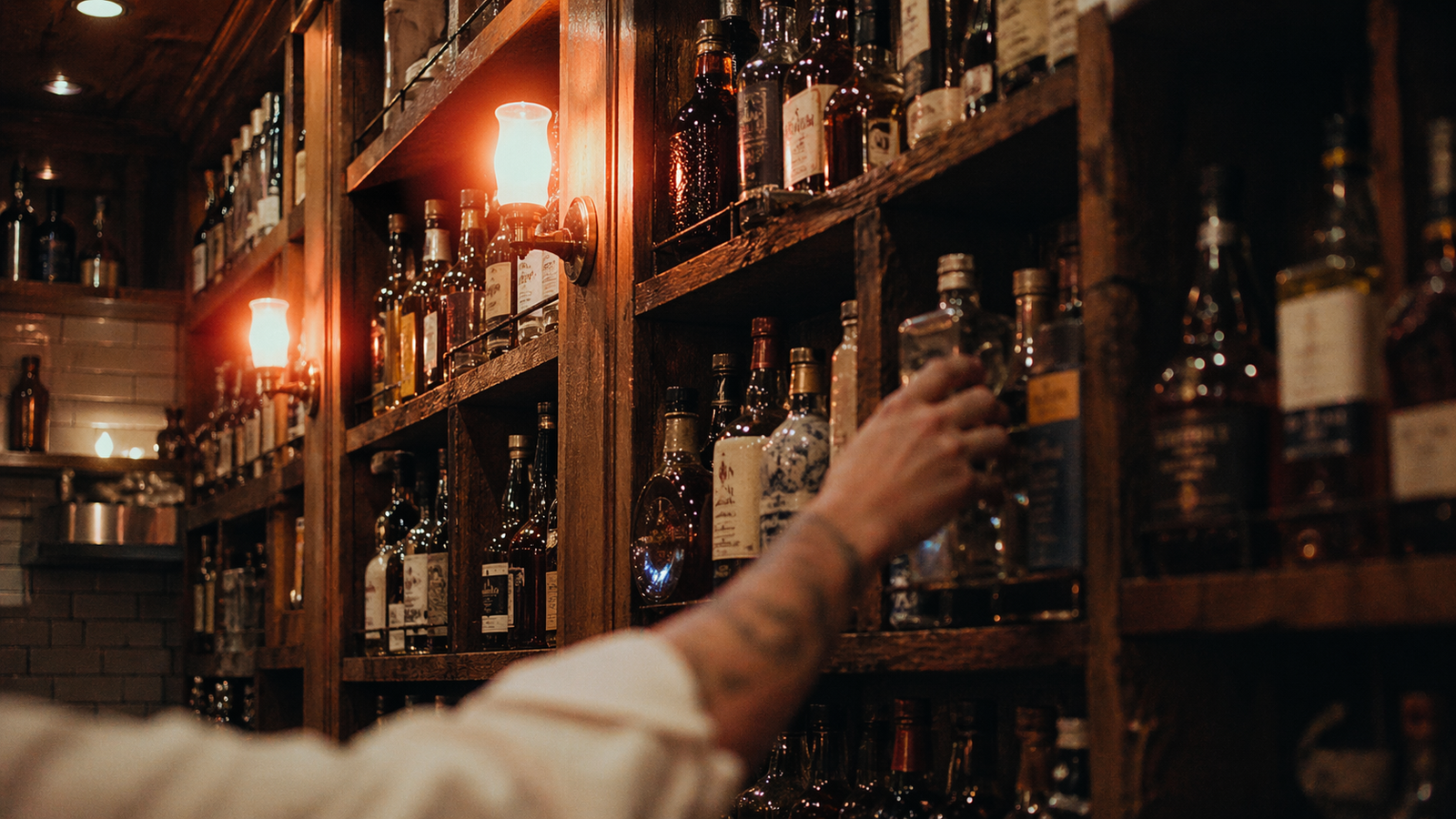
Every Bottle Has a Purpose: The 800-Bottle Libation Library
Every bottle in my bar has a purpose.
Wine, beer, spirits, all of it.
Aroma Thyme’s Libation Library holds 800 selections from small independent producers worldwide.
Eight hundred bottles. Every one of them selected on purpose.
Nothing is there by accident. Nothing is there because a giant supplier pushed it. Nothing is there because some marketing department trained consumers to ask for it.
Each bottle is there because it tells a story. Because it has integrity. Because it represents people I believe in. Because it reflects the same values as the kitchen.
This is why smaller producers matter so much in hospitality.
When you support a smaller producer, you can actually build a relationship. If they are local, you can visit them. If they are independent, they may come through with their distributor and spend real time with you.
They might host a tasting. They might do a dinner. They might sit in your restaurant and talk to your guests. They might open up their facility on a Sunday and personally show you what they do.
That happens. I have lived it.
I have winemakers who call me when a new vintage ships. I have distillers who save me a barrel. I have brewers who stop by the restaurant on their way home and leave me a case to try.
You cannot fake that relationship. You earn it by buying their product, month after month, year after year, when the big brands would have cost you less and moved faster.
Try getting that from a giant corporate brand. Layers of departments. Hospitality protocols. Retail divisions. Corporate gatekeepers.
You will not get the same human connection. You will not get the same flexibility. You will not get the same soul.
That relationship model is also why VIP Winery Vacations exists. The whole company is built on relationship-led travel with the families who actually make the wine. You cannot buy that experience from a conglomerate portfolio.
Why do most bars still stay lazy?
The Lazy Bar Problem: Why Most Restaurants Stock the Same Five Labels
Most bars take the lazy route.
They carry the brands everyone knows because they think it is safer. They think guests will resist. They think staff training is too hard. They think it is easier to stock the usual suspects because that removes friction.
What they are really doing is making themselves forgettable.
You can walk into five restaurants in the same town and see the same back bar over and over again. Same tequilas. Same vodkas. Same wines. Same beer handles.
No identity. No intention. No education. No leadership.
That is weak hospitality.
Real hospitality guides people to something better.
What can a consumer actually do about it?
Consumers Have a Role: How to Vote With Your Dollar
Consumers can play a role in this too.
Here are four questions I encourage every guest to ask at any bar.
- Ask what is local.
- Ask what is different.
- Ask what the staff is excited about.
- Ask what is the best bottle no one orders.
One of my favorite questions is to ask the bartender what the worst-selling tequila is. A lot of times the worst-selling bottle in the restaurant is actually the best one.
I do this every time I travel. I have found some of the best bottles of my life by asking that one question in strange bars in strange towns.
It is just not known. It is not marketed. It is not what people have been trained to order. A great bottle can sit right there while the big global brands keep moving because the consumer never learned to look past the label.
That is the opportunity.
What is really at stake when you pick a bottle?
Your Dollar Is a Vote: What Every Bottle Really Supports
Your dollar matters.
You work hard for your money. I work hard for mine. And I have always believed that when guests spend money with me, I have a responsibility to respect that dollar.
I have to make sure it flows toward products, producers, and systems that deserve support.
So no, this is not about being difficult. It is not about being anti-success. It is not about pretending every big brand is automatically garbage.
It is about being intentional.
It is about asking the harder question.
Not just, is it good?
Not just, is it famous?
Not just, have I heard of it?
But what story am I supporting?
Who lost when this brand got bigger?
What town got hollowed out?
What jobs disappeared?
What buildings were left vacant?
What community paid the price so this company could save money by moving production to a larger facility?
Because every bottle has a story.
The question is not whether there is a story.
The question is whether you care enough to know what it is.
Your dollar is a vote.
Make it count.
And once you do, you may never order the same way again.
Frequently Asked Questions
Who owns Johnnie Walker?
Diageo owns Johnnie Walker. The brand became part of Diageo’s portfolio in 1997 when Guinness and Grand Metropolitan merged to form the company.
When did Diageo close the Kilmarnock facility?
Diageo closed the Kilmarnock facility in 2012. Around 700 jobs were lost. The closure ended nearly 200 years of Johnnie Walker production in the town where John Walker originally started blending whisky.
What big spirits brands are still independent?
A few well-known brands remain independent. Tito’s Handmade Vodka is owned by Fifth Generation Inc. Hangar One sits under Proximo Spirits, a smaller independent. Many of the best craft distilleries stay under 50,000 cases a year and sell mostly direct.
What is the best way to support independent distilleries?
Buy direct whenever possible. Visit the distillery. Ask your local bar to carry independent producers. Avoid the biggest names when a smaller alternative exists. Vote with your dollar on every pour.
What changed at Johnnie Walker after the Diageo acquisition?
Production became more centralized. Local decision-making moved to corporate headquarters. The Kilmarnock facility was closed in 2012. The liquid may still meet Scotch whisky standards, but the community that built the brand no longer shares in its success.