


Takeaway: If the salmon is raised in open-net pens, the ocean pays the cost.
Most people think farmed salmon helps protect wild salmon. They’re told it’s cleaner and more sustainable. That story sounds good. It sells a lot of fish.
If it’s open-net, I don’t serve it. Period.
If you’re new here, start with my full archive on the Chef on a Mission Blog.
If you want a quick example of how I look at food fraud, start with Real vs. Fake Balsamic Vinegar: The Balsamic Deception & The Pantry Audit.
It also hides the main issue. If it is farmed salmon in open-net pens, it is the same problem. There is no “good” version of it. That includes most farmed salmon you see.
The Moment That Changed Everything
Takeaway: One conversation with a real sourcing expert can change what you’ll accept from a sales rep.
In 1999, I flew from Colorado to attend a Sustainable Chefs Collaborative at the Culinary Institute of America. I sat at dinner next to Henry Lovejoy, founder of EcoFish, a company built around real seafood sourcing.
That conversation changed how I looked at seafood. It changed what I was willing to serve. It also changed what I was willing to accept from a sales rep.
It’s the same shift I want for you: stop trusting labels, start asking how the fish was raised.
What Open-Net Pens Really Mean
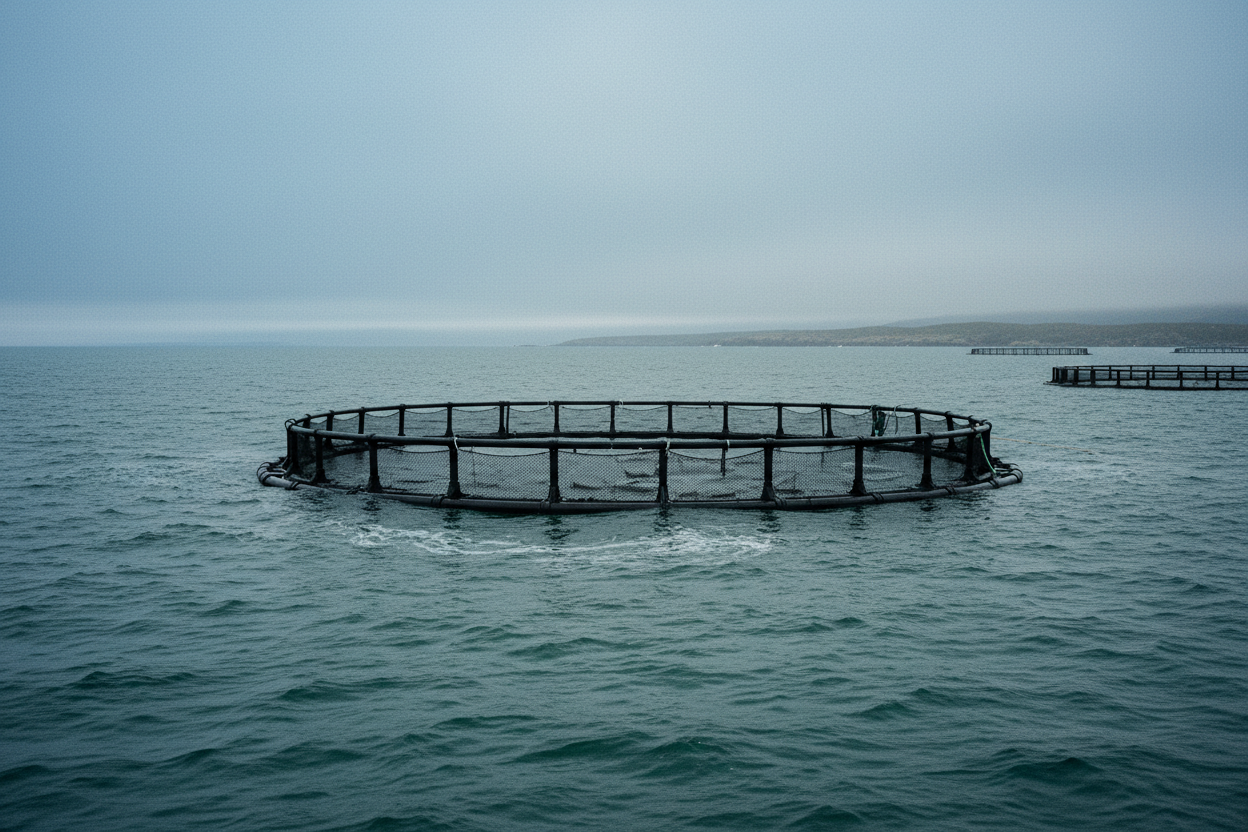
Takeaway: Open-net pens are not “farms near the ocean.” They are farms in the ocean.
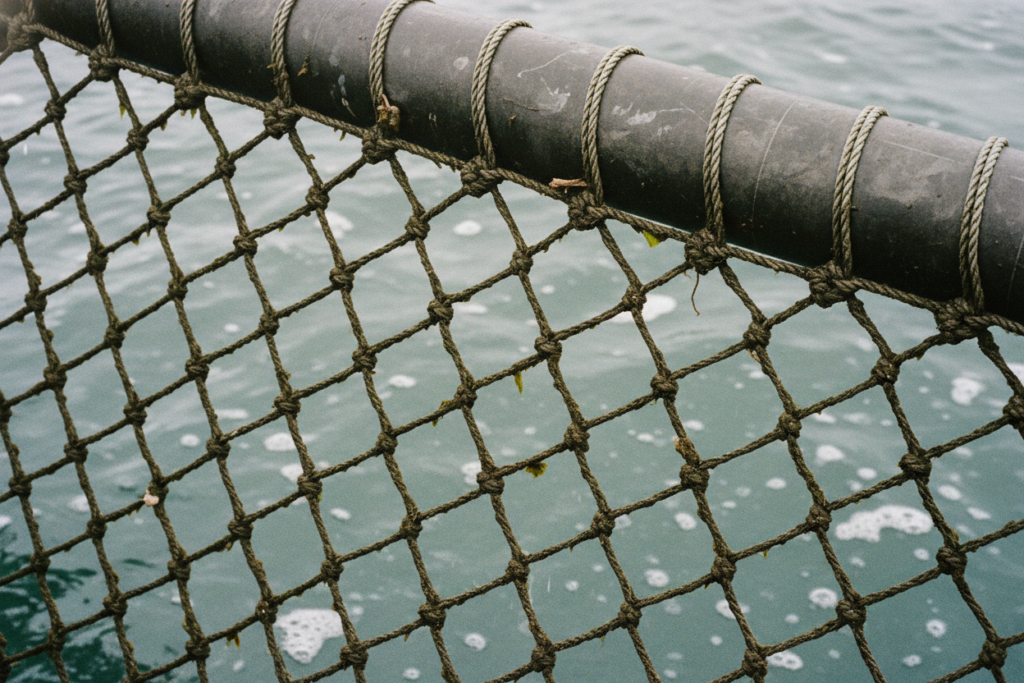
A lot of farmed salmon is raised in open-net pens. These pens sit in coastal water. They are not sealed. They are not contained. They are part of the ocean.
A simple test: if water can flow through the cage, so can waste, parasites, and chemicals.
Sources: SeaChoice — Aquaculture Methods (Open-net pens) and Georgia Strait Alliance — Salmon farming impacts & solutions.
That one fact drives most of the damage. What happens in the pen doesn’t stay there. Waste, parasites, and pathogens move into the surrounding water.
The 5 Problems You Cannot “Fix” With Better Marketing
Takeaway: The system is the issue. Better labels do not change an open system.
1) Farmed salmon spreads parasites and disease
Open-net salmon farms are often placed in or near migration routes. Wild fish pass through those waters.
When parasites and pathogens build up in dense pens, it can raise pressure on nearby wild fish. Sea lice is the most discussed example.
Sources: Review: Salmon lice impacts (PMC), Sea lice & salmon population dynamics (PMC), and NOAA — Net-pen aquaculture FAQ.
Wild fish do not get to opt out. They swim through it.
2) Farmed salmon eats an unnatural diet
Wild salmon eat what the ocean gives them. Farmed salmon eats manufactured feed designed for fast growth and consistent color. Many people miss the supply chain side of this.
Some feeds still rely on wild fish inputs. The industry says it is lowering those ratios.
Source: IFFO — Fish In Fish Out ratios (PDF).
For me, that is not “saving wild fish.” It is shifting pressure and calling it progress.
That matters when you buy it, because you’re buying the system, not just the fillet.
3) Farmed salmon is colored to match expectations
Wild salmon earns its color through a natural diet. Farmed salmon is different.
When you add pigment so the fish looks “right,” you are not improving nature. You are improving marketing.
Source: Astaxanthin noted as a micro-ingredient in feeds: Feed resources in Norwegian salmon farming (ScienceDirect).
That should make you pause.
If the fish needs a makeover to look “wild,” ask what else had to be managed to get it there.
4) Open-net pens concentrate waste and chemicals
Crowded pens create concentrated waste. In an open system, that waste enters the surrounding water. It drifts. It builds.
That can change the local seabed and nearby ecology.
Sources: Living Oceans — Environmental impacts of open net-pen salmon farms and NOAA — Net-pen aquaculture FAQ.
Farms also use chemical treatments to manage parasites or disease. Those treatments can enter the water.
Sources: NOAA — Net-pen aquaculture FAQ and Living Oceans — Pathogens and disease in open net-pens.
Open-net pens are not a closed system.
If that’s the setup, “better management” still means dumping the problem into shared water.
5) The health story is not as simple as the label
I get asked this all the time: is farmed salmon healthy? That question deserves a real answer, not a slogan.
The system matters. Open-net pens add risks that do not belong in a clean, controlled food chain.
Sources: Risk-based consumption advice for farmed vs wild salmon (PMC) and Washington State DOH — Farmed Salmon vs Wild Salmon.
If you care about health, you also have to care about how the fish lived.
“Sustainably Farmed Salmon” and Other Buzzwords
Takeaway: Buzzwords are not containment. Ask how the fish is raised.
I have heard every pitch. “Organic salmon.” “Low density.” “The cleanest farmed salmon in the world.” The words change. The structure stays the same.
People sell farmed salmon with words like “sustainable” and “organic.”
If you see the phrase “sustainably farmed salmon,” ask one question: contained system or open-net pens?
A real answer sounds like: “Contained, on-land, closed-loop.” Anything else is marketing.
If it is open-net pens, it is still the same problem. There is no right way to do the wrong thing.
Farmed Salmon vs Wild Salmon: What I Look For
Takeaway: If a restaurant cannot answer sourcing basics, that is the answer.
When people compare farmed salmon vs wild salmon, they usually talk about taste. Taste matters. So does sourcing.
People also ask me: is farmed salmon healthy? I think that depends on the system, not the sales pitch.
I do not believe in the phrase sustainably farmed salmon when it means open-net pens.
| What I look for | Wild salmon (what I serve) | Open-net farmed salmon |
|---|---|---|
| Where it lives | Open ocean, specific rivers and regions | Coastal water pens, all raised the same way |
| Region | Copper River, Yukon, Cook’s Inlet, Kodiak, Columbia River | No regional identity. A pen is a pen. |
| Catch method | Troll caught (one hook, one line) or net | No catch method. Harvested from pens. |
| Traceability | Region, species, method, season | Vague labels, marketing language |
| Menu signals | Specific origin named | “Atlantic salmon” with no details |
| My decision | Serve it | Do not serve it |
Use this table like a script. If they say “wild” but cannot name the region, the catch method, or the species, that tells you everything you need to know.
What You Can Do as a Consumer
Takeaway: Ask direct questions. Vague answers mean “no transparency.”
You have more power than you think. But the real power is in asking the right questions.
Lots of restaurants say they serve wild salmon. Many of them don’t. The menu says “wild” and most people stop there. Don’t stop there.
If it’s truly wild, they should be able to answer these without hesitation:
- Where was it caught? Wild salmon is sold by region. Copper River, Alaska. Yukon River. Cook’s Inlet. Kodiak Island. Columbia River, Washington State. If they can’t name a specific region, that’s a problem.
- What was the catch method? The best wild salmon is troll caught. One hook, one line. If they don’t know how it was caught, ask yourself why.
- What species is it? Sockeye, King, Coho, Chum, Pink. Each one is different. “Just salmon” is not an answer.
- Is it fresh or previously frozen? Outside of peak season (May through September), wild salmon should be previously frozen. That’s normal. If they claim fresh wild in February, that’s a red flag.
Farmed salmon has none of these answers. No region. No river. No catch method. It’s all raised the same way, in pens. There is nothing to distinguish one farmed fish from another.
If a restaurant says “wild” but cannot tell you where it was caught or how, treat that as your answer.
If you want another “hidden in plain sight” example, read Sulfites: The Hidden Preservative Lurking in Dried Fruit.
What We Serve at Aroma Thyme Bistro
Takeaway: We serve wild Alaskan salmon. We do not serve farmed salmon.
At Aroma Thyme Bistro, we serve wild salmon from Alaska. We do not serve farmed salmon.
This isn’t a luxury choice. It’s a responsibility choice.
You can learn more about the restaurant at Aroma Thyme Bistro.
If you want another seafood sourcing read, see Cold Water vs. Warm Water Lobster: A Chef’s Guide.
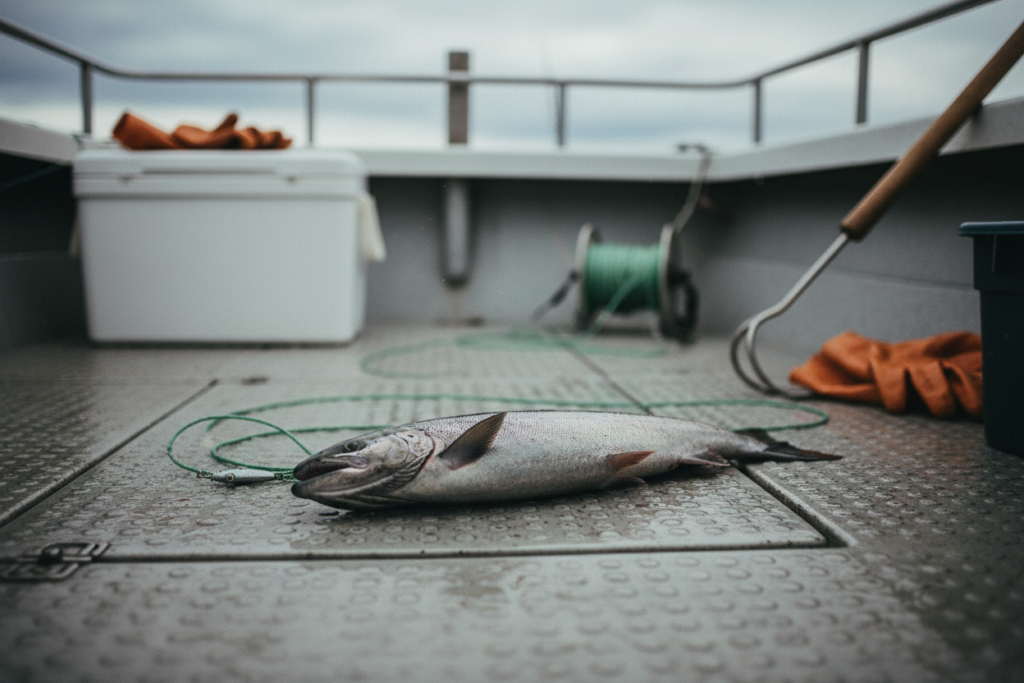
We also prefer line-caught, also called troll-caught. One hook. One fish. Better handling. Better quality. Better transparency.
Final Thought
Takeaway: Once you understand open-net pens, you cannot unsee them.
The more questions you ask, the harder it becomes for the industry to hide behind marketing. Once you understand how open-net pens work, you cannot unsee it.
If you want salmon you can trust, choose wild. Then make them prove it. Ask where it was caught, how it was caught, and what species it is. Reward the restaurants that can answer without hesitation.