





Let me make this clear. The lobster roll was never meant to be fancy. It was born dockside, built for working hands, and now people argue about it like it’s religion.
Here’s the core split:
- chilled or hot
- butter or mayo
- Maine or Connecticut
I’ve cooked professionally for decades. I’ve watched simple food become “iconic.” This is one of the clearest examples.
Chef Marcus Guiliano writes from the kitchen, not the comment section. This is lobster roll history, and the chef rule is restraint.
Lobster Roll History (In One Minute)
Key takeaway: The lobster roll went from dock food to luxury because distance turned coastal abundance into inland scarcity. That shift helped create Maine’s chilled dressed style and Connecticut’s hot buttered style.
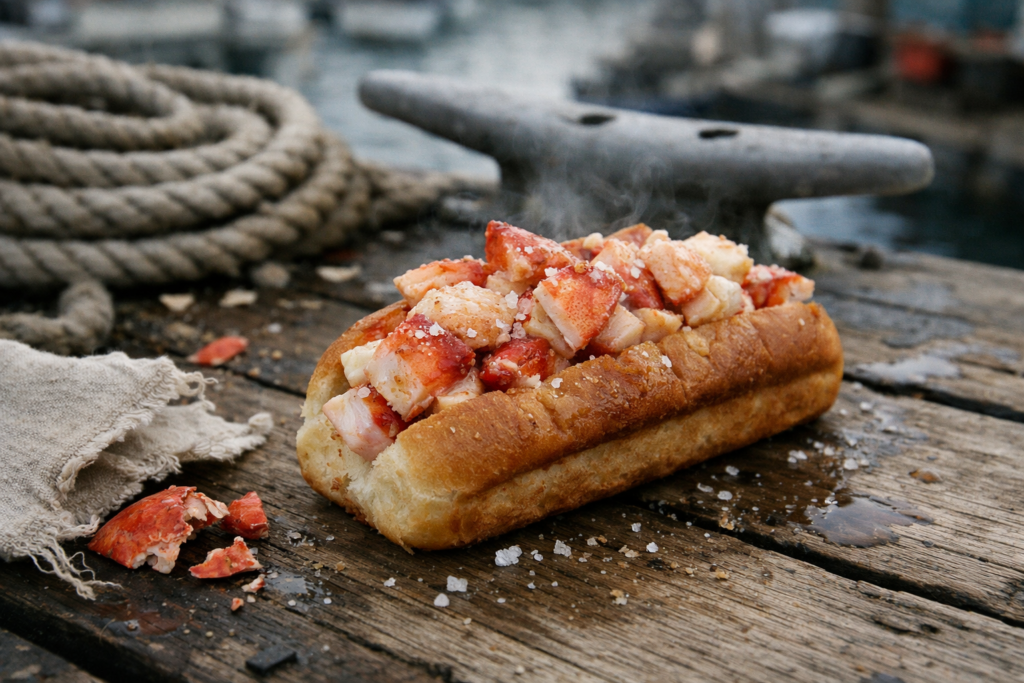
Lobster did not change much. Access changed. Coastal towns had abundance, while inland diners had novelty.
lobster roll history matters because novelty travels faster than context. That is the whole story. That is the shift.
Why Was Lobster Once Considered “Poor People’s Food”?
Key takeaway: Lobster was so abundant it was treated as low-status food, and it only became “luxury” when it became harder to get.
Sources:
In early New England, lobster was everywhere. So it got used for fertiliser, for bait, and for feeding people who did not get a choice.
Distance changed the story. Railroads moved lobster inland, inland diners saw novelty, and novelty helped create luxury.
Before the Roll, There Was the Salad
Key takeaway: The lobster roll didn’t appear out of nowhere. Chilled lobster salad made a handheld roll inevitable.
Note: The exact “first” lobster roll is debated. Early lobster dishes show up fast, across cookbooks and hotels, with dressed meat built for fast service and fast travel.
Once chilled lobster salad existed, the handheld roll was inevitable. It was perfect between bread.
Travel Changed Everything
Where did the lobster roll originated? People needed food they could eat on the move.
If you want to go deeper on lobster itself, read Cold Water vs. Warm Water Lobster: A Chef’s Guide.
Key takeaway: Connecticut-style happened because travel demanded hot, filling food you could eat fast.
Butter was the simplest way to carry flavour.
Source:
Beach towns sold speed. Roadside stands sold handheld. That demand favoured hot lobster and butter.
The origin story is debated, but the travel logic is not. Abundant supply stayed on the coast, and value rose as the roll moved inland.
Maine vs Connecticut Lobster Roll: What’s the Difference?
Key takeaway: Maine-style lobster rolls are chilled and lightly dressed. Connecticut-style rolls are hot with butter.
Both are legit because each fits a distinct eating context.
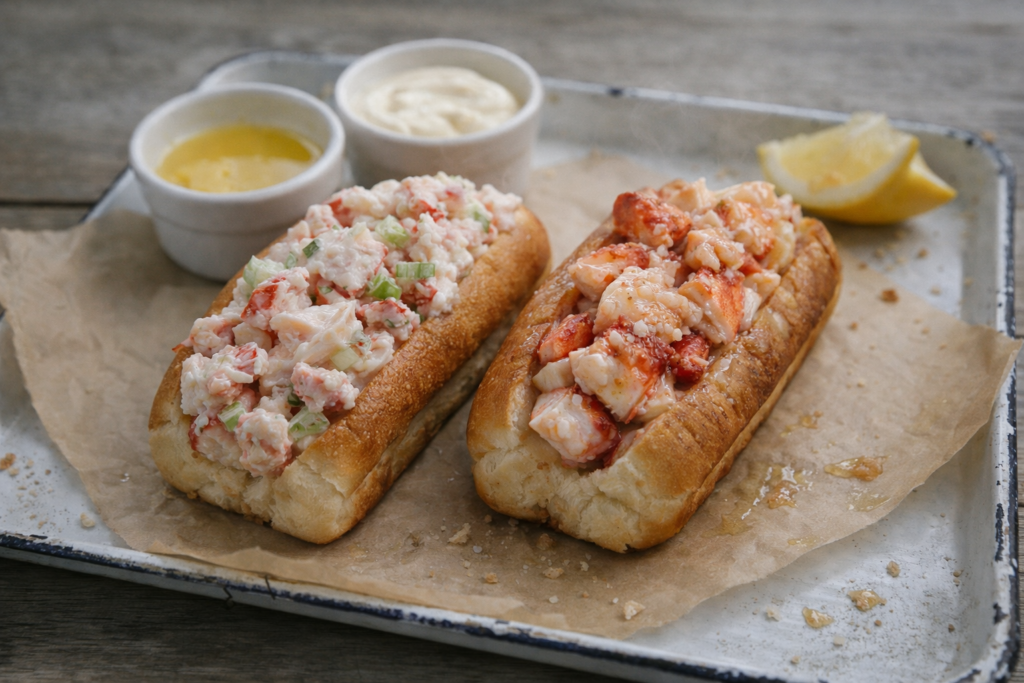
Maine is chilled, with a small dressing. It is built for summer and built to hold.
Connecticut is hot, with butter and a toasted roll. It is built to satisfy fast, with no distractions.
Which style came first, and why?
The question is a trap. Chilled dressed lobster travels, and hot buttered lobster satisfies fast.
That split is why the argument never ends. It is two different contexts pretending to be one rule.
When the Lobster Roll Went National
Key takeaway: The farther the lobster roll travelled, the more it turned into a status symbol. Status always adds price and noise.
Source:
By the mid-20th century, it became shorthand for New England. Then big cities made it expensive, and complicated.
That is what status does. It adds price, it adds theatre, and it distracts from the craft.
Why Can’t Butter or Mayo Save a Bad Lobster Roll?
Key takeaway: Butter or mayo can’t save mishandled lobster. Great rolls come down to clean cooking, good bread, and restraint.
A lobster roll is only as strong as the seafood. If you want the bigger frame, read Fresh vs. Frozen Fish: Rethinking What “Fresh” Really Means.
| Element | Maine-style (ideal) | Connecticut-style (ideal) | Red flags |
|---|---|---|---|
| Lobster temperature | Chilled. Ideal. | Hot. Low heat. | Freezer taste. Rubbery meat. |
| Fat / dressing | Light mayo. Just enough. | Warm butter. Glossy. | Drowned. Greasy. |
| Bread | Split-top roll. Light toast. | Split-top roll. Butter-toasted. | Soggy. Dry. No toast. |
If the lobster is mishandled, the roll is fighting uphill. Butter and mayo should carry flavour, not hide mistakes.
The best lobster rolls I’ve eaten follow one rule: Restraint. That is a chef rule, not a history rule.
Why the Lobster Roll Still Matters
Key takeaway: The lobster roll still matters because it proves one thing. Great ingredients do not need theatre.
They need respect.
The argument is noise. Hot or chilled, it is the same principle.
Red flag: hype over craft. Respect the lobster. Respect the bread. Stop hiding mistakes.
lobster roll history is a reminder. Respect beats hype.
If you’re ever in the Hudson Valley and you want the real version of simple food done right, come eat with us at Aroma Thyme Bistro.