




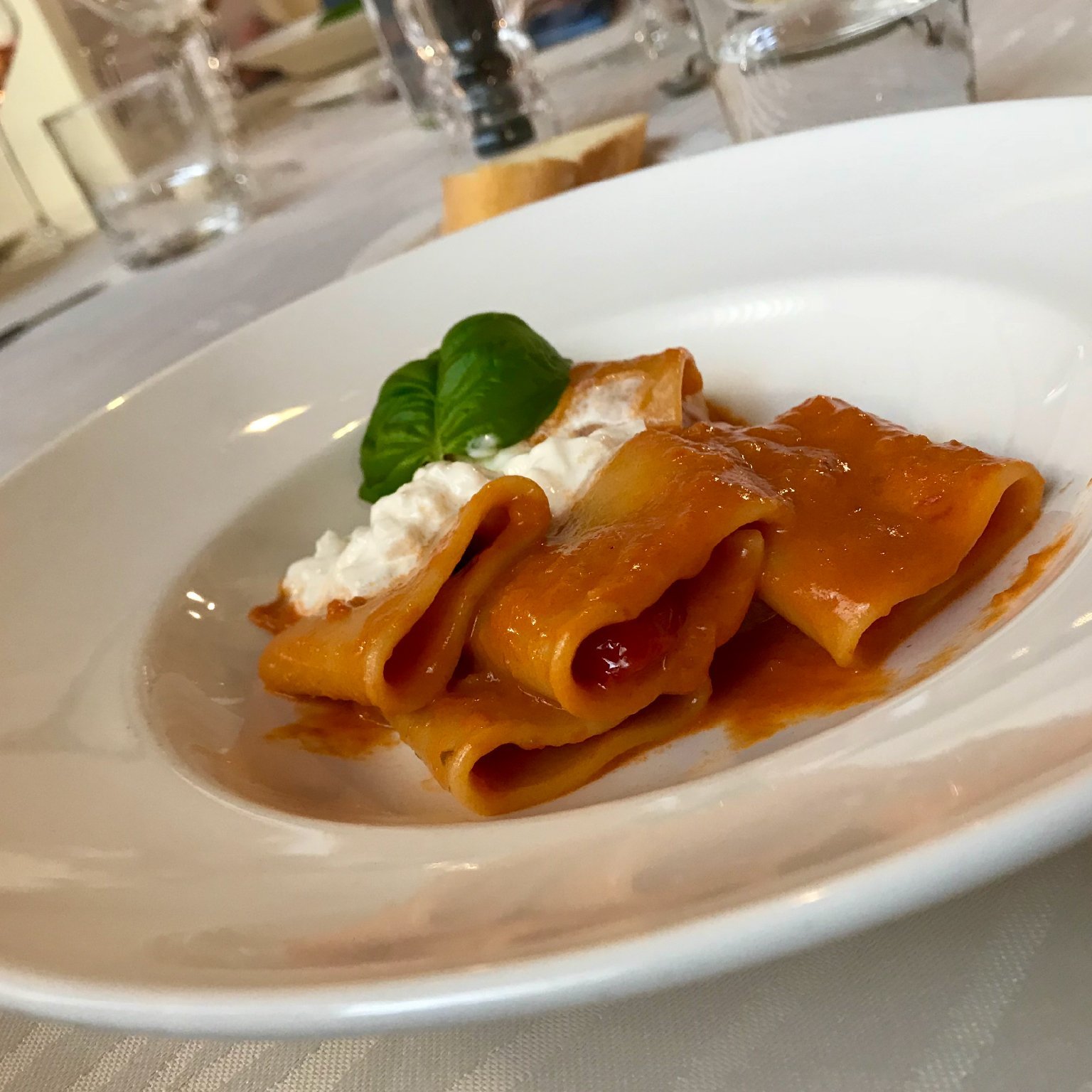
I’ve spent more than 35 years in kitchens, including Michelin 3-star training, and 22 years running Aroma Thyme Bistro. I’ve traveled across Italy — from Puglia, where my family is from, to the alpine borders of the north — eating in trattorie, osterie, vineyards, and homes. And the more I travel, the more one truth becomes impossible to ignore:
What most Americans call “Italian food” isn’t remotely Italian.
And that’s not an insult — it’s a fascinating story of immigration, adaptation, and culture. But if we want to talk about authentic Italian cuisine, we have to go to the source.
To the villages, the grandmothers, the trattorie, the vineyards, the fishermen, and the markets.
Let’s put this debate to rest, once and for all — with respect, education, and a little cinematic storytelling.
My Italian Roots: Bari and the Flavor of Puglia
My family is from Bari, in Puglia — a region shaped by the sea, olive trees older than most languages, and cooking traditions known as cucina povera (“the cuisine of the poor”). Simple, honest, ingredient-driven food.
Orecchiette made by hand.
Bright, peppery olive oil.
Seafood pulled out of the water minutes before it hits your plate.
Wild greens.
Burrata that almost melts on contact.
It’s where I first understood that Italian cuisine isn’t based on complexity — it’s based on purity.
That philosophy followed me through my Michelin training and into my own kitchens.
Italian Cuisine Isn’t One Cuisine — It’s 20 Distinct Worlds
When you travel Italy region by region, everything changes:
Puglia (Apulia)
Burrata, seafood, orecchiette, olive oils so green they glow.
Calabria
Chiles, nduja, swordfish, bergamot — fiery and bold.
Veneto
Risotto, radicchio, Amarone, polenta — elegant and refined.
Emilia-Romagna
Prosciutto di Parma, Parmigiano-Reggiano, balsamic, tortellini.
Piedmont
Truffles, Barolo, tajarin, brasato — rich and luxurious.
Alto Adige & Trentino (The Austrian Italy)
Speck, dumplings, mountain cheeses, hearty Alpine dishes.
Sicily
Citrus, pistachio, seafood, Arab-influenced spices.
Italy is small — but its cuisine is massive.
And here’s the key:
A restaurant in Italy does not serve food from all regions.
A Venetian trattoria won’t cook Sicilian dishes.
A Milanese restaurant won’t serve Neapolitan classics.
Menus are short, focused, regional, and deeply rooted in local tradition.
What You’ll Never Find in Italy
Let’s rip off the bandage:
You will not find the following in a true osteria or trattoria:
- Chicken Parmesan
- Spaghetti & Meatballs
- Caesar Salad
- Fettuccine Alfredo (American creamy version)
- Garlic Bread
- Shrimp Scampi Pasta
- Baked Ziti
- Mozzarella Sticks
- Penne alla Vodka
- Lasagna with ricotta
- Anything with “extra cheese”
These are American-Italian creations — born from immigrant chefs adapting Italian flavors to American ingredients, portions, and palates.
Delicious? Sure.
Authentic Italian? No.
How Italians Actually Eat: Antipasto → Primi → Secondi → Dolce
In Italy, a meal is a sequence, not a pile.
Antipasto
“Before the meal.”
Cured meats, vegetables, crostini, seafood.
Primi (First Course)
The heart of the meal:
Pasta, risotto, polenta, soups.
Always starch-based.
Secondi (Second Course)
Protein:
Meat, fish, poultry.
Contorni
Vegetable sides — ordered separately.
Dolci → Espresso → Amaro
This order matters.
Dessert first.
Then an espresso.
Finally an amaro (a bitter digestive).
This isn’t preference — it’s culture.
The Pasta Rule Americans Don’t Know
Here’s one of the biggest differences:
In Italy, pasta is NEVER topped with chicken, shrimp, or steak.
Pasta is the dish.
Protein belongs in the next course (secondi), not on top of the primi.
There are exceptions — seafood pasta, ragù — but the instinct to “add protein” is strictly American.
That’s why “Chicken Alfredo” doesn’t exist in Italy.
Neither does “Shrimp Scampi Pasta.”
Neither does “Meatball Spaghetti.”
Butter vs. Olive Oil: A Culinary Border
Italy’s cooking fat tells the story of its geography.
Northern Italy → Butter
Piedmont, Lombardy, Veneto, Trentino-Alto Adige
Cooler climate, Alpine influence.
Butter, cream, polenta, and rice dominate.
Risotto is king.
Central & Southern Italy → Olive Oil
Tuscany to Sicily
Warmer climate, endless olive trees.
Olive oil isn’t just fat — it’s identity.
Your Bari heritage falls here:
food seasoned with world-class EVOO, not butter.
Water Buffalo Milk vs. Fior di Latte
Two types of fresh mozzarella — two completely different worlds:
Mozzarella di Bufala (Water Buffalo)
Rich, creamy, tangy, luxurious.
From Campania and Lazio.
Fior di Latte (Cow’s Milk)
More delicate, milder.
Used throughout the country.
Both beautiful.
Not interchangeable.
Zero-Kilometer Cuisine: The Soul of Italy
One of the most beautiful things about eating in Italy is the zero-kilometer movement — food sourced as close as possible to where it’s served.
Fish straight from the dock.
Produce from the farmer down the street.
Wine from the hillside behind the restaurant.
Ingredients don’t travel.
You do.
This is the foundation of real Italian cooking.
Aperitivo: Italy’s Golden Hour
Before dinner, Italy slows down.
This is aperitivo — a ritual, not a “happy hour.”
Spritzes, vermouth, small bites, conversation.
It opens the palate and the spirit.
And then the evening unfolds…
Why Restaurants Open Late — and Why Your Table Is Yours All Night
Italian dinner doesn’t start early.
Most restaurants don’t open until 7:30 or 8:00 PM.
And once you sit down?
The table is yours for the night.
No rushing.
No flipping tables.
No “are you done with that?”
Dinner is not a meal — it’s an evening.
Italy Is One Giant Food Movie — If You Know How to Watch It
Every time I return — to Bari, Piedmont, Veneto, Sicily, Puglia — I’m reminded of how cinematic real Italian cuisine is.
It’s simple, soulful, regional, disciplined, historical, and emotional.
It’s everything American-Italian cuisine is not — and I say that with love.
American-Italian Cuisine Isn’t Wrong — It’s Just Different
American-Italian cuisine is nostalgia.
Italian cuisine is identity.
Both matter.
But only one is true to Italy.
And after a lifetime of cooking, traveling, and tasting — I’m here to help you experience the real thing.
When you travel with me to Italy, you’re tasting authenticity:
the food, the culture, the ritual, the landscape, the history.
It’s what inspired my work, my restaurant, and my life.
And it’s what I want to share with you.